Do Words Invent Reality? The Hidden Philosophy in How You Talk
Is a Hole a Thing?

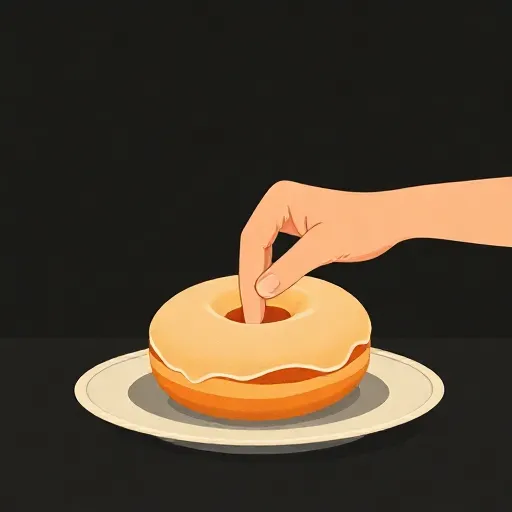
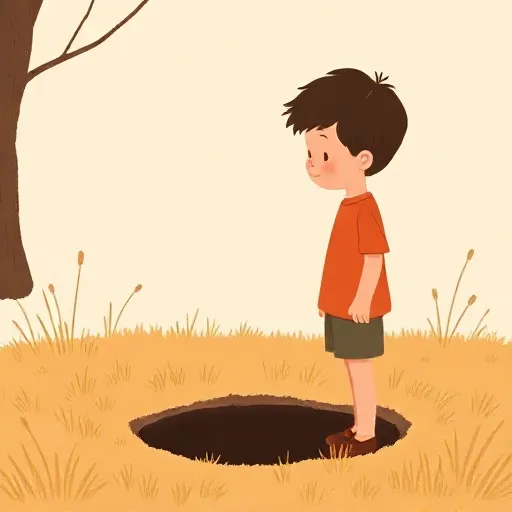
You are walking across a park and your foot discovers a hole. “That hole is deep,” you say. Wait — is a hole a thing? You can point to it, measure it, warn someone about it. But if you dig out all the dirt around it, the hole disappears. Was it ever really there?
Philosophers and linguists have begun treating this kind of puzzle as serious science. They call it natural language ontology — the study of what kinds of things our everyday language treats as real, whether or not those things actually exist. The idea was first proposed as a discipline in 1986 by the philosopher of language Kent Bach (working in the late 20th century), who called it “natural language metaphysics.” He argued that while real metaphysics asks “What sort of things are there?”, natural language metaphysics asks “What sort of things do people talk as if there were?”
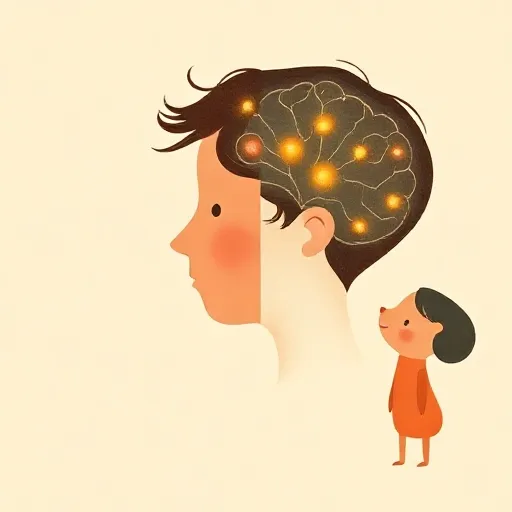
That shift is huge. Instead of trying to figure out the ultimate furniture of the universe, you look at words — ordinary words like hole, shadow, smile, problem, reason, and mistake — and ask: does the way we use these words commit us to believing those things are real? And if not, what is actually going on when we talk about them?
Two Kinds of Metaphysics: What Seems Real vs. What Is Real

Philosophers quickly noticed that the world reflected in language might not match the world described by science or deep metaphysics. This led P.F. Strawson (1919–2006) to draw a famous line. He called one style descriptive metaphysics: the project of describing the shared picture of reality that is built into our concepts and our ordinary talk. The other style he called revisionary metaphysics: the attempt to produce a better, truer picture — one that carves nature at its real joints.
Natural language ontology belongs to the descriptive side. It does not ask whether numbers or holes are fundamentally real. It asks what our language-tied intuitions treat as real. The philosopher Kit Fine (born 1946) later gave this a different name: naïve metaphysics, or the metaphysics of appearances. Fine argued that foundational metaphysics — the search for what really exists — must actually start from naïve metaphysics, because that is where our basic notions of “object,” “property,” and “existence” get their shape.
So when you say “I have a problem,” descriptive metaphysics stops and listens. It notices that you used the word problem just like you use the word apple. You can count problems, refer to them, even describe their size. On the surface, language treats problems as things. Whether they are really things is a question for foundational metaphysics, not for the language detective.
The Case of the Door and the Home: Chomsky’s Challenge
Not everyone agrees that language refers to a world of objects at all — not even an “apparent” one. Noam Chomsky (born 1928), one of the most influential linguists alive, has spent decades arguing that the notion of reference in everyday speech is deeply suspicious.
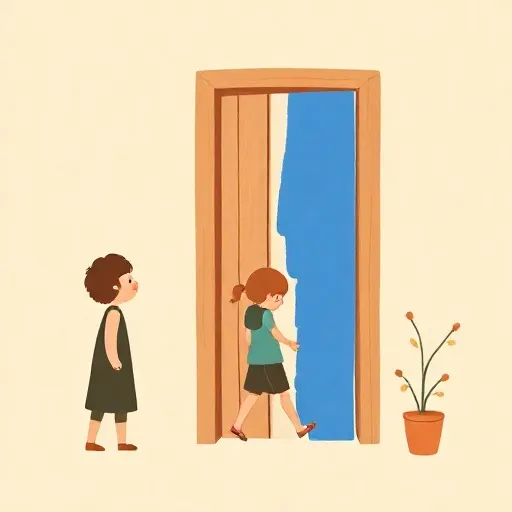
Consider a door. You can paint it, walk through it, and later replace every board and hinge. Those properties — being paintable, walk-through-able, and replaceable — would contradict each other if the door were just one solid material object. A physical lump of wood cannot be both a painted surface and an opening you pass through. Similar puzzles pop up everywhere. You can own a home, sell it, and live in it, but you cannot paint a home the way you paint a house. Even the word water is tricky: you can pollute water, but H₂O itself is not polluted by dirt particles floating in it.
Chomsky’s conclusion is that words like door, home, and water do not refer to mind-independent objects. Instead, they hook onto mental concepts — internal structures in our heads that bundle properties in creative, sometimes inconsistent ways. If Chomsky is right, then natural language ontology cannot be about real objects at all, only about the shape of human thought.
Other philosophers push back without giving up. They say reality might be richer than we assumed. Maybe the world contains complex objects that can inherit properties from different parts — so a door really does have a painted surface and an empty passageway. Maybe it contains variable embodiments, things that change their physical makeup over time while staying the same entity, like a river whose water replaces itself minute by minute. The debate is alive, and it forces everyone to rethink what an “object” even is.
When Language Decides What Counts as One Thing
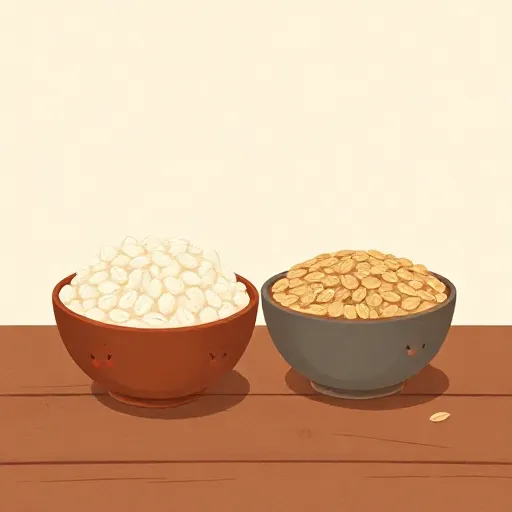
Language doesn’t just decide what exists — it also decides how the world gets carved into individual units. In English, rice is a mass noun: you say “some rice,” not “three rices.” Oat, though, is a count noun: you can say “three oats.” The two foods look equally grainy, so the difference isn’t in the food — it’s in the grammar.
This gets weirder across languages. In English, hair is a mass noun (you have “hair,” not “hairs” unless you count individual strands). In Italian, capelli is a plural count noun, like “hairs.” English uses clothes (plural count) but also clothing (mass) for nearly the same idea. And some nouns are object mass nouns: words like furniture, luggage, and jewelry that behave like mass stuff but clearly pick out collections of individual items. You can’t say “three furnitures,” even though a couch and a chair are perfectly distinct objects.
Philosophers of language call this grammaticized individuation — the idea that language doesn’t just reflect natural boundaries between things; it draws its own boundaries, sometimes in arbitrary ways. So the world that language seems to describe may not be a world of real joints; it might be a world partly invented by grammar.
The Core and the Edge: What Counts as Evidence?
If every new word a philosopher invented automatically counted as evidence for what exists, the game would be too easy. Someone could say “the nothingness” and suddenly nothingness would be a thing. To avoid that, natural language ontologists make a crucial split between the core of a language and its periphery.
The core contains the functional, everyday machinery of speech: words like is, have, exist, happen, and the simple nouns that just show up without anyone inventing them. The periphery contains terms that people deliberately build or repurpose to express a philosophical theory — things like truth value, the property of being wise, or the number eight. These reifying terms seem to create abstract objects on the spot, and linguists suspect that process is more like building a mental tool than discovering a hidden fact.
A striking claim, defended by the philosopher Friederike Moltmann, is the Abstract-Objects Hypothesis: the core of natural language never refers to abstract objects at all. Words like wisdom, the number of planets, and that idea turn out, on close inspection, to refer to concrete particulars — tropes, quantities, pluralities — not to ghostly abstract entities. Only in the periphery do we really talk about numbers, properties, and propositions as objects. If that hypothesis is correct, then centuries of philosophers who used language to prove that abstract objects exist were studying the periphery, not the genuine intuitions buried in everyday speech.
Why It Matters: What Language Says About Your World
You wake up tomorrow morning and say, “I have a problem.” You talk about “the shadow on the wall,” “the reason I was late,” “the mistake I made.” Every one of those sentences treats something invisible as if it were a solid object you could pick up and inspect. Natural language ontology invites you to notice that — and to get curious.
This matters because the hidden picture inside your words shapes how you think about everything from arguments with friends to big questions about science. If you believe reasons are real things floating somewhere, you might argue differently than if you think “reason” is just a convenient way of linking a cause to an explanation. If you think holes are genuine objects, you might find it easier to believe that empty space itself has a kind of existence. The language you speak, without ever planning to, nudges you toward a whole invisible philosophy.
Work on natural language ontology is still young. It sits right at the border of linguistics and metaphysics, blending sentence diagrams with ancient puzzles about being. And it hands you a powerful, slightly dizzying thought: the next time you open your mouth, you are doing philosophy — whether you know it or not.
Think about it
- If a hole is just an absence, but we talk about it like a thing, does that mean absences exist? If not, what is it that makes “the hole is deep” true?
- Suppose you grew up speaking a language that counted rice grains with a plural noun, unlike English. Do you think you would picture rice differently than you do now?
- If you and a friend disagree about whether numbers exist, could the way both of you talk settle the argument? Why or why not?