
Does English Really Exist, or Is Language Just in Your Head?
Your Private Language or Everyone’s Shared Rules?

Imagine you’re sitting in a classroom. Your teacher says, “We all speak English.” But pause for a second—what exactly is “English”? Is it the thick dictionary on the shelf? The sounds coming out of your mouth? The wiring deep inside your brain? It turns out this simple question has divided thinkers for decades.
When philosophers talk about language ontology (the study of what kind of thing a language actually is), they notice we can pick out a language in two very different ways. One way is to list its properties: English contains an adjective “red” that refers to a color, it forms questions by moving words around, and so on. The other way is to point to a specific person or group who speaks it: English is the first language of most people in Australia, the language Zadie Smith writes novels in, the one you’re reading right now.
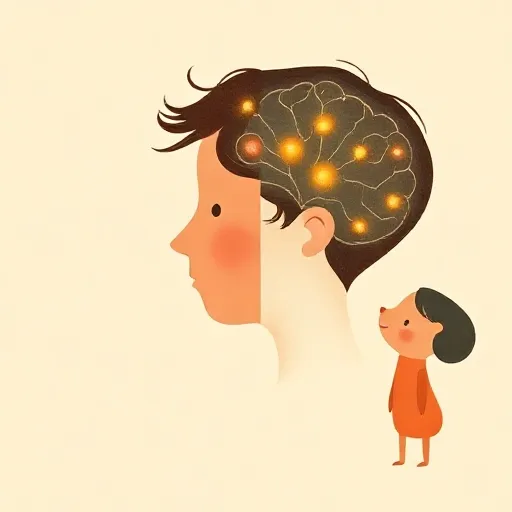
If we define a language by the inner properties of a single speaker—their brain’s grammar—we are talking about an idiolect. It’s the language of one individual. Noam Chomsky (born 1928) champions this view: a language is a system inside your head, something your brain “knows” the way it knows how to walk. On the flip side, if we define a language by looking at a whole community—by what a population finds acceptable or by social rules—we are talking about a social language. The philosopher David Lewis (1941–2001) argued for this second picture: a language is a public convention, like the custom of shaking hands.
These two starting points lead to very different maps of what language really is. And many linguists today think only one of them can be scientifically respectable.
Is English Even Real? The Case Against Folk Languages

Here’s a surprising claim: most linguists believe “English” as you ordinarily think of it doesn’t exist—not as a solid scientific object, anyway. What we call English, Hungarian, or Tagalog are folk languages, handy labels that work fine in daily life but fall apart under close inspection.
Why? First, there’s the problem of prescriptivism. This is the urge to say that a language has “proper” rules you must follow—don’t split infinitives, don’t say “hopefully” at the start of a sentence, and so on. But deciding what counts as correct is a social or political choice, not a scientific one. Take the word “livid.” Most dictionaries say it means “pale” or “bluish,” based on its Latin roots. Yet most English speakers today think it means “red,” because of the phrase “livid with rage.” Which group is right? There’s no fact of the matter—only different opinions, each prescribing what English “ought” to be. Science, however, needs to describe what is, not tell people what they should do. Descriptivism, the opposing view, says linguists should study how people actually use language, without handing out rulebooks. But even descriptivist dictionaries make choices about what to include, and those choices carry their own norms. Because of this unavoidable normativity, folk languages can’t be treated like neutral objects of study.
A second problem is that the borders of folk languages are often drawn by politics, not by anything linguistic. Until the 1990s, people spoke Serbo-Croatian. Then Yugoslavia broke apart, and suddenly the same speech was called Serbian, Croatian, or Bosnian—new “languages” that appeared overnight, without anyone changing how they talked. Similarly, some Dutch dialects are closer to German dialects across the border than to other Dutch dialects on the coast, yet they’re grouped as “Dutch” purely for national reasons. The edges are fuzzy in an arbitrary way, not in a way that respects a language’s internal structure. So if you try to pin down exactly what English is, you end up with something that looks more like a social fiction than a natural kind.
This doesn’t mean the label “English” is useless. It’s a convenient shorthand for “the idiolects spoken by a bunch of people who roughly understand each other.” But the shorthand hides a messier reality.
The Great Convention: Lewis and the Social Game
David Lewis thought folk languages were too sloppy, but he still believed language was fundamentally a social thing. He wanted to give a precise, scientific account of how a population could share a single language.
Lewis started with a puzzle. On one hand, a language is an abstract object—a function that maps sentences to meanings, a kind of giant look-up table. There are infinitely many such possible languages, most of which humans could never learn (imagine a language with a billion words). On the other hand, a natural language like Swedish is something concrete: real people use it every day. How can these two ideas fit together?
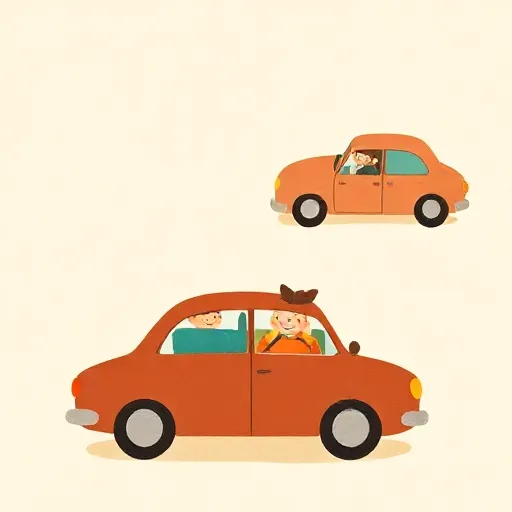
His answer: a natural language is just an abstract language that a population uses because of a convention. For Lewis, a convention is a solution to a coordination problem—a situation where everyone benefits if we all do the same thing, but there’s more than one thing we could do. Driving on the right is a convention: we all do it because we expect others to do it, and it keeps us safe; but we could just as well have driven on the left. No deep reason picks one side.
Language, Lewis argued, works the same way. We face a huge coordination problem: we want to share our thoughts, influence each other’s behavior, and understand intentions. Using the same mapping of sounds to meanings is incredibly useful. To make this work, a community follows two main conventions:
- Truthfulness: speakers utter a sentence only if they believe the meaning it has in L (their shared language) is true.
- Trust: hearers believe that whatever meaning L assigns to the sentences they hear is what the speaker intends.
If everyone is generally truthful and trusting in L, and everyone knows this about each other, then communication flows. The language L becomes the community’s language because six conditions hold: most people conform to truthfulness and trust, they expect others to, this gives them reason to keep doing it, general conformity is preferred, another language could have worked just as well, and all of this is mutual knowledge (everyone knows that everyone knows, and so on). It’s like a gigantic, invisible contract.
This elegant picture makes language a stable, public system. But it also requires that speakers somehow know the mapping for every possible sentence—an infinite task. Lewis bit that bullet: he said languages must be compositional (the meaning of a whole sentence is built from the meaning of its parts and how they’re combined) so that you can figure out new sentences on the fly. And he admitted this was an idealization, not a perfect description of every messy real-world conversation.
When Words Go Wrong: Davidson’s Challenge
The philosopher Donald Davidson (1917–2003) threw a wrench into Lewis’s neat machine. He argued that successful communication doesn’t depend on a shared, rulebook-like language at all.
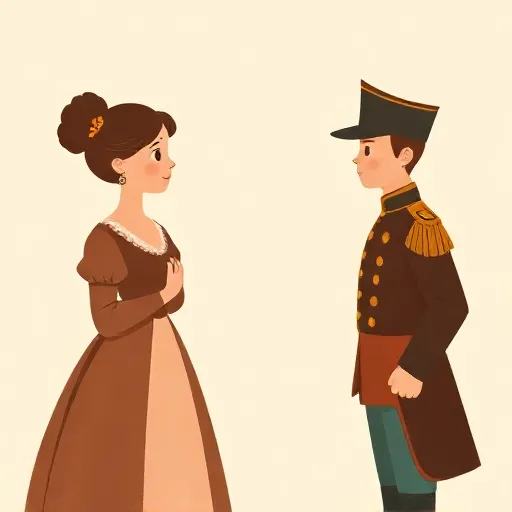
Davidson’s key example is the malapropism—a slip where someone uses a word that sounds like the right one but means something else, often with comic effect. In the play The Rivals, Mrs. Malaprop declares she hates “a nice derangement of epitaphs.” That’s nonsense until you realize she meant “a nice arrangement of epithets.” Yet Captain Absolute, the listener, understands her instantly. No shared dictionary of English helped him; he just used his wits.
Davidson described what happens in such cases using two kinds of theories. Your prior theory is how you expect words to work before someone speaks. Your passing theory is how you actually interpret them in the moment. In a malapropism, speaker and hearer have different prior theories (she thinks “epitaph” means “epithet”; he knows it doesn’t), but their passing theories match—he adjusts on the fly, using common sense and context, and they connect. Communication succeeds.
Why is this a problem for Lewis? Because if communication works without a shared, pre-existing language L, then the convention of truthfulness and trust in a single L isn’t what makes communication possible. Prior theories are systematic and prepared (you have them ready in advance) but not shared. Passing theories are shared and systematic but not prepared—they’re invented on the spot. And the skill that builds passing theories—general intelligence, guesswork, knowledge of the world—isn’t systematic at all. It’s not a grammar you can write down.
Davidson’s point wasn’t just about funny slips of the tongue. He thought all communication relies on this creative, convention-free skill. Malapropisms just make it obvious. Defenders of Lewis reply that even in these cases, people still assume a shared language (they’re trying to be truthful and trusting in something) and that general intelligence can be folded into a revised theory. But the challenge remains sharp: perhaps the public language is a convenient myth, and all we ever really have are individual minds bridging gaps with flexible thinking.
The Brain as the Only Home: Chomsky’s I-Language
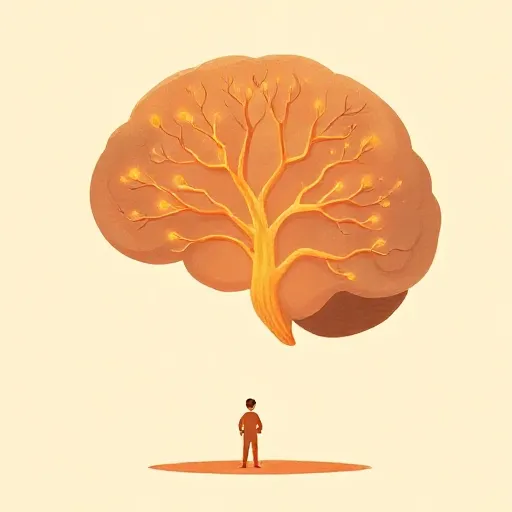
While Lewis was building his social convention, Noam Chomsky was pushing in a completely different direction. For him, the only scientifically respectable notion of a language is an I-language—the “I” stands for internal, individual, and intensional (a technical term for a function, not a list). An I-language is not a public object at all; it’s a state of your brain.
Chomsky’s starting point is the poverty of the stimulus. Think about it: you learned your first language as a tiny child, but nobody ever sat you down and taught you all the rules. What you heard from adults was messy—full of false starts, mumbling, incomplete sentences. Yet somehow, by the age of five or six, you had internalized an incredibly complex system that lets you produce and understand sentences you’ve never heard before. The information in the environment, Chomsky argues, is far too poor to explain this feat. Your brain must have come equipped with a rich blueprint for grammar, what he calls Universal Grammar (UG). Language acquisition, then, is not so much learning a social code as it is your language faculty growing and settling into a mature state, like an organ developing. That mature state is your I-language.
From this perspective, E-languages (“E” for externalized)—things like “English” or “Swahili” as floating social objects—have no scientific role. They are fictions, or at best rough shorthand. What linguists really study is the I-language inside the heads of idealized speakers. Chomsky doesn’t deny that language is also a social product; he just thinks that when you investigate language as a natural phenomenon, the internal system is what carries the explanatory weight. E-languages, he says, are too vague, too prescriptive, and too mixed up with political borders to be objects of serious science.
This view has drawn fire. Some critics say that if an I-language is purely internal, it’s hard to see how it can be about anything outside the mind—words like “water” seem to refer to a real liquid in the world, not just brain commands. Chomsky replies that referring is something people do, not words; the I-language merely provides “instructions” to other mental systems that handle perception and action. Others, especially psycholinguists, have pushed back on the poverty of stimulus claim itself.
How the Social World Fights Back

Over the last few decades, the field of psycholinguistics—the study of how we process and learn language—has challenged Chomsky’s internalism. Researchers have found that the language children hear from caregivers is far from chaotic. Adults speak to babies in shorter, clearer sentences, repeat words in helpful ways, and point to objects while naming them. This “social input” is richer and more structured than the poverty-of-stimulus argument assumes.
Studies show that children rely on general learning abilities—statistical pattern detection, intention reading, analogy—to extract grammar and vocabulary from this input. For example, babies can track which syllables are likely to follow each other in speech, simply by listening. Some researchers argue that these domain-general skills, combined with a rich social environment, can explain language acquisition without needing an innate Universal Grammar loaded with detailed rules. Syntax, they suggest, emerges from usage, not from a pre-installed brain module.
Does this disprove Chomsky? Not entirely, because the debate is alive and messy. Even if the input is richer, there’s still evidence that some abstract grammatical principles appear too early and too universally to be learned from scratch. But the psycholinguistic results do show that language is not just an isolated brain organ; it’s shaped powerfully by the social and physical world. The boundary between internal and external turns out to be blurrier than either extreme suggests.
So, Where Is Language? Why It Matters

This isn’t just a dusty academic squabble. The question of where language lives touches your life every single day. When you send a text, you’re relying on something—but is it a public rulebook that both you and your friend have memorized, or is it your separate brains improvising with enough overlap to get by? If Lewis is right, misunderstandings happen because someone broke a convention. If Davidson is right, understanding is always a creative leap, and the miracle is that it succeeds as often as it does. If Chomsky is right, the deepest parts of your linguistic ability come from a biological inheritance shared with every human on Earth, and the specific “language” you speak is a surface gloss.
The answer matters for practical reasons too. How we teach languages in schools, how we build AI that can chat naturally, how we support children with language disorders—all of these depend on whether we think language is primarily a social tool or a biological instinct. The debate remains open, and that’s exactly what makes the philosophy of language so alive. Next time you say “hello,” you’re stepping into a centuries-old mystery.
Think about it
- If a friend says a word in a way you’ve never heard it used before, do you think they made a mistake—or is the language just changing around you? How would you decide?
- If you were raised by wolves and never heard human speech, could you still invent a complete language on your own? What would be missing?
- When you speak a second language imperfectly, are you using “a language” in the same sense as when you speak your first? Where do you draw the line?