Are You Really in Control? Addiction, Forgetting, and the Blame Game
The Case of the Forgotten Bourbon
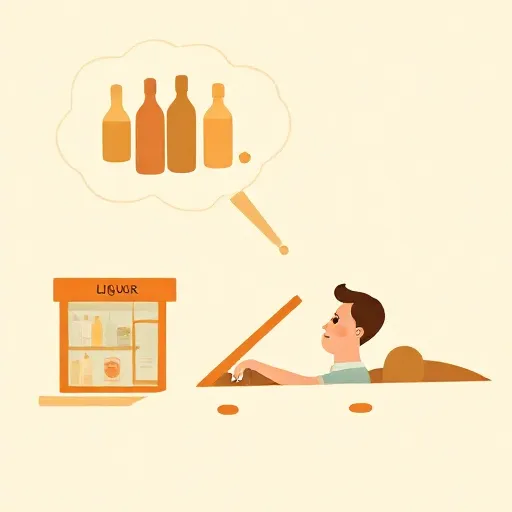
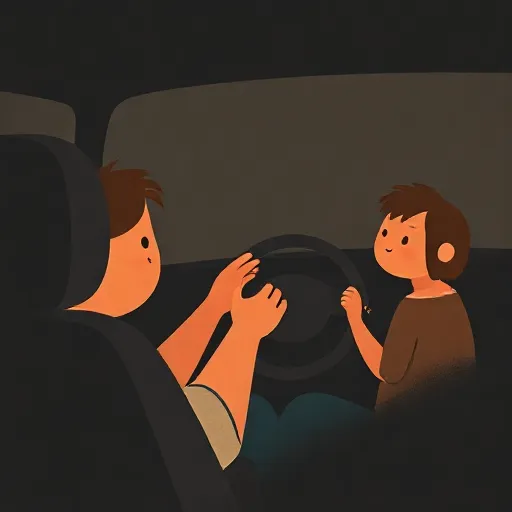
Randy promised his friend Al that he would buy bourbon on the way to work. He started driving, his mind drifting to a paper he was writing about omissions. When he arrived at the office, he realized he had forgotten the bourbon completely. Randy didn’t decide to blow off his promise. He simply never thought about it at the right moment.
Yet most of us would say Randy is morally responsible — he should apologize, Al might forgive him, and the whole thing feels like a real failure, not an unlucky accident. That’s puzzling. Moral responsibility usually requires two things: a control condition (you must have some kind of control over what you do) and an epistemic condition (you must know, or be in a position to know, relevant facts). It’s hard to see how Randy controlled his forgetting, or knew that he was forgetting while it happened.
Philosophers Samuel Murray and Manuel Vargas (21st-century thinkers) point out that Randy’s action lacks all the usual ingredients we look for when assigning blame: there’s no decision, no intention, no choice that he should buy bourbon and then didn’t. So how could he be responsible? To answer that, we need to peek inside the black box of spontaneous conduct — the split-second mental moves that make you forget, blurt something out, or miss what’s right in front of you.
Your Brain’s Hidden Scoreboard
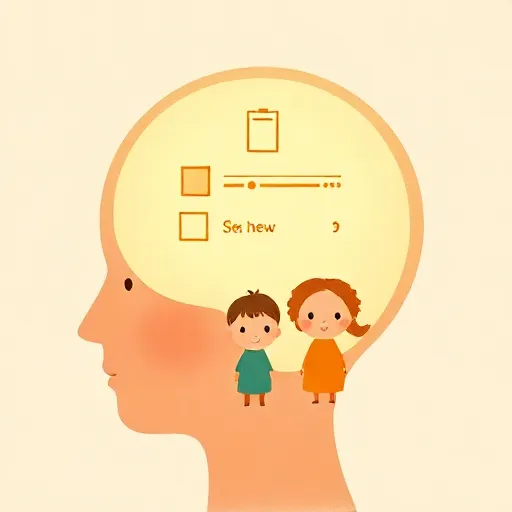
When Randy’s attention drifted from bourbon to omissions, his brain was doing something that cognitive scientists now understand quite well. According to what’s called the priority map model, the brain continuously assigns a value score to everything you could pay attention to — a thought about a paper, a memory of a promise, the sight of a liquor store, a buzzing phone. These scores are built by lightning-fast, subpersonal processes that work beneath your awareness. Then, at the person level, you choose to attend to whatever tops the scoreboard at that moment.
So Randy’s subpersonal system gave “thinking about omissions” a higher score than “getting bourbon” — entirely reasonable, since he was deeply interested in his paper. The trouble was that even as he passed the store, his scoreboard didn’t update. His attention stayed locked on the paper, and he drove on. He didn’t rebel against his promise; his brain’s autopilot simply never put bourbon thoughts back in the winner’s circle.
Does that mean Randy is excused? Two rival positions have emerged. One, defended by Murray and Vargas, says that these priority‑map mechanisms are reasons‑responsive: they usually flex to match what really matters to you, even though they glitch sometimes. Because they confer a kind of background control, Randy is on the hook for the slip. Another position points out that priority maps can be inaccurate. If Randy’s internal map wrongly gave bourbon a low score when a higher score would have served his actual goals, then he acted in ignorance — not of the facts, exactly, but of what his own aims really demanded at that second. If that ignorance wasn’t his fault, he might not satisfy the epistemic condition and could be off the hook. This second view revises our gut feeling: maybe Randy isn’t as blameworthy as he first seemed.
The Unwilling Addict: Irresistible Desires?
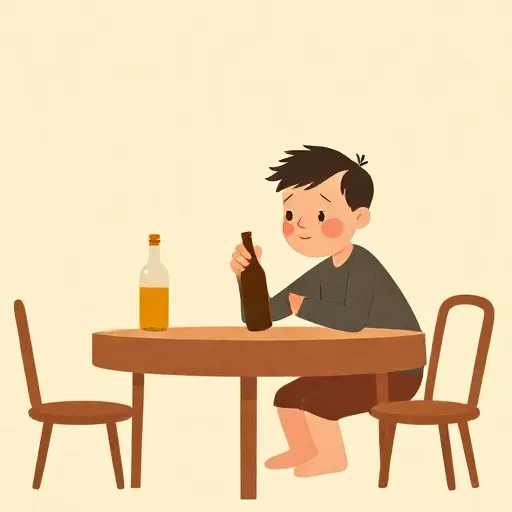
Forgetfulness is a small crack in the idea of perfect control. Addiction looks like a much bigger one. For decades, philosophers have treated addiction as the ultimate example of impaired control. Harry Frankfurt (1929–2023) gave us the haunting figure of the unwilling addict:
“[The man] hates his addiction and always struggles desperately, although to no avail, against its thrust. He tries everything that he thinks might enable him to overcome his desires for the drug. But these desires are too powerful for him to withstand, and invariably, in the end, they conquer him.”
In this picture, addictive desires are literally irresistible — no matter how hard you try, you cannot stop. William James (1842–1910) and many others endorsed this view. But is it accurate? The philosopher Hanna Pickard (b. 1972) has argued convincingly that the answer is no. People with addictions show strong incentive sensitivity: they routinely avoid using drugs when police are “at their elbow,” they can quit for days or weeks, and they will even choose a small reward over a drug if the reward is immediate. If the desire were truly irresistible, none of that would be possible.
Some theorists retreat to a weaker claim: addictive desires aren’t irresistible, but they are exceptionally hard to resist. Yet this runs into trouble too. If “hard” just means effortful (like cleaning a messy diaper or grading bad papers), that doesn’t seem enough to say someone has impaired control — we don’t normally excuse someone for skipping a chore just because it’s unpleasant. Moreover, actual surveys find that people rarely rate their drug cravings anywhere near the maximum on the scale.
A more promising account comes from cognitive science: perhaps addiction doesn’t impair control over desires directly, but over the evaluations that feed those desires. According to this model, many addicted individuals develop distorted automatic impressions — a kind of mental trick where their brain inaccurately “sees” themselves as helpless, the future as hopeless, and relief from drugs as huge. These distortions are hard to recognize and correct, making it difficult to break the loop. On this view, impaired control hides in the faulty raw material your brain serves up, not in a super‑powerful craving.
At the same time, a minority of thinkers insist that addiction involves no real control impairment at all — that people who use drugs are making free, rational choices we merely disagree with. Yet that claim is hard to square with the repeated cycle of quit‑and‑relapse, or the fact that many addicts willingly join costly treatment programs just to stay sober. The empirical cards are still being dealt. Until the science settles, the question of whether someone in the grip of addiction deserves blame remains genuinely open.
Growing Up Blind: Culture, Bad Beliefs, and Blame
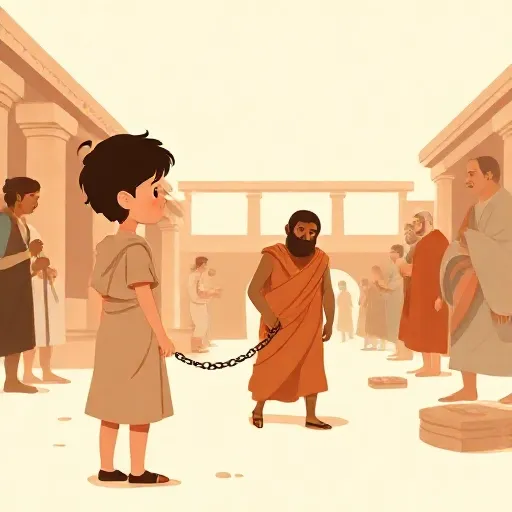
Control isn’t only about moment‑by‑moment actions; it also depends on what you know. And sometimes entire societies leave their members ignorant of important moral truths. The philosopher Michael Slote (b. 1942) asked whether ancient Greek slave owners could be blamed for owning slaves. He thought not: slavery was so universal in their world that they lacked the ability to see a genuine alternative. They were, in his words, trapped by “cultural limitations.”
Michelle Moody‑Adams (b. 1956) pushed back sharply. She pointed to the “banality of evil” — the dark truth, revealed by Stanley Milgram (1933–1984) and others, that ordinary people will inflict great harm when social incentives push them that way. She also argued that people often engage in affected ignorance, a crafty form of self‑deception in which we avoid looking too hard at uncomfortable truths. On her view, slave owners weren’t incapable of knowing better; they made choices that kept them comfortably unaware.
Neil Levy (b. 1967) offered a different, more exculpatory story for a modern version of the puzzle: why do people in certain communities stubbornly hold “bad beliefs,” like denying climate science or refusing vaccination? Levy notes that evaluating complex evidence is far beyond what any normal person can do alone. So we rationally rely on epistemic deference — we trust the views of those around us. Because your neighbor’s belief is, statistically, a decent guide to the truth, forming beliefs that way isn’t a glitch; it’s a smart shortcut. If your community is in an unlucky epistemic environment filled with misinformation, your ignorance may not be your fault at all.
Yet there’s a counter‑punch. Some evidence suggests that people often adopt weird views as cultural badges — a way to show group membership, not because they genuinely believe them. If that’s right, then what looks like ignorance might actually be loyalty‑based expression, and that wouldn’t shield you from moral responsibility. The takeaway is that no single story works for all cases. Figuring out whether someone is culpably ignorant — whether the kid who grows up with bad ideas deserves blame — requires digging into the messy details of how exactly their mind came to hold those ideas. Armchair hunches won’t do.
What If Robots Could Be Blamed? AI and the Future of Responsibility
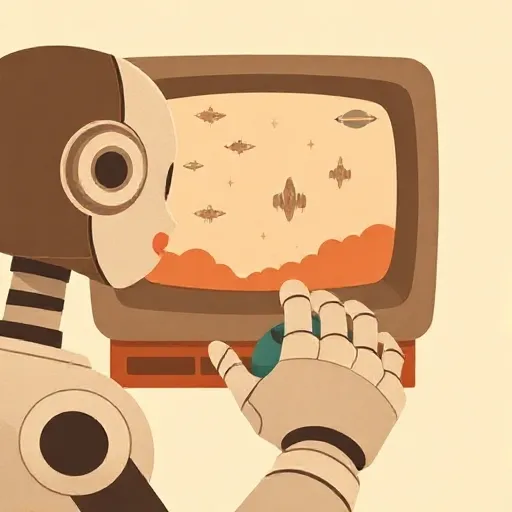
So far we’ve looked at human agents. But the world of agents is expanding. Artificial intelligence researchers often use the agent model: imagine a system that observes a state, has goals that assign value to different states, and learns to pick actions that maximize long‑term value. This simple setup has produced machines that beat world champions at chess, Go, and video games.
On the face of it, such an artificial agent seems to meet the control condition — it flexibly adjusts to circumstances — and the epistemic condition — it “knows” which moves lead to its goal. Yet nobody seriously thinks an Atari‑playing program deserves praise for saving Earth in Space Invaders. Several gaps leap out.
First, lacking temporally extended projects: the Atari bot chases a single, narrow goal. Humans care about things that unfold over decades — friendships, careers, personal growth — and those richer cares may be needed for genuine responsibility. Second, no moral sense: the bot has no concept of fairness, cruelty, or virtue, so it can’t be responsive to moral reasons. Third, consciousness might be indispensable. When you sleepwalk, you aren’t considered responsible; one theory is that consciousness broadcasts information widely across your mind, letting you react to a huge range of reasons. Without that, the bot’s behavior may be too narrow. Finally, there is a worry about ultimate control: the bot’s goals are pre‑installed by programmers. For true responsibility, an agent must be able to reflect on and revise its own aims, not just follow orders.
Some of these gaps may shrink. Researchers are already building machines that plan over long horizons and begin to reason about moral trade‑offs. Others may grow in the opposite direction — artificial systems might eventually share information even more widely than the human mind, with its cramped working memory. As the variety of agents multiplies, our theories of moral responsibility, built entirely around ordinary adult humans, will need to stretch. The friend who forgets a promise, the person wrestling addiction, the neighbor who sticks to strange beliefs, and the robot that learns to act — all force us to ask the same messy question: Who, exactly, is in charge?
Think about it
- If a friend forgets your birthday because they got absorbed in a new video game, are they to blame? What if, just before, they told you they might get distracted?
- Imagine you grow up in a town where everyone believes something you later discover is false and harmful. Should you be held responsible for harm you caused while holding that belief?
- If a self‑driving car causes an accident while following its programming perfectly, who, if anyone, is morally responsible — the car, the programmer, or no one at all?