Why This Doctor Said Kids Should Be Free—Even in School
A School Without a Teacher—Is That Possible?

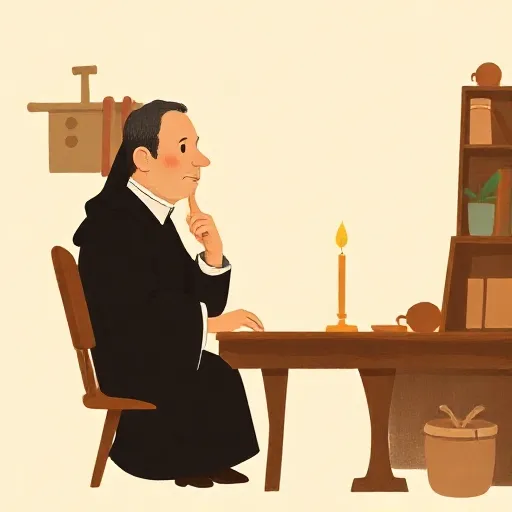
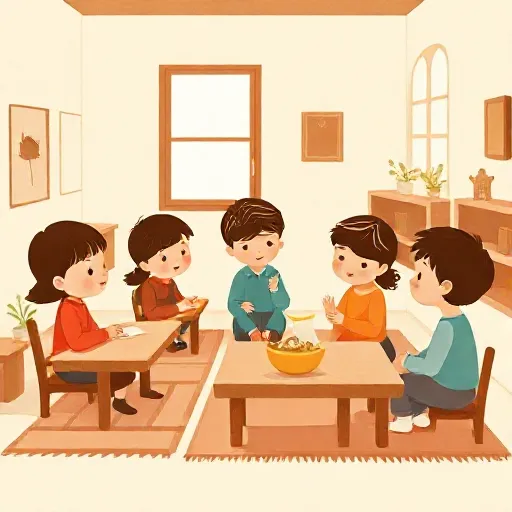
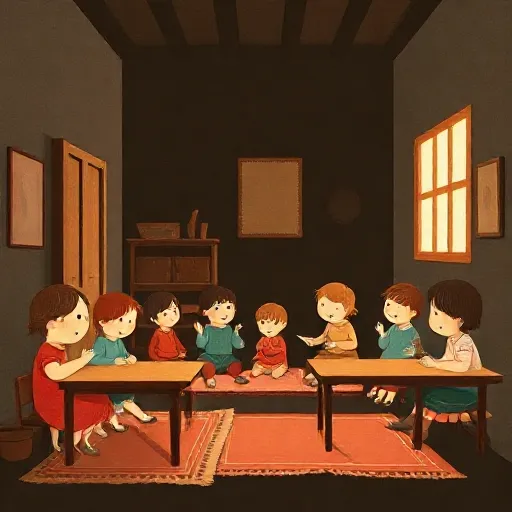
In 1907, in a slum in Rome, a doctor opened a school for poor children. The classroom had no desks and no teacher standing at the front. Children ages three to six chose their own tasks: polishing shoes, stacking blocks, tracing letters. Within months, visitors were stunned. Chaotic rooms had become places of deep concentration and calm. The doctor was Maria Montessori (1870–1952), and she was about to upend everything people thought they knew about learning.
Montessori did not start out wanting to be a teacher. She studied engineering, then became one of the first women in Italy to attend medical school. As a young doctor, she worked with children who had intellectual disabilities and saw something surprising. Their problems, she argued, were “more educational than medical.” If you gave children the right environment and let them follow their natural curiosity, they could flourish.
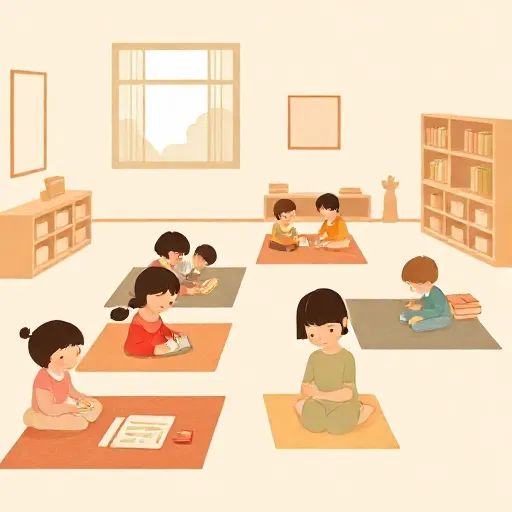
That insight became the core of her philosophy of education. She called her approach freedom within limits. Children must be free to choose their own work, she said, because “freedom is the basis of pedagogy… of human nature itself.” But freedom does not mean chaos. The adult’s job is to carefully prepare the classroom—what Montessori called the prepared environment—with child-sized furniture, real tools, and special materials that invite exploration. When children are free in such a space, they develop what she called normalization. That does not mean becoming the same; it means a psychological recovery where a child’s true personality can build itself normally.
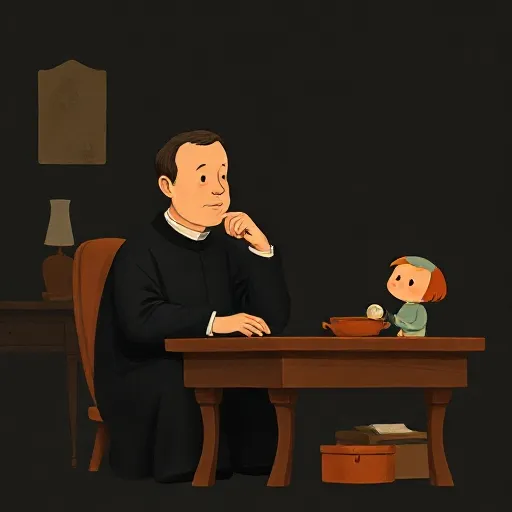
Montessori made a sharp observation: children have an innate drive to concentrate on self-chosen tasks. She called it a “vital instinct” for work. If you let them, they will work with deep focus, not because someone forced them, but because it satisfies a need inside them. That is why Montessori classrooms are calm but busy, with children moving independently and helping themselves to materials. The teacher does not lecture. She observes, gives short lessons on how to use a material, and then steps back.
The Secret of the Absorbent Mind
Montessori believed that children are not blank slates waiting to be filled. They are spiritual embryos—beings with an unconscious power that guides their development. She called this power horme, a word she borrowed from British psychologist Percy Nunn. Horme is like an unconscious will. A plant’s roots “choose” the right soil nutrients; an infant’s interests fix on features of the world that help it grow. Both are expressions of the same life force.
Closely tied to horme is mneme, a kind of unconscious memory. Every experience leaves a trace, and those traces build the mind. Montessori described the young child’s mind as an absorbent mind. From birth to around age six, children take in the surrounding world effortlessly, without needing to be taught. They learn language, manners, and the feel of their culture simply by living in it. This process is not passive. The child actively selects what it needs, driven by horme and shaped by mneme.
This is not just a psychological claim. Montessori held a vital teleology, the idea that every living thing has a built-in purpose. Life, she said, “creates rocks and soil and… sustains the harmony of the earth.” Every plant, animal, and even inanimate object has a cosmic task. She saw the universe as a great ecological web, where each part serves the whole. For humans, our task is to build ourselves and, eventually, contribute to a more peaceful, harmonious world.
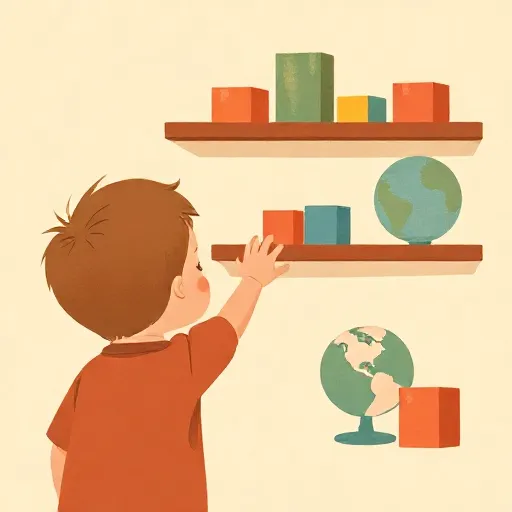
Her philosophy of mind also emphasized the body. Thinking is not trapped inside the brain; it happens through movement. “Mind and movement are part of the same entity,” she wrote. Children learn by doing: tracing sandpaper letters with their fingers, carrying heavy objects, balancing. This resonates with later ideas of embodied cognition, the view that our bodily actions shape how we think. Montessori arrived there a century ahead of time by watching children.
Learning with Your Hands: The Senses Come First

Montessori was an empiricist: she believed all knowledge starts with the senses. But she gave that old idea a twist. Her interested empiricism says perception is never passive. A child sees only what her inner drives select. You might stare at a cell under a microscope and see nothing unless you have trained your attention. So the senses themselves need exercise.
She developed materials for what she called “sensory gymnastics.” Children would match fabrics with their eyes closed, arrange cylinders by size, and sort color tablets from darkest to lightest. These activities not only sharpened the senses but built the foundation for later abstract thought. Concepts like “bigger” or “darker” grow out of careful, repeated encounters with the world.
Her approach also tackled a famous puzzle from philosopher David Hume. Hume wondered if you could imagine a missing shade of blue you had never seen. Montessori’s experience with children showed that even seeing subtle differences between shades is hard and requires practice. Most adults, she noted, struggle to distinguish close colors. So imagining a brand‑new one would be nearly impossible. Sensory training is a real intellectual skill.
Her epistemology also highlights what later philosophers call virtue epistemology—the study of intellectual excellences. For Montessori, good thinking requires virtues like patience, concentration, sensory acuity, and intellectual love. These are not just gifts you are born with; they are habits you build through free, focused work. A child who waits calmly while another finishes with a material is practicing respect for truth and for others’ quest for it.
Character, Respect, and the Work of Peace
Montessori’s moral philosophy begins with a striking claim: children have genuine agency, even before they can reason about their choices. Their horme directs them toward challenging, self‑chosen work, and that work builds character. Character, for Montessori, is not about following rules. It is the capacity to pursue a task with persistence, concentration, and a drive for improvement. She saw it as something like forging your own path toward excellence—an idea influenced by Nietzsche.
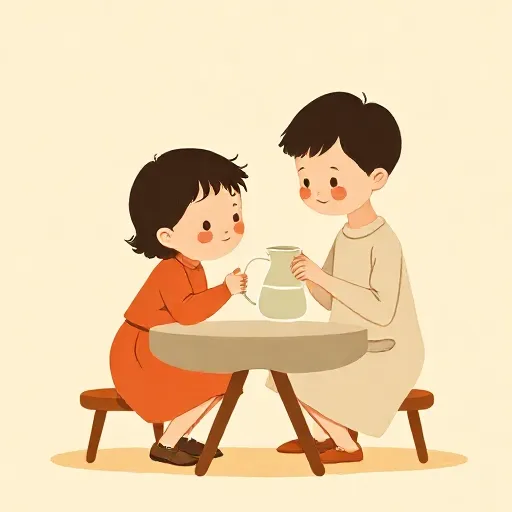
When children work freely in a prepared environment, two other moral values emerge. One is respect for the work of others. In a classroom with only one of each material, a child learns to wait, to watch without interrupting, to handle shared objects with care. This respect is not preached; it is lived every day. The other is social solidarity, a sense that the group is a “society by cohesion,” not just individuals side by side. Older children help younger ones; problems are solved together.
These ideas were the seeds of Montessori’s vision for world peace. She argued that “establishing peace is the work of education.” War, she thought, is not natural; it grows out of adults who were never allowed to develop normally. If children could grow up in environments that foster independence, concentration, and mutual respect, they would become adults who solve conflicts without violence. Peace would be woven into their character.
Her commitment to peace was not just theory. During and after World War I, she worked with refugees and imagined a “White Cross” that would care for children’s psychological wounds the way the Red Cross cares for their bodies. She drafted plans for a “Social Party of the Child” to give children a political voice. Long before it was common, Montessori insisted that children are not just future citizens; they are full human beings with rights right now.
The Doctor Who Fought for Women—and for Children
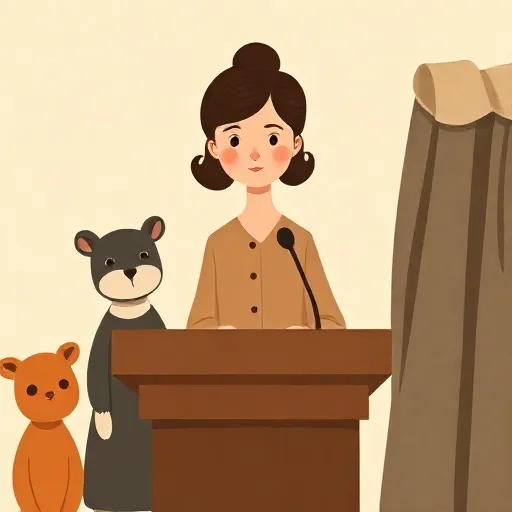
Montessori was a feminist long before she became an educator. She broke barriers for women in Italian schools and universities. She represented Italy at women’s congresses in Berlin and London, arguing for equal pay and against colonial oppression. Her feminism was “practical”—she believed women should prove their abilities by excelling in fields like medicine and science, not just by demanding rights.
At the same time, she championed what scholars call scientific feminism. She used anthropological research to challenge claims that women’s brains were naturally inferior. She also urged women to become scientifically literate, especially about their own bodies and motherhood. Knowledge, she thought, would give women power over their lives and protect their children from disease and abuse.
Some of her views sound troubling today. She spoke of improving “the human species” through maternal care, language that echoes eugenics. Yet even within that framework, her primary goal was to empower women, not control them. She condemned marriage as a patriarchal institution where “the wife is a slave.” And she saw her educational method as a way to free mothers: if children could be nourished in school, women could pursue work outside the home.
Most importantly, her feminism gave her a lens for seeing the oppression of children. Adults, she said, treat children with a patronizing love that hides a kind of dictatorship. The fight for women’s rights taught her that those who are weak in society need not just protection, but liberty. That conviction drove everything she did.
Why Montessori Still Matters
Montessori’s ideas were almost forgotten by mainstream philosophy. In the United States, John Dewey and his student William Heard Kilpatrick criticized her method. Kilpatrick called her materials too rigid and said she did not provide enough social cooperation. Dewey thought she feared raw experience and over‑controlled the environment. Over time, the Deweyan model of open‑ended exploration won in American schools. Montessori was pushed to the margins.
Yet her influence never died. Thousands of Montessori schools exist across the globe. Major ideas she pioneered—child‑centered learning, sensitive periods, the importance of early sensory experience—have entered mainstream education. Angeline Lillard’s research shows that Montessori students often outperform others academically and socially. Philosophers are now rediscovering her contributions to theories of mind, virtue, and peace.
The question Montessori leaves us with is simple but radical: What if we trusted children more? What if schools were not places of competition and obedience, but laboratories where the next generation learns to concentrate, to cooperate, and to build a more peaceful world from the ground up? Those are not just questions for teachers. They are questions for anyone who was ever a child.
Think about it
- If you had to design a classroom where students teach themselves, what would you put in it and what would you keep out?
- Montessori believed that interrupting a deeply focused child is harmful. Do you agree? Can you think of a time when being left alone in your work helped you—or when it didn’t?
- She thought peace could grow out of how children learn. Is that realistic, or are politics and history too powerful for any classroom to change?