What Would You See If You’d Never Seen Before?
A Letter to John Locke

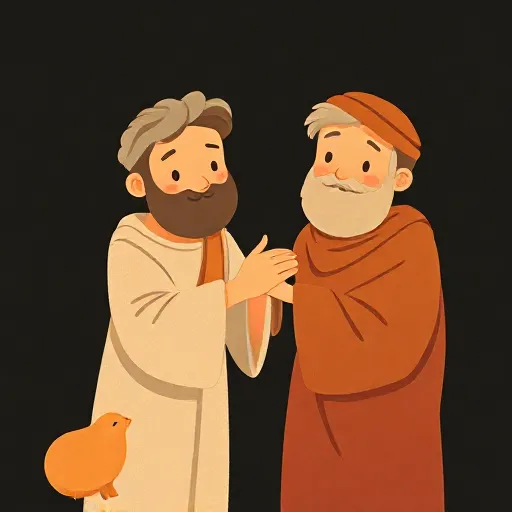
On 7 July 1688, a well‑off Irish lawyer named William Molyneux (1656–1698) sat down at his desk in Dublin and wrote a letter to England’s most famous philosopher, John Locke (1632–1704). Molyneux was no ordinary lawyer. He was fascinated by the science of optics — how light and lenses work — and by what happens inside the mind when we see. His interest had a deeply personal side: not long after their wedding, his wife had lost her sight.
The letter contained a thought experiment, a story that imagines a situation and asks what would happen, the way a scientist might build a model to test an idea. Molyneux asked Locke to picture a man who had been blind since birth and had learned, by touch alone, to tell a cube from a sphere. Suppose this man suddenly gained his sight. If the cube and the sphere were placed on a table in front of him, could he say which was which just by looking — without reaching out to touch them?
Locke was delighted by the question. He included it in the next edition of his famous Essay Concerning Human Understanding, and from then on Molyneux’s problem became a shared puzzle for philosophers all over Europe. The question sounds simple, but it opens a door to the deepest questions about how our senses build the world we know.
Two Camps: Experience or Reason?
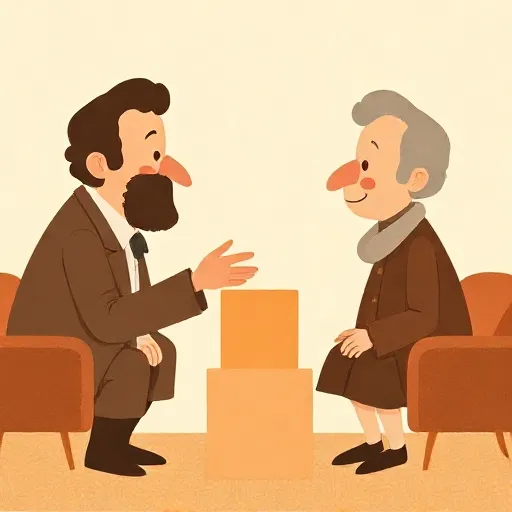
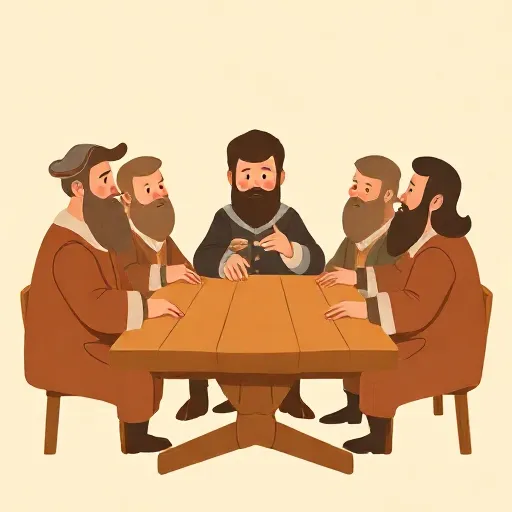
Once the problem hit the stage, thinkers quickly divided. Molyneux himself, Locke, and later the Irish bishop George Berkeley (1685–1753) all gave the same answer: no. They were empiricists — they believed that all our knowledge comes from sensory experience. Because the blind man had never received visual impressions of a cube or a sphere, his mind had no visual idea of those shapes. The sensations of touch (hard edges, smooth curves) are nothing like the sensations of sight (patterns of light and shadow). You have to learn, through repeated experience, that what looks like a cube is the same thing that feels like a cube. Until that learning happens, looking alone is useless.
On the other side stood philosophers who answered yes. Some, like the Irish clergymen William Lee (1621–1683) and John Synge (1667–1742), thought that certain ideas of shape are built into the mind from the start. If touch feeds the mind one version of “cube” and sight feeds it another, reason can sort out that they belong to the same object. The German polymath Gottfried Wilhelm Leibniz (1646–1716) argued that even though the visual and tactile sensations are different, they share a deep, mathematical notion of form — a kind of geometric footprint. With enough time to think and walk around the object, the newly sighted man could use reason to figure out the match. This camp was called rationalist: they held that reason, not just experience, can unlock truths about the world.
So the battle lines were drawn: could the senses be bridged only by experience, or does the mind have its own secret wiring that makes the connection possible?
The Boy Who Saw for the First Time
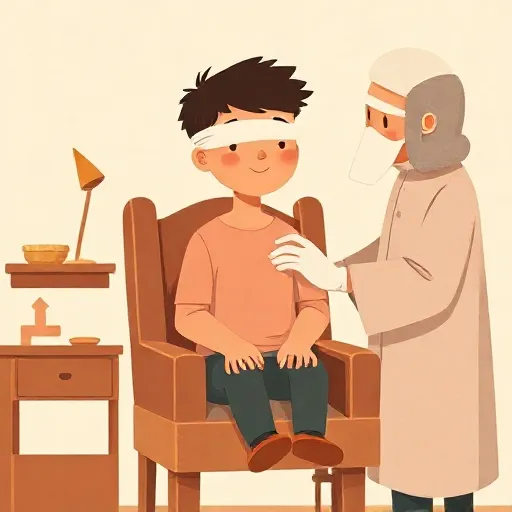
For decades the debate stayed entirely in the territory of armchair thinking. Then, in 1728, the English surgeon William Cheselden (1688–1752) published an account of a real patient. The boy, recently identified as Daniel Dolins, had been blind since birth because of cataracts. When his cataracts were removed, he could see for the first time.
Cheselden recorded something striking: at first, the boy could not recognize any shapes by sight. He could not tell which of his pets was the cat and which was the dog just by looking, even though he knew them perfectly by touch. Everything seemed to be a flat wash of colour with no clear boundaries. Many empiricist‑leaning thinkers — the French writer Voltaire (1694–1778) among them — celebrated this as proof. It looked exactly like what Berkeley had predicted: seeing really does have to be learned.
But not everyone was convinced. The physician Julien Offray de La Mettrie (1709–1751) and the philosopher Denis Diderot (1713–1784) pointed out serious problems. Maybe the boy’s eyes were still too raw or swollen after the operation to see clearly. Maybe the surgeon asked leading questions that confused the child. Maybe the boy’s intelligence played a role. Some suggested you would need to let the patient rest first, exercise his eyes in a dark room, and ask careful, neutral questions. The debate was still wide open.
Do Newborn Animals Already See in 3‑D?
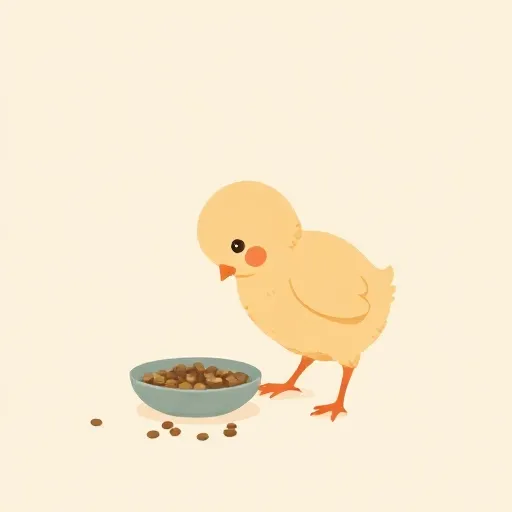
In the 1800s, researchers looked beyond human cataract patients. They noticed that many newborn animals, like chicks and calves, can see and judge distance almost immediately. A chick pecks a grain of corn accurately within hours of hatching. If seeing objects and space had to be slowly stitched together from touch, these animals would stumble around blindly at first. To some scientists, this pointed toward a built‑in, rationalist‑style ability.
Around the same time, the inventor Charles Wheatstone (1802–1875) showed that depth perception — seeing the world in 3D — is immediate. It wasn’t a slow lesson learned by touching objects and then recalling them; the brain seemed to be wired to extract solidity straight from the two slightly different views our two eyes receive. That finding made Berkeley’s theory look weaker.
Yet other observers studied human babies and insisted that infants do have to learn to see. They pointed out that babies reach for things and miss, and their visual attention slowly becomes coordinated. The animal evidence was messy, because different species are born with different levels of readiness. By the end of the century, philosophers still had no single, firm answer.
Modern Labs Pick Up the Puzzle
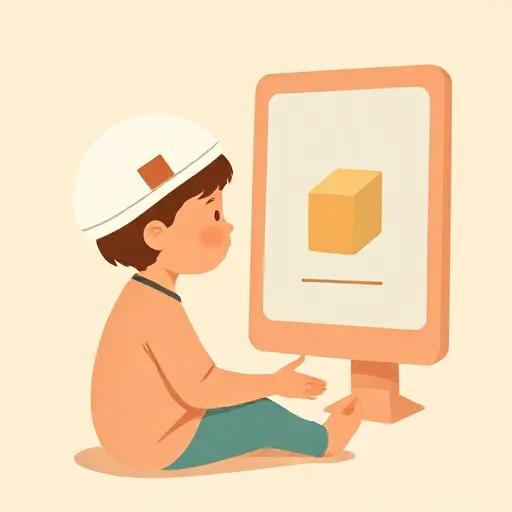
Today, the tools are fancier, but the core challenge remains. One clever approach uses sensory substitution devices — machines that turn visual information into sounds or vibrations a blind person can feel on their tongue or back. A person learning to use such a device is a bit like Molyneux’s imaginary man: they have to learn to “see” with a completely new channel. These experiments show it takes time and practice to recognize objects, which echoes the empiricist side.
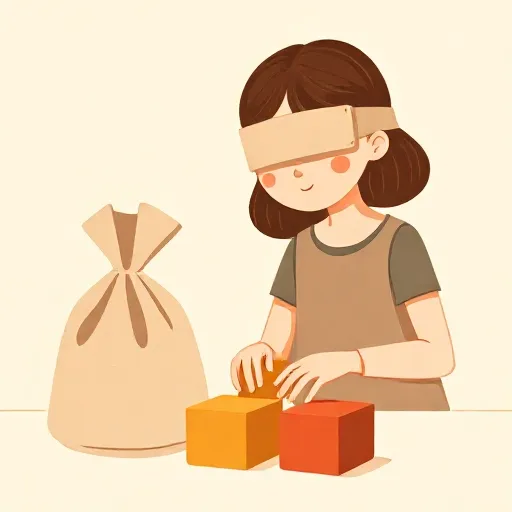
In 2011, the neuroscientist Pawan Sinha finally got a chance to test the question more directly. In a program in India, he treated five children and teenagers aged 8 to 17 who had been totally blind from birth due to cataracts. Immediately after their surgeries, the subjects could visually tell apart objects about as well as they could by touch alone. But when scientists asked them to feel a shape while blindfolded and then pick the same shape from two choices shown on a screen, they performed barely better than guessing. The connection between touch and sight simply wasn’t there.
And yet, it emerged staggeringly fast — within just a few days of normal life, the subjects’ cross‑modal mappings, the links between what one sense reports and what another sense reports, grew rapidly. So the most honest scientific answer right now appears to be: no, at the very first moment you can’t make the match, but your brain is astonishingly quick at building the bridge once both senses are working together.
Why a 300‑Year‑Old Puzzle Still Matters
You were once a baby who had to figure out the world from scratch. A rattle felt a certain way in your fist, and at the same time it looked a certain way across the room. Somehow your brain wired those two streams together so tightly that today you simply see a book, a ball, or a banana and instantly know how it would feel in your hands. Molyneux’s problem asks what that wiring took: is it a gift you were born with, or a project you built from raw sensory material?
The question still matters because it sits at the crossroads of philosophy, neuroscience, and technology. How we answer it shapes how we design tools for blind people, how we understand learning, and even how we think about the mind of a newborn. Some philosophers now treat the problem not as one single question but as a family of smaller puzzles about different kinds of shape information and different ways of using memory and attention.
Molyneux’s thought experiment has lived this long because it doesn’t just belong to the 17th century. It belongs to anyone who has ever opened their eyes and trusted the world that appeared — and then wondered, for just a moment, whether it would look the same if they had felt it first.
Think about it
- If you were born blind and suddenly saw, do you think you would immediately know a football from a tennis ball? Why or why not?
- Suppose a new device let you sense the shape of objects through gentle vibrations on your back. Would learning to use it feel more like learning a brand‑new language, or like remembering something you always knew?
- If the brain needs experience to link sight and touch, what might that tell us about the idea that we are born with certain knowledge?