Can You Really Be Modest If You Know It? The Puzzle of Self-Awareness
Mirror, Mirror, on the Wall — Why Can’t You See Your Own Modesty?
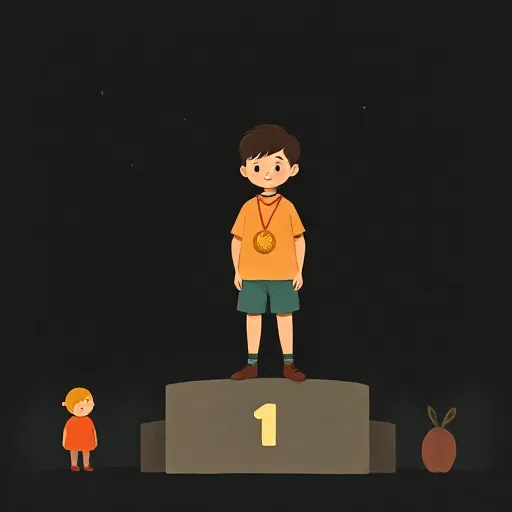
You just won the big race. The whole school cheers. Later a friend slaps your back and says, “You’re the fastest!” You shrug and say, “It was just luck. Anyone could have done it.” Later that night, lying in bed, a quiet thought creeps in: I was pretty modest just now. But the moment you think that, something feels off. It’s as if the very act of noticing your own modesty took it away.
This strange twist has fascinated philosophers for decades. Modesty and humility (most philosophers treat these as two names for the same basic trait) seem to work like a camera that can take a picture of everything — except itself. The philosopher Roy Sorensen calls this an ethical blindspot: if you have it, you won’t know it; and if you think you know you have it, you probably don’t. He pointed out that saying “I am modest” is one of the most immodest things you can say. Bernard Williams (1929–2003) put it this way: a modest person doesn’t act while thinking “I am being modest right now,” in the way a fair person might think “I am being fair right now.”
A Virtue That Hides From Itself

Philosophers call modesty a dependent virtue. That simply means you’re modest about something else that is good — your success, your intelligence, your skill at drawing. You wouldn’t be modest about nothing; there has to be some real good quality there, at least in the eyes of most people. If you had no talent at all, you wouldn’t be modest about it, just honest.
Because modesty can be faked, it can’t be only about what you say or do. Someone who brags but then loudly pretends to be humble is performing false modesty. A real account of modesty must include what’s going on inside your mind — your beliefs, your attention, or your emotions. That’s why philosophers look for the hidden engine under the hood.
Is Modesty Even a Good Thing?
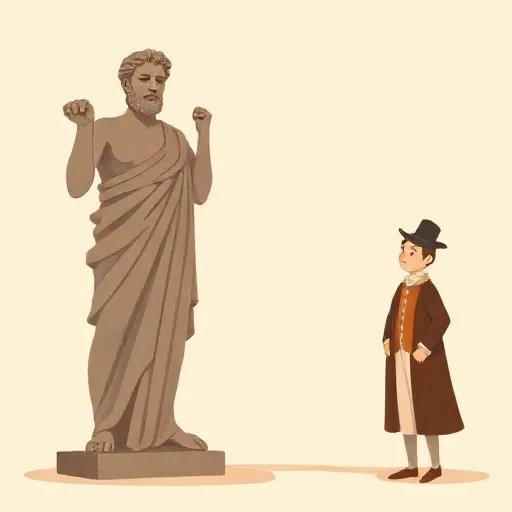
You might assume everyone agrees modesty is a virtue. After all, parents and teachers praise it. But some of the sharpest thinkers in history weren’t so sure. Aristotle (384–322 BCE) thought a truly virtuous person should know exactly how good they are — and shouldn’t pretend otherwise. He described the ideal “great-souled” person who deserves honors and isn’t afraid to claim them. In that picture, hiding your own excellence looks less like virtue and more like a mistake.
David Hume (1711–1776) had his doubts too. He called modesty a “monkish virtue” — one of those traits, like fasting or silence, that parade as religious virtues but actually make life gloomier rather than better. Yet even Hume softened when he considered how modesty can keep conversations from turning into endless competitions and can help young people stay open to learning. The debate was never really settled.
Still, most philosophers today do see modesty as a genuine moral good. The real question is why. Is it because it makes social life smoother? Because it expresses a kind of respect for the equal worth of every person? Or because it requires something about your inner state that is valuable in itself? To answer that, thinkers have had to stare straight into the blindspot.
The Big Debate: Should You Underestimate Yourself?
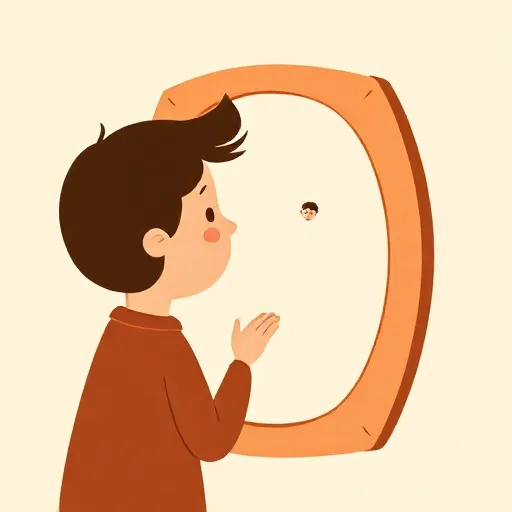
The modern conversation took off with a bold idea from the contemporary philosopher Julia Driver. She put forward an ignorance account of modesty. For Driver, a modest person is someone who doesn’t fully know how good they really are — or at least underestimates their good qualities. The modest person wrongly believes they’re not as excellent as they truly are, or simply never forms a clear belief about it. Driver points out that this can explain a lot. It explains why modesty is a dependent virtue (there’s a real goodness you’re missing). It explains why false modesty is possible (you can’t fake ignorance unless you actually know the truth). And it explains the blindspot: if modesty itself is a good quality, then the truly modest person is, by definition, ignorant of that too.
But many philosophers winced at this idea. Can a moral virtue really require you to be wrong about yourself? That seems to put a wall between being good and knowing the truth. So a family of accuracy accounts sprang up in response. These views say modesty is not about having false beliefs; it’s about getting something right.
Some accuracy theorists defend an egalitarian view: modesty is recognizing that everyone has the same basic moral worth, no matter how talented or successful they are. On this picture, a brilliant scientist and a neighbor who struggles with reading are equals as persons, and the modest person sees this clearly. That means you can know exactly how good you are at math or music, but you never let those facts puff up into a sense that you are more valuable than anyone else. Other accuracy accounts are a bit gentler — they merely require that you don’t overestimate yourself. Ideally you’d be accurate, but as long as you aren’t inflating your abilities, modesty can still exist alongside some self-ignorance.
Looking Elsewhere: Theories That Don’t Focus on Beliefs
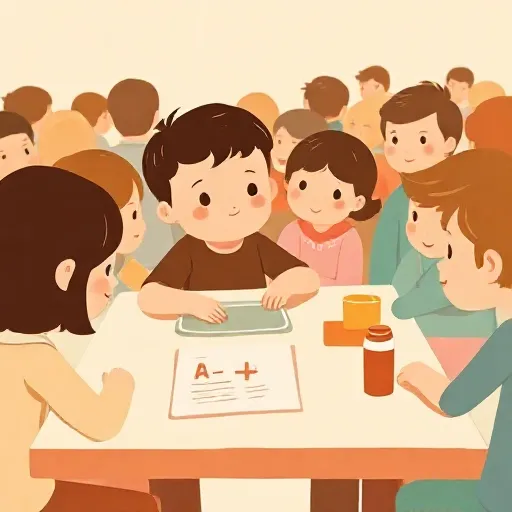
What if the whole fight about beliefs is missing the point? A different batch of thinkers, offering non-doxastic accounts (from the Greek doxa, meaning belief), argue that modesty is not fundamentally about what you believe at all. It’s about something else — your attention, your emotions, or how you treat others.
One recent version is the attention account, defended by philosopher Nicolas Bommarito. A modest person, he argues, is simply not very interested in thinking about their own good qualities. They don’t forget that they’re a great violinist or a fast runner; they just don’t dwell on it. When they do think about their success, they tend to focus on outside factors — the teacher who stayed late, the lucky weather, the team that made it possible. It’s not that they don’t know; it’s that their mind is pointed elsewhere.
Other philosophers root modesty in a kind of emotional indifference. On this view, the modest person simply doesn’t care very much about praise, high rankings, or being seen as better than others. You might know you’re good and still feel no impulse to compare yourself. An asymmetry account goes a step further: it says the rules for how you talk about yourself are just different from the rules for how you talk about other people. Saying “She deserves a standing ovation” is fine; saying “I deserve a standing ovation” feels jarring. Modesty, on this view, is your internal understanding of that special self-other gap.
These accounts don’t always disagree with one another — in ordinary life, your beliefs, attention, and emotions are all tangled together. But they shift the spotlight away from “what must you believe?” toward “what do you care about, and where do you look?”
Why This Puzzle Still Matters Right Now
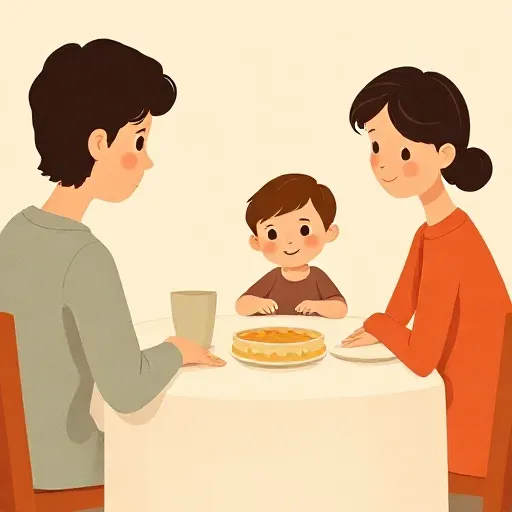
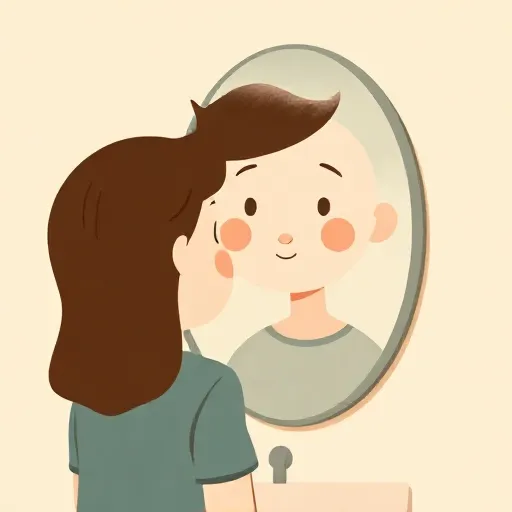
The puzzle of modesty isn’t just a game for philosophers. It sneaks into your life every time you do something worth noticing. You want to feel good about a hard-won achievement, but you also don’t want to become the person who is always polishing their own trophy. And if you start constantly checking yourself — Am I being modest right now? Did I just ruin it by thinking that? — you end up staring at yourself in an exhausting loop. Modesty, like falling asleep, seems to flee the moment you try to watch it happen.
This connects to a deeper tension. We want to know ourselves honestly, and at the same time we want to be the kind of people who don’t need to keep the score. Driver’s radical idea that a little ignorance might be part of goodness is unsettling for anyone who loves truth. The accuracy accounts promise that you can have both full self-knowledge and full virtue — but they demand you truly feel that your talents don’t make you more important than anyone else, which may be even harder than being a little forgetful about your successes. And the attention and indifference accounts remind you that life is, after all, about paying attention to the right things.
So the next time you ace a test or score the winning goal, you’ll face the same puzzle philosophers have mapped out. You might try not to think about your modesty. You might remind yourself that everyone has equal worth. Or you might just direct your attention to your friends and let the whole question slide. Any of these paths carries a piece of the story — and none of them lets you fully see your own modesty without losing it.
Think about it
- If you become clearly aware that you are being modest, does that mean you’ve stopped being modest in that moment, or can the two coexist?
- Could a person who always genuinely underestimates their own talents still be a good person, or is there something wrong with living with a false picture of yourself?
- Is it possible to aim to be modest without defeating your aim — or does trying to become modest just turn into another kind of performance?