Why a Single Drop of Water Shakes Up All of Philosophy
A Scientist Stares at a Family Tree That Won’t Stay Still
It is the early 2000s. A philosopher of biology named John Dupré examines a stack of genetic data from common bacteria. He wants to draw a clean family tree, the kind you might make for lions, eagles, or even your own relatives. For animals, the rule seems simple: a species is a group of organisms that can breed only with one another. That idea is called the biological species concept (BSC), and it was defended for decades by influential thinkers like the evolutionary biologist Ernst Mayr (1904–2005). If two animals can’t produce fertile offspring together, they belong to different species.
But bacteria don’t care about rules. They don’t breed in pairs. They copy themselves, or they exchange genes directly with neighbors—sometimes with neighbours from entirely different lineages. They swap DNA like kids swapping stickers. The animal-based family tree, with its neat, forking branches, collapses into a tangled web when you include microbes. Dupré and many other philosophers began to ask: if a single concept of species can’t cover the whole diversity of life, maybe we need to change the concept itself.
That question opened a door. Through it, philosophers found themselves rethinking not just what a species is, but the shape of the entire tree of life, the nature of individuality, and how science uses tiny creatures as living models for everything—including human thought.
The Tangled Tree: When Branches Cross
For centuries, biologists imagined the tree of life as a single trunk splitting into major branches for plants, animals, fungi, and microbes. Each branch represented a separate lineage with a long, independent history. This picture got much sharper in the 1970s, when scientists began comparing the sequences of molecules like DNA and RNA across different organisms. They expected to find one solid, historical pattern of branching.
Instead, in the 1990s and 2000s, microbiologists made a startling discovery. Bacteria and Archaea—another large domain of single-celled life—regularly pass genes across lineages. This is called horizontal gene transfer. Imagine your cousin giving you the gene for green eyes, not from your parents but directly, like a gift. Now imagine that happening constantly for billions of years. The tree of life doesn’t look like an oak anymore. It looks more like a dense spiderweb, especially in its deepest, oldest roots.
Philosophers of science like W. Ford Doolittle and Marc Ereshefsky saw that this wasn’t just a technical problem for biologists. If the tree metaphor breaks down, what does it say about the way we categorize the living world? Some argue we should keep using the tree for parts of life where it still works, like for animals and plants. Others say we need a whole new kind of map—perhaps a ring, a network, or a series of Venn diagrams. The debate isn’t settled. But it forces anyone who thinks about evolution to pay attention to the smallest living things.
Living Test Tubes: Why Microbes Make Perfect Models
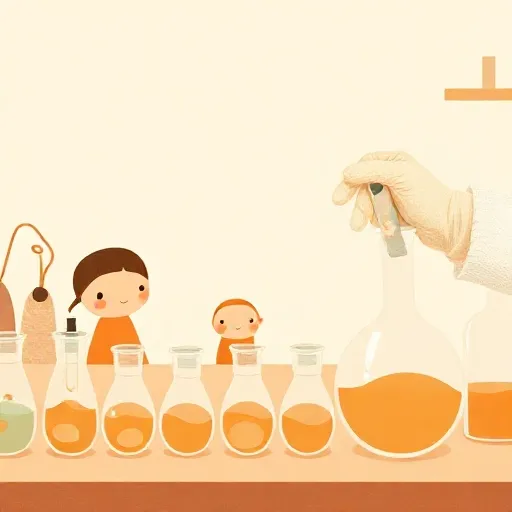
Philosophers love thought experiments: “Imagine a runaway trolley,” or “What if you could rewind time?” But a biologist named Richard Lenski built a thought experiment out of living, dividing cells. In 1988, he started twelve identical populations of the bacterium Escherichia coli (E. coli) in twelve separate flasks. The bacteria were fed the same limited resources, and a sample from each was moved to a fresh flask every 24 hours. More than thirty years later, the experiment continues. That’s over 75,000 generations—the equivalent of nearly two million human years.
Lenski’s long-term evolution experiment works almost like an algorithm. Because the populations can be frozen and revived, researchers have a “frozen fossil record.” They can go back to an earlier generation, unthaw a sample, and replay evolution from that point to see if the same outcomes repeat. This lets scientists study big questions: Does evolution follow predictable paths? How do complex new traits arise?
One famous result emerged around generation 31,500. One of the twelve populations suddenly gained the ability to feed on citrate, a chemical that E. coli normally can’t use in the presence of oxygen. By reviving frozen ancestors, the team reconstructed the precise sequence of mutations that built this new capacity—step by step. That kind of reconstruction is almost impossible in larger, slower-breeding animals.
Philosophers of science note that microbial models like this are uniquely tractable—easy to manipulate and close to pure mathematical equations. In the 1930s, the Russian biologist Georgii Gause used single-celled Paramecium to test the equations that describe predator-prey cycles. His work gave us the competitive exclusion principle: two species cannot live on exactly the same limiting resource. When the math and the microbes agree, our theories get stronger. When they clash, we learn where our assumptions fail.
Where Do You End and Your Microbes Begin?
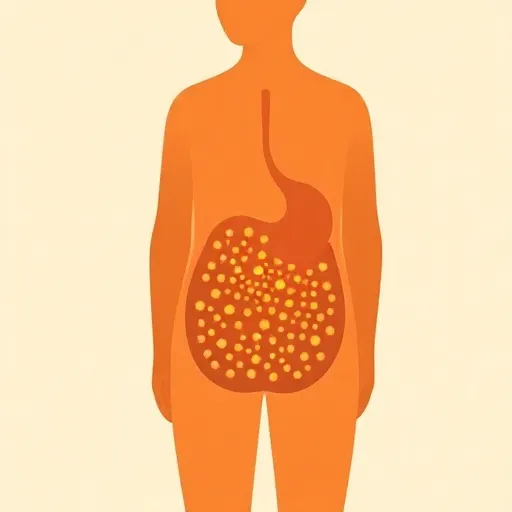
Every human body is an ecosystem. On your skin, in your mouth, and especially in your intestines live trillions of bacteria, archaea, and tiny eukaryotes—your microbiome. Most of these microbes are neither harmful nor helpful in a simple way; they are permanent passengers, kept in check by your immune system. But they communicate with your body chemically, and some research suggests they can influence your mood, appetite, and even brain development.
This raises a sharp philosophical question: are those microbes part of you, or are they separate living things riding along? Traditional mereology (the study of parts and wholes) can give abstract answers, but philosophers of biology have taken a more concrete path. They ask whether you and your microbiome evolve as one single unit of natural selection. If natural selection acts on the whole system—human plus microbes—then maybe your biological individuality includes them.
Some philosophers, like Derek Skillings, argue that such reasoning can stretch the concept of an individual too far. Others, like John Dupré and Maureen O’Malley, see it as a necessary rethink. The debate is lively and unresolved. What’s clear is that microbes push us to question old assumptions about the boundaries of the self—without any need for spooky thought experiments.
But the excitement can lead to exaggeration. Some headlines claim your microbes determine who you are or even control your mind. That goes beyond the evidence. Philosophers now work alongside scientists to clarify what causal claims about the microbiome actually mean. For instance, does the composition of gut bacteria cause depression, or merely correlate with it? Using philosophical frameworks about causality, such as interventionism (if I change the microbes, does the mental state change as a predictable result?), researchers are trying to pick apart correlation and causation. So far, the careful answer is: the microbiome matters, but it doesn’t erase the rest of your biology or your life history.
Rethinking Big Ideas Through Tiny Life
Why should a twelve-year-old philosopher care about bacteria? Because ignoring microbes can lead to badly biased ideas about life. For most of the twentieth century, philosophy of biology was zoocentric—focused on animals, especially humans and our close relatives. That bias made sense when scientists had limited tools for studying microbes, but it left out the vast majority of evolutionary history. For roughly two billion years, all life on Earth was microbial. The biologist Stephen Jay Gould (1941–2002) famously said we live in an “age of bacteria,” not an age of mammals. If philosophy wants to understand life, it has to include the tiny stuff.
Microbes also offer a special window into the practice of science. Because bacterial models are so simple and controllable, they sit midway between abstract mathematical equations and complex animal studies. That comparability has inspired philosophers to think about how modelling works: when is a flask of bacteria a reliable stand-in for a forest or an ocean? How far can we stretch the analogy from digital evolution simulations to real ecosystems? These are epistemological questions—about how we know what we know—and microbes help answer them.
Even questions about the mind have a microbial side. Unicellular organisms like slime moulds and E. coli show surprisingly complex behaviour: they remember past chemical conditions, make trade-off decisions, and anticipate regular changes in their environment. Philosophers debate whether this counts as minimal cognition. Nobody claims a bacterium has thoughts like yours. But studying how sensing and responding evolves without a brain might give us a clearer picture of what minds, at their most basic, really are.
The history of philosophy itself is partly built on microbial labour. Cyanobacteria began pumping oxygen into Earth’s atmosphere nearly three billion years ago. Without that chemistry, there would be no large animals, no complex brains, and no one around to wonder about the tree of life. In a very literal sense, every philosophical question rests on a foundation of single-celled activity.
Think about it
- If scientists found that your gut bacteria could predict every strong emotion you feel, would it be fair to say you don’t choose your moods at all?
- Should we keep using the word “species” even though it doesn’t fit most of the living world, or should we replace it with something more flexible?
- Imagine you could rewind the evolution of your own body a million times. Do you think something like a human would appear again, or would life take a completely different path? What does your answer say about the role of chance in who you are?