Should You Be Your Own Boss, No Matter What?
The Strange Man with the Big Forehead

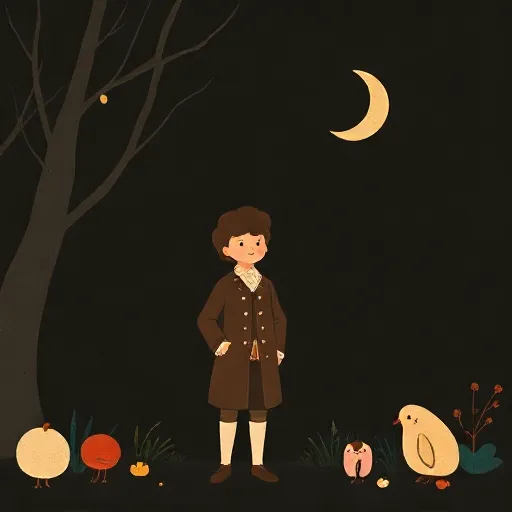
Max Stirner (1806–1856) started out as Johann Caspar Schmidt, an only child in the German town of Bayreuth. Schoolmates gave him the nickname “Stirner” because of his large forehead, made even more noticeable by the way he pushed back his hair. Later he took that joke‑name as his own, calling himself Max Stirner — a quiet man who would write one of the most explosive books in philosophy.
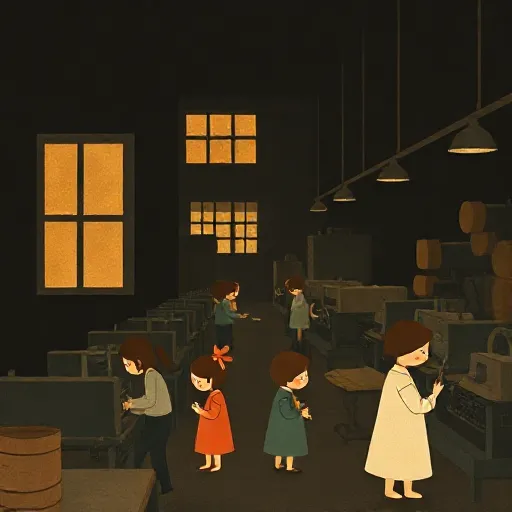
As a young man he studied at three universities and heard lectures by the famous G. W. F. Hegel on religion, history, and the mind. But Stirner’s own path stayed shaky: his mother became mentally ill, his first marriage ended in tragedy, and he drifted through irregular jobs. Eventually he landed a post at a respected girls’ school in Berlin, where he was known as a polite, reliable teacher of history and literature.
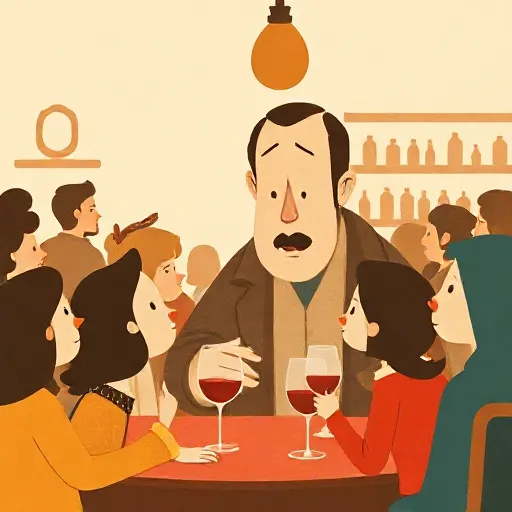
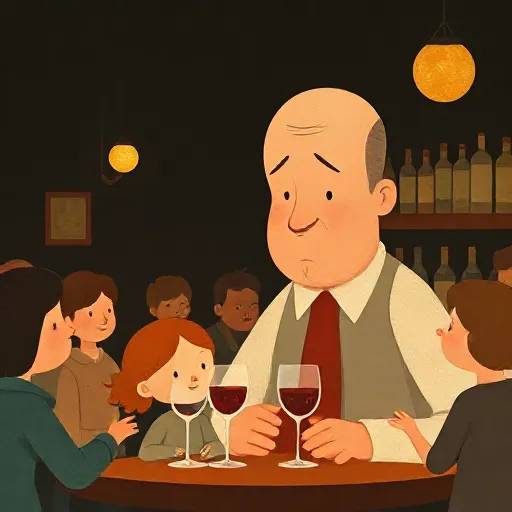
Off the clock, however, Stirner led a double life. Each afternoon he slipped into Café Stehely, and by 1841 he was a regular at Hippel’s wine bar, the noisy home of “the free” — a group of rebellious teachers, students, and journalists led by the radical thinker Bruno Bauer. In that bohemian circle, Stirner, though mild‑mannered, became feared for his fierce arguments against religion and his refusal to soften his ideas. There he began work on a book that would stun even his unconventional friends.
A Book That Mocks All Books

The result, The Ego and Its Own, appeared in 1844. From the first page, Stirner’s prose seems designed to unsettle. He didn’t build arguments step‑by‑step like most philosophers. Instead he made jokes with words, connecting terms like Eigentum (property) and Eigenheit (ownness) to suggest that owning things and owning yourself are deeply linked.
He believed language and reason were not sacred — they were human creations that had turned into cages. If you accept that words have fixed meanings handed down by authorities, you give up your own power to shape how you think. So Stirner wrote in an aggressively personal style, twisting words to prove that the only real limit is what serves your ends.
The whole book is built like a parody of Hegel’s grand historical schemes. Stirner tells a story in three stages. First realism: children are controlled by material forces like parents. Then idealism: youths discover their own minds, but become slave to conscience and reason — internal cops. Finally egoism: the adult escapes both outer and inner masters, valuing personal satisfaction above everything. He then stretches this same pattern over human history: the ancient world (realism), the Christian‑modern world (idealism), and a coming future of egoism. The book’s first half attacks the past; the second half paints a shocking picture of what could come next.
The New Boss: “Humanity” Is Just Another Tyrant

Stirner’s main target was not ordinary religion but what he saw as a deeper problem: the human habit of putting any spirit — any idea, ideal, or essence — above the individual. He thought the Protestant Reformation had actually made things worse. Instead of freeing people from religious control, it extended it: priests could now marry, but marriage itself became a holy duty; faith moved inside the heart, creating a never‑ending war between natural desires and religious guilt. Stirner compared that internal battle to a secret police force patrolling your mind.
His biggest fire, however, was aimed at his own radical friends, especially a philosopher named Ludwig Feuerbach (1804–1872). Feuerbach had become a hero to progressives by arguing that God is just a projection of human qualities — love, wisdom, justice — thrown into the sky. Once we realize that, he said, we can bring those qualities back to earth and build a society based on love for our fellow humans. Feuerbach even insisted he wasn’t an atheist; he just wanted to save the content of religion from its otherworldly shape.
Stirner replied: you have only changed the label. Religion, properly understood, is any system that puts an essence over me — something that tells me what I ought to be. Fire God and hire “Man with a capital M,” as Stirner put it, and you still have a master. Feuerbach took the divine king from his throne, but left the crown hovering above every human head. And this new master is worse, Stirner thought, because it reaches everyone — believers and unbelievers alike — and its voice, your own conscience, is harder to escape than a distant god. It’s a “change of masters,” not liberation. The same trap, he insisted, caught all the other left‑Hegelians: the ones who defined human nature as citizenship, or labor, or critical activity. Each replaced an old idol with a new one, still demanding you bow.
Owning Yourself: The Egoist’s Rule

So what is real freedom? Stirner’s answer is egoism, but it’s not what you might think. He didn’t mean greedily chasing money. A miser who sacrifices everything for gold, he wrote, is still a slave — enslaved to one narrow desire. Nor was he claiming that everyone secretly does act selfishly all the time. He gave the example of a young woman who gives up her love out of duty to her family: if she truly feels herself bowing to a higher power, that’s not egoism, that’s piety.
Stirnerian egoism is ownness — a fierce kind of self‑rule. “I am my own only when I am master of myself,” he wrote, “instead of being mastered … by anything else.” This has two sides. Externally, it means no person, group, or state can have a rightful claim over you. Internally, you must not be dragged around by your own cravings; you need a kind of cool detachment so that even your desires don’t become new bosses.
Because of this, Stirner rejected morality as normally understood. Morality, he said, sets up obligations — fixed rules about how you must treat others — and that’s incompatible with ownness. But he wasn’t a nihilist who thinks nothing matters. He valued certain things enormously: courage, independence, the strength to say no. He praised the egoist who lies for her own sake, and he condemned the “weakness” of anyone who surrenders to pressure. His world has a hierarchy, just not one based on universal duties. Self‑rule sits alone at the top.
A World Without Promises or Prisons
The consequences are extreme. Stirner insists that the state is always a despot, whether it’s one ruler or a majority vote. Even if you freely agreed to a law yesterday, you cannot be bound by it today, because that would make a past decision your commander. “Own will and the state,” he wrote, “are powers in deadly hostility.” He didn’t think individuals have a duty to smash the state — you can dodge its demands case‑by‑case — but he predicted that as egoism spread, people’s disrespect would eventually “scuttle” the whole ship.
The same axe falls on promises. To be forced to keep your word just because you gave it is to let your own past control you. The egoist must be ready to break even her own word “in order to determine himself instead of being determined.” This isn’t lying for God or a higher cause — Stirner made fun of Martin Luther for that — but lying purely for yourself.
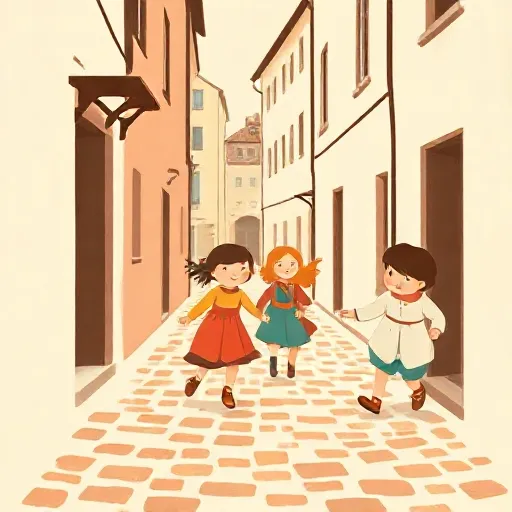
Does this mean a future of miserable isolation? Not quite. Stirner imagined a union of egoists, a purely instrumental club that exists only as long as it benefits each member. He pictured children who meet in the street, form a “comradeship of play,” and disband when the game ends. No shared flag, no loyalty, just mutual use. Love can even survive, he claimed — but only as long as it makes you happy. The moment it costs you your ownness, it must end. Some readers wonder whether what remains is really love at all.
And Stirner pushed further. He thought the egoist stands in a relation of ownership to everything — things, persons, the world — with no moral fences. Others are “nothing but — my food, even as I am fed upon and turned to use by you.” In the book he refused to condemn an officer’s widow who killed her child, a man who treated his sister as a wife, or a murderer who felt no guilt. The egoist, he wrote, does not give up “even the power over life and death.” When he imagined that his ideas might lead to “the bloodiest wars and the fall of many generations,” he said he would publish them anyway.
Why This Still Haunts Us
When Stirner died — alone, stung by an insect, almost unnoticed — his book had already gone out of print. Yet it came back. Karl Marx, then a young ally of the Berlin radicals, spent hundreds of pages in The German Ideology furiously trying to answer Stirner. That fight pushed Marx to rethink what communism owed to the individual, and to break decisively with Feuerbach. Later, Stirner became a founding voice of individualist anarchism, influencing activists from London to Boston who argued that no government, no matter how democratic, could be justified.
His challenge still works like an alarm clock. You’ve probably felt annoyed by a rule that seemed pointless, or a promise you regretted. Stirner isn’t here to comfort you; he’s the voice asking what would happen if you took that feeling all the way to the end. He doesn’t tell you whether to follow him — he thinks that would be just another master — but his book dares you to look in the mirror and decide what you owe to yourself and what you owe to others, without hiding behind “everyone says so.”
Think about it
- If everyone decided to break their promises whenever they felt like it, could friendships survive? What would you gain, and what would you lose?
- Stirner says a state is always a despot, even a democracy where the whole population votes. Do you agree? Why or why not?
- Imagine a world where nobody owes anyone anything. Would that world feel more free, or more lonely — and can you have one without the other?