Can Thinking Too Much Make You Unfree?
A Boy Who Couldn’t Look Away
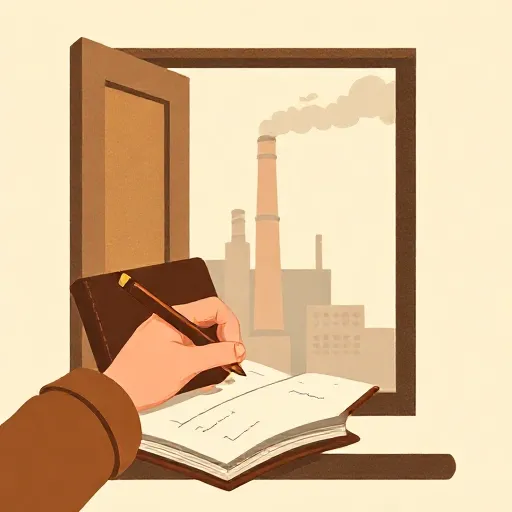
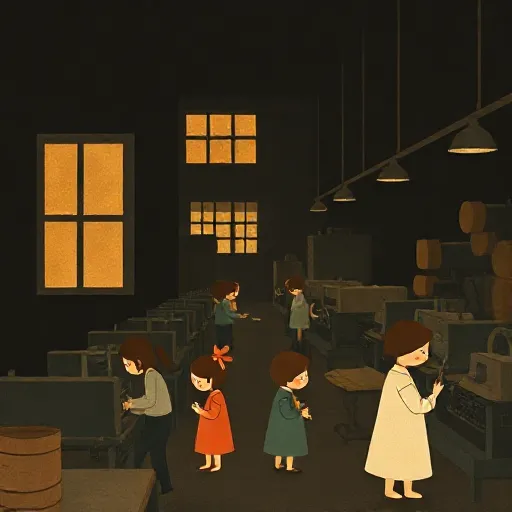
In 1910, fifteen-year-old Max Horkheimer (1895–1973) was pulled out of school to work in his father’s textile factories in Germany. But instead of becoming a businessman, he became haunted by what he saw: exhausted workers, their lives ground down by long hours. He started to write, filling notebooks with questions about suffering and happiness. When he finally escaped to university, he carried that ache with him. Horkheimer would go on to lead a whole movement of thinkers, but its starting point was always the same — real human pain is not something to explain away. It is where thinking must begin.
Philosophy Must Start with Real Pain

Many philosophers before Horkheimer had built grand systems, trying to explain the meaning of everything from a bird’s‑eye view. Horkheimer rejected this. He called his approach materialism, not because he cared about physical stuff, but because he insisted that thinking must be rooted in the material conditions of life — hunger, exhaustion, fear, and the longing for joy. He argued that the desire for happiness is a natural fact that needs no justification. You don’t need a complicated argument to know that being in pain is bad and wanting to be free of it is reasonable.
This meant taking a hammer to any philosophy that “transfigured” suffering — that painted over misery with talk of a higher purpose. For Horkheimer, the 19th‑century thinker G. W. F. Hegel was a prime example. Hegel described history as the unfolding of a cosmic Spirit, giving even terrible events a rational place. Horkheimer saw that as dangerous. If you convince people that their suffering is just part of some grand plan, they stop fighting to change it. Philosophy, he thought, should do the opposite: it should sharpen our awareness of pain so that we demand a better world.
The Super‑Team of Thinkers

In 1930 Horkheimer became the director of the Institute for Social Research in Frankfurt. He gathered a brilliant group, including his friend Theodor Adorno (1903–1969). They called their new style critical theory — a way of studying society that aimed not just to understand it, but to change it.
The plan was wildly ambitious. Horkheimer noticed that scientists had become chaotic specialists. A psychologist might study memory but ignore poverty; an economist might crunch numbers but forget about loneliness. Meanwhile, philosophers sat in armchairs spinning theories with no facts. Horkheimer wanted to smash those walls. He imagined a constant back‑and‑forth — what he called a “dialectical penetration” — between philosophical theory and hands‑on research. The goal was a complete picture of society that showed how economic structures, psychology, and culture were linked, and that picture would reveal where suffering came from so people could organize to fix it.
At first, his writing crackled with something like hope. He believed capitalists had created an irrational mess, a system where everyone scrambles for their own piece, yet the whole machine ends up harming almost everyone. He thought that if the oppressed could see this clearly, they might band together and build a rational, planned society that met people’s real needs. Notice the word: rational. In the early 1930s, Horkheimer still trusted that reason itself was a force for liberation.
Then the Nazis took over. Horkheimer and his colleagues had to flee Germany, first to Geneva, then to New York. In exile, forced to watch the world burn, his optimism about reason itself began to crack.
When Reason Becomes a Calculator
In the 1940s, Horkheimer started to write a much darker story. The problem, he now believed, was not just that society was irrational. The deeper trouble was that a certain kind of reason — the kind that asks only “does this work?” — had taken over all of life. He called it instrumental reason.
Imagine you have a hammer. It’s excellent for driving nails, useless for writing a poem. Instrumental reason is the mind treating everything as a nail. It cares about the most efficient way to get from A to B, but it never asks whether B is worth reaching. Horkheimer called this subjective reason because it only serves the individual’s survival and advantage. He contrasted it with objective reason — the old philosophical dream that we could know what a good life or a just world truly looks like, as ends in themselves. In the modern world, he argued, objective reason had been almost completely squashed. We became masters of means and idiots about ends.
Horkheimer and Adorno wrote a book together, Dialectic of Enlightenment, to show how this had happened. They claimed that the Enlightenment — the great movement that used reason to free people from fear and superstition — had secretly turned into its opposite. In trying to dominate nature, we flattened it into dead material, mere resources to be used. But to control outer nature, we also had to control our own inner nature: we learned to crush our spontaneous desires, our messiness, our wild joy, turning ourselves into efficient calculators. They saw this even in old myths. When Odysseus tricks the Cyclops by calling himself “Nobody,” it is a symbol: to survive, we learn to erase our true selves, to become an empty, clever function that outsmarts danger but forgets who it really is.
Factory‑Made Dreams
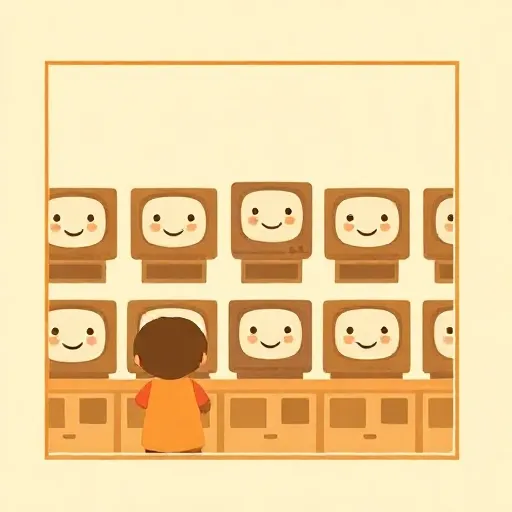
One of the most famous parts of their book is the chapter on the culture industry. Horkheimer and Adorno argued that in modern capitalism, art and entertainment had been turned into mass‑produced products. Movies, radio shows, pop songs — they were all stamped out according to formulas meant to keep us passive and predictable.
Think about it like a factory that manufactures consent. A blockbuster film, they might say, makes you feel like you had a big emotional experience, but its story always teaches you the same lesson: the world can’t really be changed, just accepted. All the rough edges are smoothed out. The culture industry didn’t need a secret police state; it produced people who policed themselves, because they couldn’t even imagine an alternative.
Horkheimer didn’t think all art was dead. He saw that certain difficult works — like James Joyce’s novels or Picasso’s painting Guernica — could still shake you awake. They didn’t offer a neat happy ending; they showed the brokenness of the world and let you feel it. That negative jolt, he thought, might keep a space for freedom open.
A Tiny Spark in the Dark

In his last years, after returning to Frankfurt, Horkheimer became even more quiet. He wrote fragments and aphorisms. He said that philosophy could no longer promise a utopia — it could only hold up a mirror to suffering. He admired the dark vision of the 19th‑century philosopher Arthur Schopenhauer (1788–1860), who believed life was full of pain and that our highest act was simply to refuse to add to it.
Yet Horkheimer never gave up on one thing: compassion. He insisted that the real task of education is to make people sensitive to injustice — not just when it happens to their own group, but whenever any human being is treated as less than a person. In a note from his final years, he wrote that if you want to define the good, the only honest way is to call it the attempt to abolish evil. That, he said, is the teaching of critical theory.
Why It Still Matters

You might never have heard the phrase “instrumental reason,” but you swim in it every day. When your social‑media feed picks videos to keep you watching, it’s using a version of instrumental reason — it cares only about the means that hold your attention, not about whether the content is true or good. When schools push you to learn only the skills needed for a future job, they risk treating your whole life as a means to an economic end. Horkheimer’s question is now yours: can you notice when thinking is being reduced to a tool, and can you train yourself to ask what is worth doing in the first place?
His work suggests there is no easy solution — no hero who can simply smash the machine. But it also suggests that the first step is to pay fierce attention to suffering, both your own and that of others. That nudge of compassion, that moment when you stop scrolling and think “this doesn’t feel right,” is a tiny crack in the armor of a world that wants you to be a nobody. Horkheimer spent his life learning to stay awake to pain. That, he believed, is where real thinking begins.
Think about it
- Think of a time you were so focused on winning a game or getting a good grade that you stopped enjoying it. Did that feel like your reason had become “instrumental”?
- If a machine could keep everyone alive and entertained, but everyone stopped having big ideas or making art, would that be a good world?
- Can you imagine a social change that would require people to feel more, not just know more?