Do You Really Have Beliefs, or Is That Just an Old Idea?
The Invisible Theory You Use Every Day
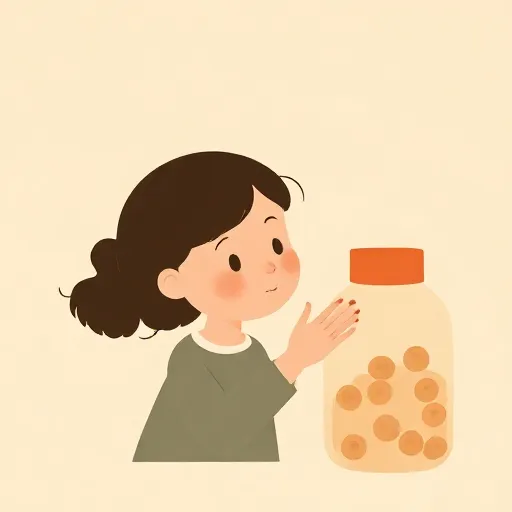
You’re sitting across from a friend at lunch. Their hand drifts toward the cookie jar, then pulls back. Instantly you think: They want a cookie, but they believe there aren’t any left. You didn’t take a class to make that guess. You just used a mental toolkit every person carries around from childhood. Philosophers call this toolkit folk psychology.
According to a view called the theory-theory, folk psychology works like a hidden scientific theory. It has secret posits—invisible inner states like beliefs, desires, hopes, and fears. These are called propositional attitudes because they are attitudes toward a proposition (a statement about the world, like “there are cookies in the jar”). One special feature of beliefs is intentionality: they are always about something. A belief points to a state of affairs outside itself.
Folk psychology also has laws, just like physics or chemistry. A typical law is: if a person desires X and believes doing Y is the best way to get X, then (unless something blocks them) they will do Y. You used that law at lunch without even thinking. These posits and laws let you explain, predict, and make sense of what people do—and they feel completely natural.
Vanishing From Reality: What Happened to Demons
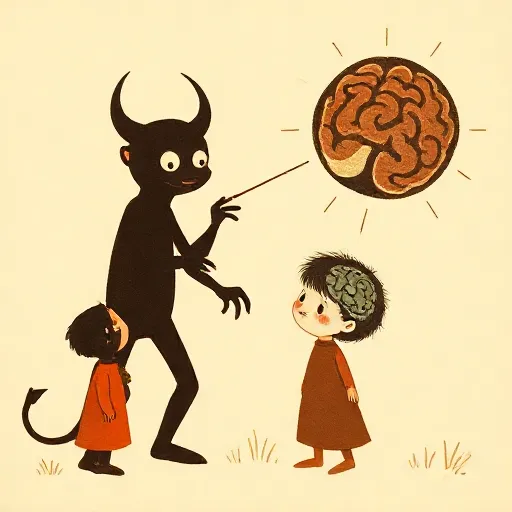
Imagine it’s the 1500s and someone acts wildly out of character. A natural explanation would be: a demon has possessed them. Today we explain the same behavior with brain disorders—no demons needed. That shift is an example of ontologically radical theory change. The old posits weren’t relocated or renamed. They were dropped from our picture of reality entirely.
Not all theory change is that drastic. When we replaced the old view of light with our understanding of electromagnetic radiation, we didn’t say light doesn’t exist. We just learned what light really is. That’s an ontologically conservative change. The posits got a new home.
Eliminative materialism is the bold claim that folk psychology is headed for the demon fate, not the light fate. Its defenders, most famously Paul Churchland (1942–) and Patricia Churchland (1943–), argue that folk psychology is a deeply flawed theory. Eventually, they say, science will show that its central posits—especially beliefs—correspond to nothing real in the brain. We won’t reduce beliefs to brain states; we’ll realize there are no such things, just as we realized there are no demons.
Why Some Think Beliefs Are the Next Demons
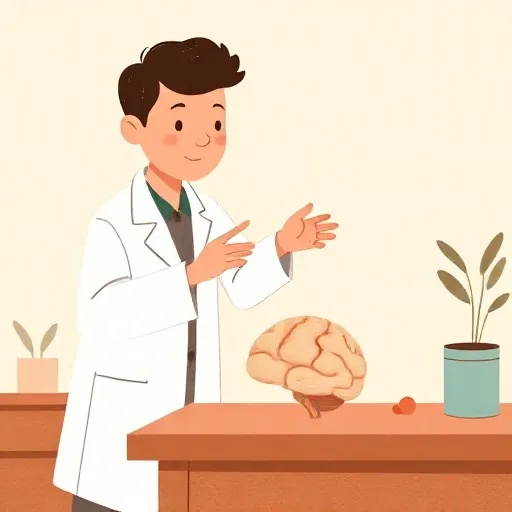
Why would anyone believe something so strange? The Churchlands and others offer several lines of argument.
First, folk psychology has a terrible track record in terms of theory growth. Other folk theories—our intuitive ideas about physics, biology, or disease—turned out to be deeply mistaken. Since the mind is far more complicated, it seems wildly unlikely that our everyday hunches about it happened to get things right. Folk psychology also appears stagnant. It hasn’t explained why we dream, how memory really works, or what causes most mental illness. A powerful theory should keep generating new insights; ours seems stuck.
Second, the brain doesn’t look anything like the theory says it should. Folk psychology treats beliefs as if they have a sentence-like structure—a thought like “the cat is on the mat” combines smaller parts in a specific order. But neurons don’t store sentences. Patricia Churchland argues that looking for sentence-like structures in the brain is like opening a computer to find words inside its wiring. It’s the wrong level of description.
Third, Stephen Stich (1943–) pointed out that folk psychology groups mental states by what they are about—their content. A scientific psychology, he argued, should group states by their physical or computational makeup instead. Content is messy, vague, and breaks down with very young children or people with certain mental illnesses. That makes belief-talk a poor fit for a real science of the mind.
Finally, some philosophers worry that the very idea of mental content—how a brain state can “say” something about the world—is too mysterious to be taken seriously. If there is no natural story about how neurons get to be about cookies, then maybe nothing in the brain actually has content. And if nothing has content, there are no beliefs.
But You Can’t Argue Without Believing!
The most famous objection to eliminative materialism is that it defeats itself. Suppose you stand up and announce, “There are no beliefs.” Making an assertion, the critic says, is an act that expresses a belief. So you just used a belief to deny beliefs—and your own action shows the theory is false.
Eliminativists reply that this objection begs the question. It assumes that asserting requires a belief, which is exactly the kind of folk-psychological “law” they are challenging. They can say that producing speech is just a physical act—your brain causes sounds without any believing going on. A radio doesn’t believe the news it broadcasts; a person might be equally belief-free.
Many defenders of folk psychology take a different route. They point to everyday success: we predict people’s behavior with astonishing accuracy using belief–desire reasoning. If the theory were completely false, they argue, we wouldn’t be so good at it. Eliminativists respond that history is full of false theories that seemed successful while they lasted. People navigated by a Sun that “orbited” the Earth for centuries.
Some philosophers suggest we don’t need a full theory at all. The simulation theory says we predict others not by following laws, but by mentally putting ourselves in their shoes—running our own decision-making systems offline with pretend inputs. If simulation is right, there’s no theory to be proven false. Still, eliminativists could respond that even our simulation machinery might systematically misrepresent itself, making us falsely believe we have beliefs.
Why It Still Matters: The Future of ‘Belief’
Eliminative materialism sounds like a far‑out science‑fiction idea, but it touches everything we care about. The philosopher Jerry Fodor (1935–2017) once wrote that if commonsense psychology collapsed, it would be “the greatest intellectual catastrophe in the history of our species.” Our whole way of holding people responsible, of making promises, of understanding friendship and law—all of it leans on the idea that people have real beliefs and desires.
Not everyone thinks a total collapse is coming. Some propose revisionary materialism: folk psychology will be heavily revised, not wiped out. Certain parts will be kept, others changed, like an old map that gets updated instead of thrown away. Another outlook, sometimes called kind dissolutionism, says mental categories like “belief” might pick out something real—but the category itself is too messy for science, like the word “weed.” A weed is a real plant, but botanists don’t use that label because it’s subjective and cuts across natural kinds.
The debate forces you to ask: if a scientist someday showed you a perfect brain‑scan prediction of your next choice, would you still feel like you chose freely? Would you still describe your friend as believing there were cookies left? The quarrel over beliefs is really a quarrel about how we see ourselves—and it’s far from settled.
Think about it
- If a brain scan could perfectly predict your next move, would you still feel like you were choosing freely? Why or why not?
- Could you ever convince a scientist that you have a secret belief they can’t detect with any instrument?
- Imagine a world where no one uses the word “belief”—only descriptions of brain states. How would you explain why your best friend helped you when you needed it?