Does Everything Need a Cause? Mary Shepherd vs. David Hume
Milk, Vinegar, and a Question About Causes
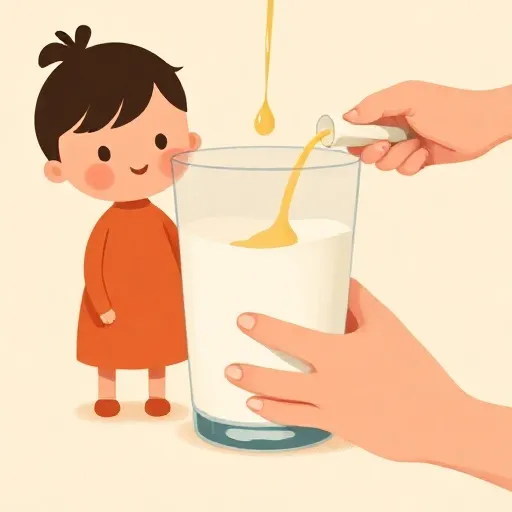
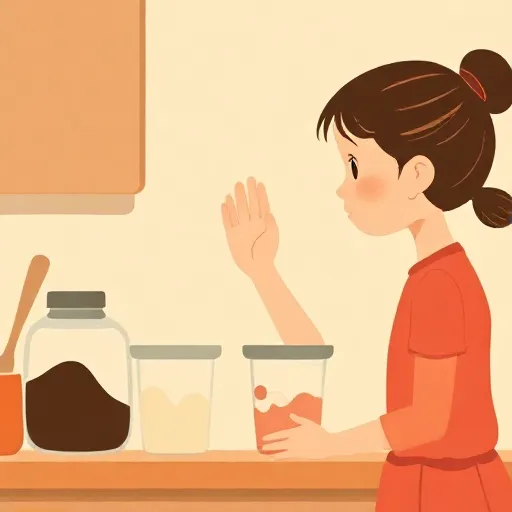
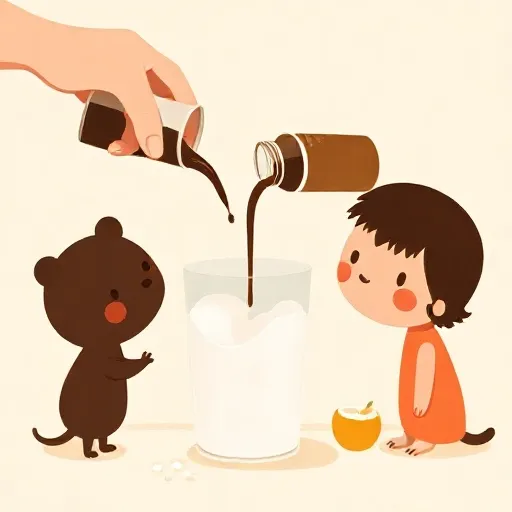
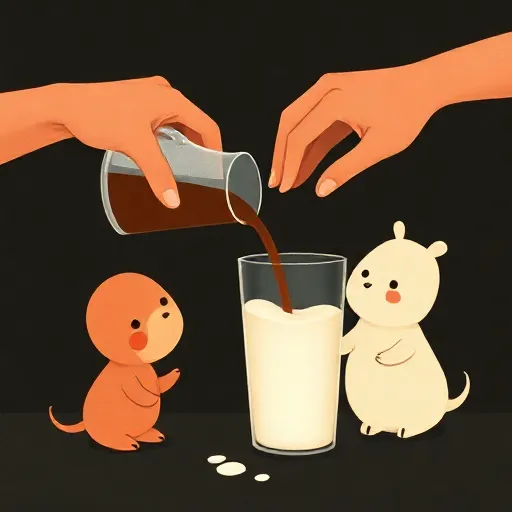
Imagine you are in a kitchen in 1824. You pour a splash of vinegar into a glass of milk. In seconds the milk separates into lumpy white curds and watery whey. You are absolutely certain the mixture caused the curdling. But can you prove it? And if you can, what exactly is a cause?
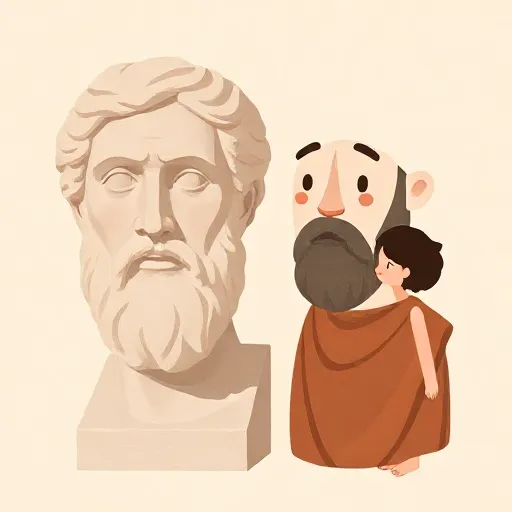
This simple scene obsessed a Scottish philosopher named Mary Shepherd (1777–1847). She lived at a time when the most famous thinker in the English-speaking world, David Hume (1711–1776), had argued that we never really see causes. What we see, Hume said, is just one event followed by another — again and again. Milk turning to curds is just one thing after another; we get used to the pattern and call it a cause, but the world might suddenly change. Shepherd thought this was a dangerous mistake. She set out to prove, with nothing but reason and everyday experience, that a real, binding connection between cause and effect exists.
This article steps right into their argument, using the milk and vinegar — along with a blank universe, a flint and steel, and a walk past a house — to explore one of philosophy’s most stubborn puzzles: does everything that begins to exist really need a cause?
The Big Bang of Nothing: Proving That Every Beginning Needs a Cause
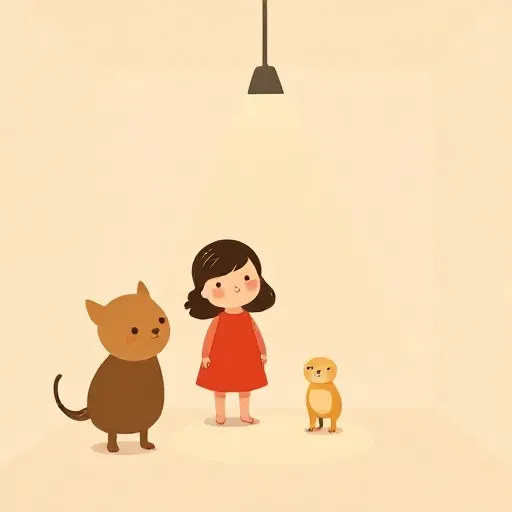
Shepherd’s first move was to state a causal principle: everything that begins to exist must have a cause. That might sound obvious. But Hume had denied we can know it for certain. He said we can always imagine something popping into existence without a cause, and imagination is the test of what is possible.
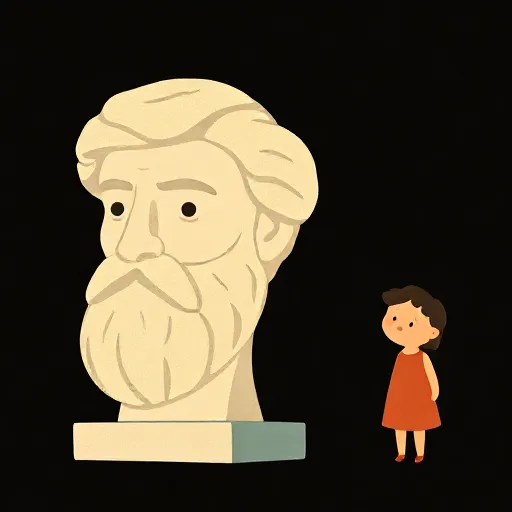
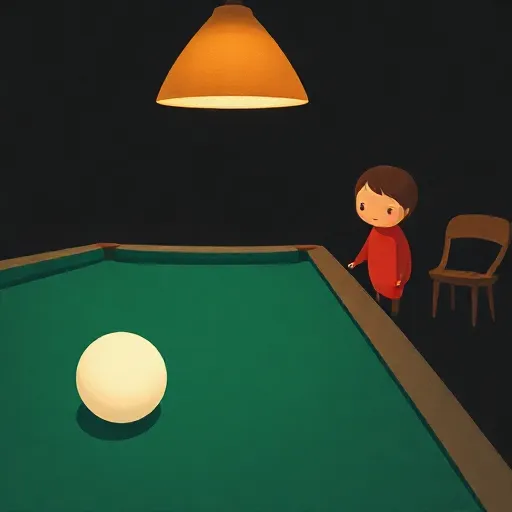
Shepherd tried to show that a beginning without a cause is not just unimaginable — it is impossible. She asked you to picture a universe that is an utter blank. No objects, no space-stuff, no minds, nothing at all. Now ask: could a new thing suddenly begin to exist in that blank?
Her answer was a firm no. To begin, she argued, is to make a transition from not-existing to existing. That transition is an act. An act needs an actor — some thing that already exists and has the power to make the new thing appear. In the blank universe, nothing exists to do any acting. So nothing can begin. The very idea of a beginning smuggles in the need for a cause.
Critics have pointed out that this reasoning might be circular: it seems to assume that beginnings are the kind of thing that require a cause. Shepherd would reply that once you look closely at what “beginning” means, you see it already contains the idea of something bringing it about. To her, the phrase “nothing comes from nothing” is not a slogan; it is a truth you can feel in your bones.
She gave her argument another twist. When we watch a quality appear — like the curds forming — our senses present it as a new property of a new combined object (the vinegar-and-milk mixture). We never see a quality float in from nowhere. So even in ordinary perception, cause and effect come tied together. Shepherd’s proof may not have silenced every opponent, but it forced anyone who denied the causal principle to explain what a beginning could possibly be if not an act.
Like Causes, Like Effects: The Rule Science Runs On

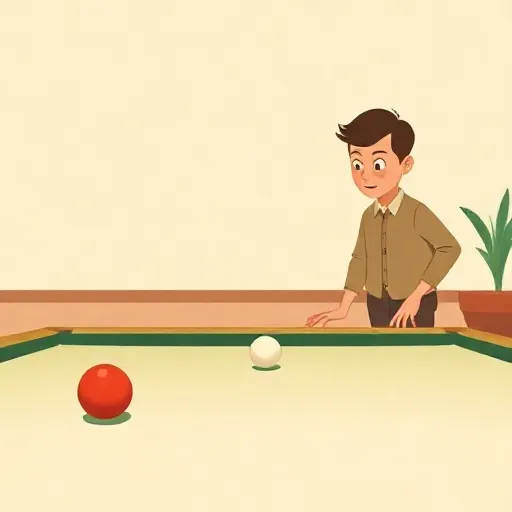
David Hume worried about a deeper problem. Even if every beginning needs a cause, how do we know that similar causes will always produce similar effects? Yesterday the vinegar curdled the milk, but maybe tomorrow the same vinegar and milk would turn into honey — or explode. Science and everyday life assume the course of nature is uniform. Hume said we have no proof for that, only the habit of expecting more of the same.
Shepherd answered with a second principle: the causal similarity principle — similar causes must have similar effects. Her argument started with how we first discover particular causes. When you pour vinegar into milk and see curds form, you notice two objects (the liquids) uniting and forming a new object (curdled milk) with a new quality. You now have a definition: the curdled milk is the result of mixing those two liquids.
Now imagine you gather what looks like the same vinegar and the same milk and mix them again. If the second mixture produced something completely different, Shepherd argued, the new result would have to begin to exist by itself — because, by assumption, the two liquids are the same as before. But an uncaused beginning is impossible (by the causal principle). So the second mixture must produce curds. The nature of the combined objects forces the result.
Shepherd illustrated this with fire. A fire is not just a sequence of hot, bright appearances; it is the object formed when flint and steel strike together, and burning is part of what it is. If a red-hot object did not burn, it would not be fire. The obligation to burn is built into the object’s essence — the set of hidden powers that make it what it is.
This move gave Shepherd a sturdy answer to Hume’s worry about nature changing. Hume had imagined snow that tastes salty or fruit trees that bear fruit in freezing cold. Shepherd replied that those things would not be snow or fruit trees; they would be different objects with different natures. Once we know a thing’s make-up, we know what it must do. Her world was a world of real, stable kinds, not a parade of loose images.
How Do We Know the World Is Really There?
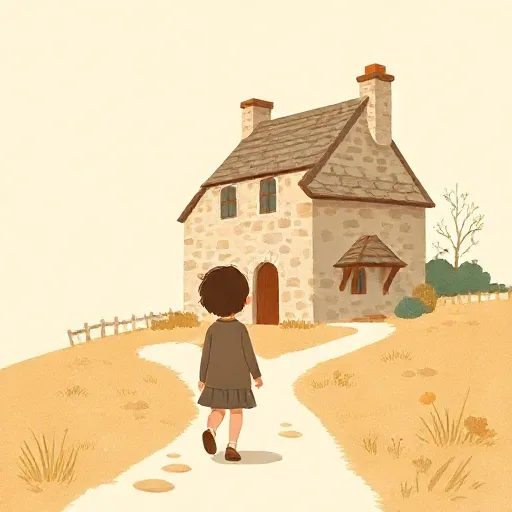
So far Shepherd has been talking about causes we can see. But she also tackled a question that had kept philosophers awake for centuries: how do we know objects exist when nobody perceives them? She called this the problem of continued existence.
Her answer relied on patterns in our sensations — the colors, shapes, sounds, and smells of which we are directly conscious. When you walk past a house, you get a series of shifting views. If you turn around and walk back, the same series appears in reverse order. That repeated sequence, Shepherd argued, cannot be caused by a brand-new object every time you turn your head. A new cause would have to be constantly created just to match your movements, which would be a wildly unlikely coincidence — and, again, no uncaused beginnings. Instead, there must be one continuing object “ready to answer the irregular call of the senses.”
She distinguished between inward existence (the mind, which is the capacity for sensation in general) and outward existence (the exciting cause of some particular sensation). A colored, extended apple is not out in the world as a color; the color is a sensation inside you. But the cause of that sensation is outside and continues even when you look away.
What about dreams? If a dream house seems just as real, how can you ever be sure which world is the waking one? Shepherd pointed out that while dreaming, you cannot test things freely. Awake, you can walk around the house, touch it, open the door, and check whether it fits its definition. Dreams don’t hold up to that kind of investigation. She did admit one tiny skeptical crack: you can never entirely rule out the possibility that all your experiences are mixed with dream-like causes. But that single doubt, she thought, was not enough to shake the solid reasons that make everyday belief in a real world the most sensible bet.
What Are You? Minds, Bodies, and the Self

Shepherd’s theory of causation also shaped her picture of what you are. A mind, she said, is the capacity for sensation in general — for feeling, thinking, and being conscious of anything at all. Your body is a collection of powers to move, resist motion, and affect other bodies.
These two capacities are not sealed off from each other. When mind and organized matter unite, they form a single object — a human being — with both mental and physical powers. Feeling a decision to raise your arm and then seeing the arm rise is not a mysterious leap between two separate worlds; it is one event in a combined nature.
Shepherd also argued that each mind is eternal. Her reasoning went like this: sensations pop in and out of existence, and even during dreamless sleep there is a gap. But if there were no continuous being capable of feeling, there would be no reason — no cause — for sensation to resume. The mind must be a lasting subject that can rest in a kind of silence and then be stirred again by other objects. From this she concluded that every mind has existed without beginning and will go on after the body dies, though she left open whether you would retain personal memories or merge into a wider ocean of consciousness.
The self you call “I” is more than the bare mind. It is the felt union of your enduring mind and your body, woven together with memories that give you a sense of identity over time. Shepherd believed that your sense of being the same person does not depend on having the exact same physical particles — your body changes constantly — but on the power to connect present sensations with ideas of the past. In her view, the pronoun “I” names something truly durable, even if the details of an afterlife remain a mystery.
Why This Argument Still Sizzles Today
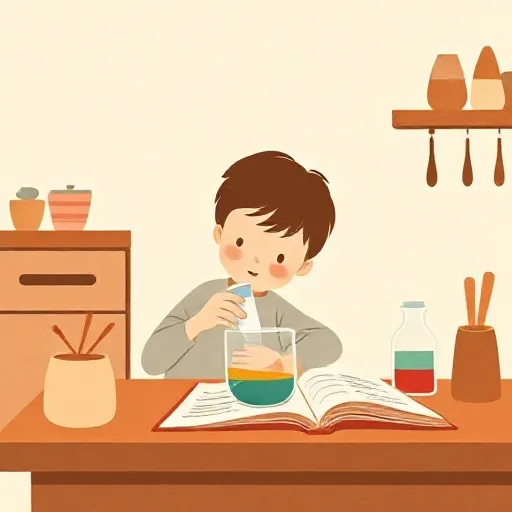
Two hundred years later, the debate between Hume and Shepherd has not gone cold. Every time you flick a light switch, bake a cake, or trust a medicine, you are counting on the world to be a place of stable causes. Scientists building particle accelerators and testing new drugs rely on the same assumption Shepherd defended: that similar conditions will not suddenly go haywire for no reason.
Hume’s challenge still lurks. Could the universe just change its habits tomorrow? Shepherd’s answer was that the natures of things oblige them to behave as they do. But critics have asked: how do you ever know you have truly captured an object’s nature, and not just observed a pattern you hope will continue? That question — the problem of induction — remains one of the deepest in philosophy.
What Shepherd gives us is not a final answer but a way of holding the question clearly. She shows that our ordinary, confident talk about causes is backed by a web of reasoning that goes far beyond “I’ve seen it before.” Whether or not you find her proof airtight, she makes you think harder about the very glue that holds your experience together — that feeling that the curds must form, and that the world cannot be a chaos of disconnected flashes. And that, she would say, is exactly where philosophy begins.
Think about it
- If an empty patch of air in front of you suddenly turned into a glowing sphere, would you instantly think something caused it? Why or why not?
- Shepherd said that if two identical mixtures of vinegar and milk produced different results, they wouldn’t really be the same mixture. Does that mean an experiment can never surprise you — or that surprises teach you you were wrong about what was the same?
- You wake up from a vivid dream in which a talking cat told you a secret. What test could you use to decide whether the cat was part of the real world or only a dream? Is there any test that works every time?