We Swore We’d End Our Lives If Life Had No Meaning
We Promised to End Our Lives

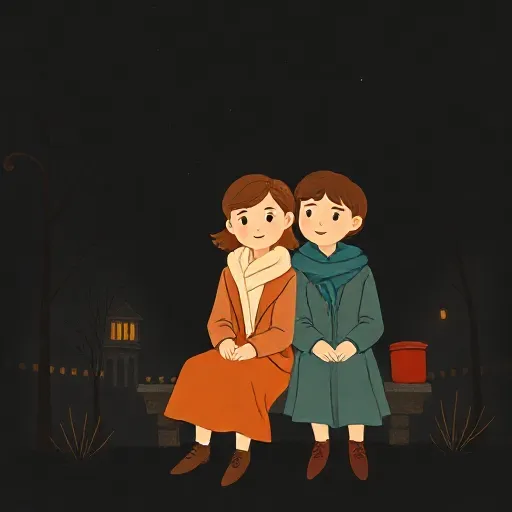
In 1901, a twenty-year-old philosophy student in Paris named Jacques Maritain (1882–1973) faced a terrifying emptiness. The university professors around him talked about science and logic, but they treated the world like a dead machine. Nothing they said made life feel worth living. Jacques and his brilliant classmate Raïssa Oumansoff (1883–1960) saw no reason to keep going. So they made a shocking promise: if, within a year, they could not find some deep meaning to existence, they would end their lives together.
They searched desperately. It was the lectures of a wild-haired philosopher named Henri Bergson (1859–1941) that first cracked open the door. Bergson argued that reality is a living, flowing pulse, not a cold set of facts. That gave them hope, and they abandoned their suicide plan. They married in 1904, and through the influence of the fiery writer Léon Bloy, both Jacques and Raïssa were baptized into the Catholic Church in 1906. For Maritain, this was not just a religious conversion. It was the beginning of a lifelong mission: to show that the deepest truths about reality, goodness, and beauty could not be grasped by scientific formulas alone.
A Way of Knowing Without Proofs
Maritain studied the medieval thinker Thomas Aquinas (1225–1274) and became a leading voice of Thomism—the attempt to keep Aquinas’s ideas alive in the modern world. But Maritain did not just repeat old arguments. He argued that human knowledge comes in many shapes, each suited to a different kind of object.
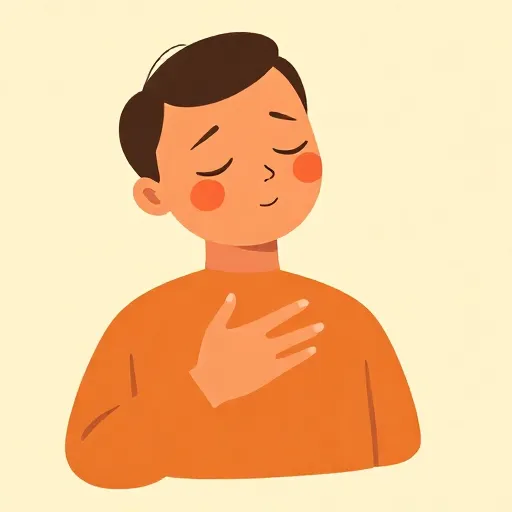
Science, he said, gives us one kind of knowledge. It observes and measures things. Philosophy goes deeper: it asks about the very being of things, about why anything exists at all. And then there are truths that sit even higher, accessible not by deductive logic but by a direct, felt grasp. Maritain called this connatural knowledge—a way of knowing that comes through sympathy, love, or a kind of inner tuning. It is non-conceptual and not the result of step-by-step reasoning. You might compare it to how you instantly know your best friend is upset, without them saying a word, or how a piece of music strikes you as sad before you can explain why.
Maritain believed this kind of knowing is at the root of our grasp of moral right and wrong, our sense of the divine, and our experience of beauty. He also insisted that every genuine philosopher must start with a direct intuition of being—a sudden, wordless awareness that things are, that reality is not just a dream. This intellectual intuition, he said, is like waking up to the sheer fact of existence. Without it, philosophy becomes a game of empty words.
The Human Person: More Than a Cog
One of Maritain’s most powerful ideas was his distinction between the individual and the person. As individuals, we are parts of a bigger social machine—we have jobs, we follow rules, we fit into groups. But as persons, we are whole worlds. A person has dignity, a spiritual core, and a destiny that goes beyond anything the state or society can give. Maritain called this view personalism, a middle path between treating people as isolated atoms and swallowing them up in the collective.
Because each person has this inner worth, Maritain argued that there is a natural law—a universal moral order built into human nature itself. We don’t invent right and wrong; we discover it, the way a seed “knows” it should grow into a tree. The first principle, he said, is that good is to be done and evil avoided. This law is not imposed by governments; it is the foundation for judging whether any human-made law is just.
Maritain believed that connatural knowledge lets us grasp the basics of natural law without needing a philosophy degree. Through an inner inclination—what the tradition called synderesis—we simply see that some acts respect human dignity and others do not. That insight, he argued, grounds human rights. Rights are not privileges handed out by rulers; they are what persons need to flourish according to their nature. And because persons are both material and spiritual, real freedom means having the conditions to grow into a full human being, not just being left alone.
Art as a Secret Door to Reality
Maritain loved art and was close friends with poets, painters, and composers. He thought art was not just decoration or entertainment. It was a way of knowing. He called the special knowledge at work in true art creative intuition—the artist’s ability to reach into the hidden inner being of things and make that reality shine through a painting, a poem, or a melody.
Unlike a scientist who abstracts general laws, the artist grasps a concrete, individual reality and, in making a work of beauty, discloses something true about the world. Maritain believed that beauty itself is an objective quality, not just a matter of personal taste. Following Aquinas, he said beauty has three marks: integrity, proportion, and a kind of radiance or clarity that delights the mind.
For Maritain, the artist’s freedom was real but not lawless. Artistic creation perfects the artist and points beyond itself—to the ultimate source of all beauty. He even called the artist’s work “the highest natural resemblance to God’s activity.” Because art springs from the same preconscious, connatural depth as moral insight and mystical experience, it can nourish the soul and remind us that there is more to life than what can be measured.
Writing the World’s Promise: Human Rights

Maritain didn’t just think about ideas in a study. He put them to work in the real world. During World War II, he broadcast messages to occupied France. After the war, he served as French ambassador to the Vatican and became deeply involved in UNESCO. There he faced a puzzle: how could delegates from communist, liberal, and religious backgrounds agree on a list of basic human rights?
Maritain’s answer was practical and philosophical. He argued that people could agree on what rights exist even if they disagreed about why. An atheist and a believer could both see that torture is wrong, even if one grounds that conviction in human dignity and the other in social contract. This approach helped the drafting committee produce the Universal Declaration of Human Rights in 1948. The rights enumerated—to life, to freedom of conscience, to work, to education—echoed many of the natural rights Maritain had defended for years.
He insisted, however, that a long-lasting defense of rights needed a more solid foundation than political convenience. The person, and the common good of the whole community, mattered more than any government’s decree. That meant even democratic majorities could not legitimately crush the rights of a single person or a minority group. Maritain’s vision of a pluralistic, person-centered society influenced Christian Democratic movements in Europe and Latin America and still appears in constitutional debates around the world.
Why Your Heart Knows Things Your Head Can’t Prove
Maritain’s world can seem far away: the Paris lecture halls, the Thomist debates, the 1940s diplomacy. But his big question is yours too: can you trust knowledge that doesn’t come with a proof?
When you feel in your bones that a bullying act is wrong, even if you can’t write an essay defending it, you are touching something like connatural knowledge. When a song gives you a glimpse of something vast and wordless, you are brushing against creative intuition. Maritain would tell you that these experiences are not illusions. They are contact with reality—just not the reality that fits into a test tube.
Of course, thinkers have pushed back. Some say that if a truth can’t be demonstrated step by step, it isn’t really knowledge at all. Others worry that talking about “natural law” or “intuition” is too vague to settle tough moral disagreements. Maritain himself admitted that our grasp of natural law grows slowly and can be distorted by culture, prejudice, or bad habits. Absolute certainty is rare. But he held that the search for wisdom was more than a logic puzzle—it was a journey of the whole person, mind and heart together.
Today, as we argue about whether human rights are “real” or just useful inventions, and as we wonder whether beauty and goodness are anything more than personal opinions, Maritain’s thought still offers a steady challenge. It asks us to take seriously the knowledge that comes through love, through art, and through the quiet awareness that we exist—and that existence is, in the end, a gift.
Think about it
- If you felt with your whole heart that something was deeply true, but you couldn’t produce any facts or evidence to convince someone else, would you still trust that feeling? Why or why not?
- Maritain said every single human being has dignity simply by being human. Do you think even people who have done terrible things still possess dignity? What reasons could someone give on each side?
- Think of a painting, song, or story that taught you something important—something that would be hard to put into plain sentences. What did you learn, and could you fully explain it without using the artwork itself?