Is Everyone Secretly Selfish? Mandeville's Scandalous Claim
A Hive That Lost Its Sting
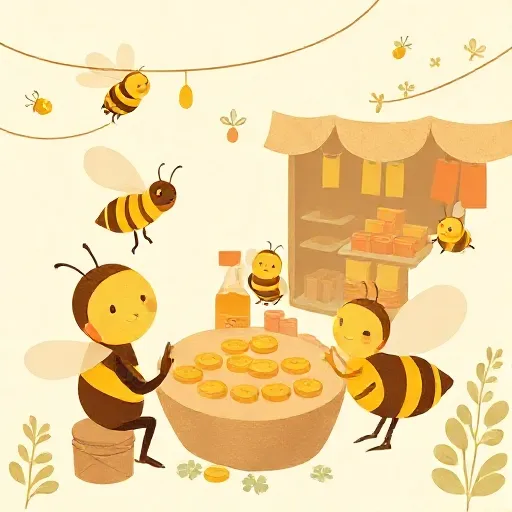
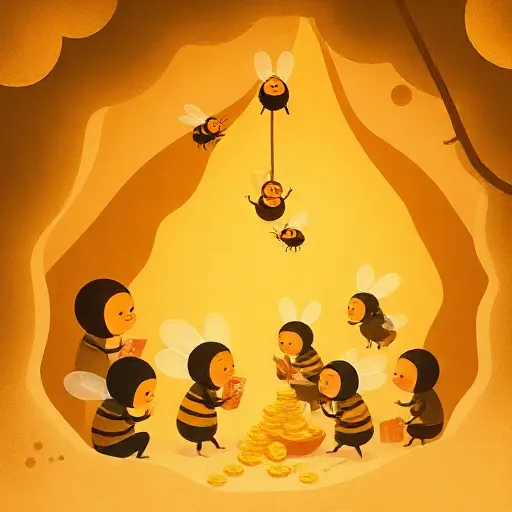
In 1705, a Dutch-born doctor living in London published a poem that made people furious. The doctor was Bernard Mandeville (1670–1733), and his poem was called The Grumbling Hive. It told the story of a huge, wealthy beehive. The bees were thieves, gluttons, and show-offs — yet their city thrived. The hive’s shops overflowed with goods, the streets hummed with trade, and even the poorest bees had honey on their table.
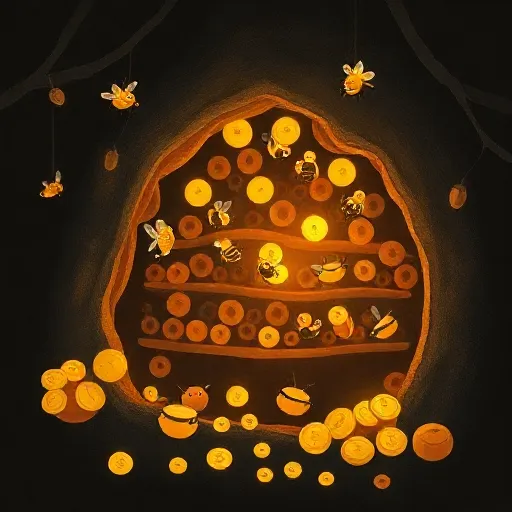
But the bees started complaining. They begged the king of the hive to make them truly honest and virtuous. The moment the wish was granted, everything collapsed. The bees stopped wanting fancy things. No one strived, no one showed off, no one bought luxury goods. The hive emptied out, and the few remaining honest bees moved into a hollow tree, poor and forgotten.
The poem’s big, uncomfortable claim was right there in the subtitle when Mandeville later turned it into a book — The Fable of the Bees: Or, Private Vices, Publick Benefits (1714). Could our selfish passions, the very things we teach children to feel ashamed of, be the secret engine that makes a whole society prosper?
Are We All Secretly Selfish?

Mandeville’s answer to that question began with a big idea about human nature. Humans, he said, are “a compound of various Passions.” Our passions guide everything we do; reason is just their servant. We like to think we make careful, rational choices, but really we follow our strongest feeling in the moment. If we notice our own thought process, we’ll see we often invent arguments to justify what our passions already wanted.
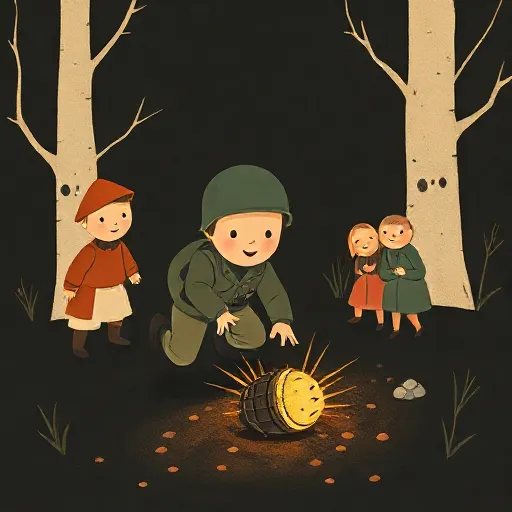
Even worse, Mandeville insisted that all passions — including the ones that look generous — grow from self-love. This is a form of psychological egoism, the belief that every human action is driven by self-interest, even when it doesn’t look that way. If you see a baby about to fall into a fire, you rush to save her. Mandeville granted that you act instantly, but he said you do it to avoid the pain you would feel if she burned. You are relieving your own distress; you are, in a roundabout way, looking after yourself. A mother’s love for her child, he claimed, also roots in self-love.
To many readers, this sounded monstrous. Joseph Butler (1692–1752) and Francis Hutcheson (1694–1746) shot back that Mandeville was playing a language game — just redescribing genuine care as secret selfishness. Butler complained: “This is not the language of mankind.” If a mother’s love is really just self-love in disguise, then we’ve twisted words until they mean nothing.
Mandeville did not budge. He sharpened his view by pointing to passions like pride and shame. Pride makes us overvalue ourselves; shame makes us dread being looked down on. These two emotions are so powerful, he noted, that people will risk their lives in a duel just to avoid being called a coward. Public praise and private shame push us to act far more reliably than a desire to be good out of pure kindness. Later, in his second volume, Mandeville split the selfish drives into self-love (caring for our survival and comfort) and self-liking (the instinct to value ourselves above others and to need proof of that value from everyone else). Self-liking, he decided, was the real hidden motor behind how we behave in society.
How Politicians Invented Virtue
If we are driven by self-love and self-liking, where do our ideas of “right” and “wrong” come from? Mandeville’s answer was shocking to eighteenth-century ears: moral virtue is an invention. In his essay An Enquiry Into the Origin of Moral Virtue, he imagined a time when cunning lawgivers and politicians realized they could not force human beings to be good by threats alone. So they used flattery instead.
The trick was simple. The lawgivers praised people who resisted their own greedy appetites and did things that helped the community. They called such people “rational” and “superior to beasts.” Everyone who heard this wanted to feel superior too, so they began to mimic those praised actions. Vice came to mean any act that satisfied your own desires in a way that could harm others. Virtue meant conquering your own impulses for the benefit of other people, or at least to feel worthy of being called good.
Mandeville put it in a line that made many people gasp: the moral virtues are “the Political Offspring which Flattery begot upon Pride.” In other words, virtue is the child of politicians’ flattery and human pride. It is not a divine law written into our hearts, as many Christians of his time believed, and not a natural moral sense that every human is born with, as his rival Anthony Ashley Cooper, the Third Earl of Shaftesbury (1671–1713) had argued. For Mandeville, the whole system of right and wrong was an artificial craft, invented to make selfish creatures livable with.
His readers saw an obvious problem. If virtue was cooked up by clever leaders, who taught the first leaders to be clever enough to invent it? Mandeville’s later writings sidestepped the puzzle by arguing that moral rules evolved slowly, across many generations, as humans stumbled onto what worked.
Is True Virtue Even Possible?

If virtue is just a trick born from pride, you might think Mandeville didn’t believe in it at all. But he sometimes sounded like he believed in it so much that no one could reach it.
Mandeville drew a sharp line between real virtue and counterfeited virtue. Real virtue required a “victory over the Passions” — not just holding back a desire because you fear shame or want praise, but acting from a pure, rational ambition to be good. If you give money to a poor person so people will admire you, that’s counterfeit virtue; your passion for reputation is merely beating your desire to keep your coins. True virtue would mean your reason itself, unmoved by any passion, steers the act. But Mandeville also held that all human beings are creatures of passion. Reason always serves a passion. So real virtue — the kind that requires total self-denial and passionless reasoning — may be impossible for any unaided human.
This left his philosophy in a strange place. He said his book was “a severe and exalted morality” that held up a strict test of virtue. But many readers thought he was just a cynic pretending to be a moralist so he could get away with celebrating vice. After all, if trying to make society purely virtuous would destroy it (as the broken hive showed), then maybe we should stop worrying about virtue altogether and accept that private vices — ambition, greed, vanity — are the real foundations of prosperity.
The debate about Mandeville’s sincerity still divides scholars. Was he a rigorist, showing that true goodness is so high a bar that we should be humble before it? Or was he a satirist who enjoyed watching hypocrites squirm when he proved they were just as selfish as everyone else? The answer may be that his main project was never to tell humans how to live, but to describe, with brutal honesty, how they actually do live.
Good Manners, Bad Motives, and the Birth of Society
Mandeville’s account of human nature led him to a grand story about how civilization itself arose. He rejected any idea that humans once gathered into a group and made a wise “social contract.” Instead, early families, terrified of wild animals, banded together for protection. Then they stayed together out of fear of other humans who wanted to dominate them. Over many ages, leaders learned through trial and error how to govern, and written laws finally created a civil society where people could live in peace.
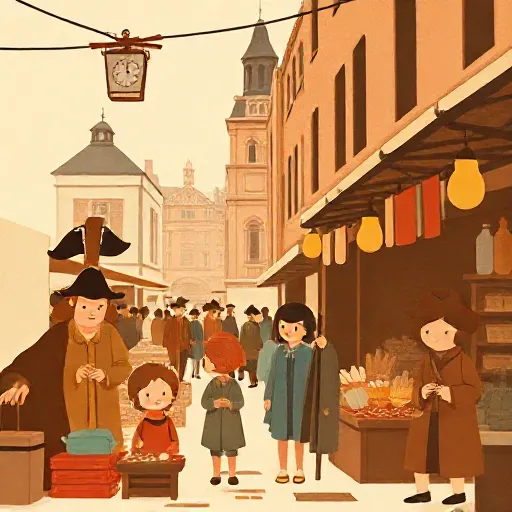
Once property was protected by law, individuals could safely pursue their own wealth. The same self-love that made us greedy now made us industrious. Luxuries developed, and with them came politeness — a set of rules that let us hide our inflated self-images behind flattery and good manners. The most polite person, Mandeville wrote, knows “not only to deny the high Value they have for themselves, but likewise to pretend that they have greater Value for others, than they have for themselves.” In other words, good manners are a deliberate lie that soothes everyone’s pride and keeps us from each other’s throats.
He saw the same kind of story in gender norms. Girls are taught to feel shame about their bodies long before they understand why, and female “honor” is built on chastity — just as male honor is built on courage in battle. Both are social constructs, not natural facts, and both serve to channel our passions in ways that powerful people in society find useful.
Even religion, for Mandeville, had a darkly useful engine. The seed of religion is our natural fear of invisible powers — the terror of storms, disease, and unexplained suffering. Politicians and priests, he argued, have always used that fear to build allegiance and keep order. No society, he claimed, can be governed without religion, but that doesn’t make its origins any less tangled up in our self-love and self-liking.
All these stories shared a radical idea: our whole social world — laws, manners, gender roles, worship — grew unintentionally out of selfish passions. No one planned it; we all “fall as it were into these Things spontaneously.” The system runs so smoothly, Mandeville said, that a well-made government is like a clock: it ticks by itself, even if the people in charge are knaves.
Why Mandeville Still Makes Us Squirm

Mandeville’s ideas were a bombshell in the eighteenth century, and they have echoed into our own. Thinkers like David Hume (1711–1776), Adam Smith (1723–1790), and Jean-Jacques Rousseau (1712–1778) read him closely, argued with him, and stole his best insights. Smith’s claim that we pursue riches more for the esteem they bring than for the comfort they offer is pure Mandeville. And when modern economists argue that markets can turn private greed into public good, they are walking on a road Mandeville paved.
But the question that makes us squirm hasn’t changed. We live in a world that runs on pride, competition, and the hunger for recognition. You study harder to get a “good student” badge. You post a picture hoping for likes. You wear a certain brand because you know it signals something about you. That’s all self-liking. Mandeville would probably say that’s not a bug in human nature; it’s the very thing that builds concerts, companies, cathedrals, and cat videos.
And yet we also feel the cost. The same engine that fills store shelves can leave people exploited as long as they don’t have the power to demand praise or pay. The poor, Mandeville argued, had to be kept hungry enough to work, and he showed surprisingly little sympathy for them. He raised uncomfortable questions that we still wrestle with: Is it okay to build prosperity on a foundation of envy and showmanship? Can a society that runs on vanity ever be fair? And if virtue is something we invented to flatter ourselves, does it still have any real weight?
Once you see the world through Mandeville’s eyes, you start noticing self-liking everywhere — and that might be exactly what he wanted.
Think about it
- If a friend gives you a birthday present, does it matter whether they did it because they genuinely care about you or because they wanted to feel generous? Why or why not?
- Think of an activity you love — a sport, a video game, making art. How much of your motivation comes from wanting to be seen as good at it? If nobody ever saw your result, would you still do it the same way?
- Mandeville thought trying to make everyone perfectly virtuous would collapse society. Can you picture a modern city where everyone was completely honest and selfless? What would work better, and what might break down?