
Why Would a Selfish Person Ever Be Good?
Imagine a World Without Rules

It’s a sunny afternoon, but nobody is sharing. Three kids are yanking the same muddy ball, shouting at each other. There are no parents, no teachers, no rules. If you wanted the ball, there was nothing to stop you from grabbing it — except maybe someone grabbing it back.
That is the picture the philosopher Thomas Hobbes (1588–1679) painted when he imagined the state of nature, a situation where there is no government, no laws, and no agreed‑upon way to settle conflicts. In such a world, Hobbes warned, life would be “solitary, poor, nasty, brutish, and short.” Everyone would be free, but everyone would also be terrified.
Hobbes thought the only way out was a deal. People, he said, would agree to give up some of their freedom and hand it to a ruler who could keep the peace. That deal — a social contract — is the starting point for a whole family of ideas called contractarianism. But the big puzzle isn’t just about government. It’s about morality. If you care only about yourself, why would you ever treat other people fairly?
Making a Deal with Your Selfish Side

Contractarians want to answer that question without cheating. They don’t assume you already want to be a good person. Instead, they start with two risky ideas. First, people have non‑tuistic preferences — they care about their own well‑being, not other people’s. Second, people are instrumentally rational: they can figure out the best steps to get what they want.
At first, these seem like a recipe for disaster. If everyone looks out only for number one, why wouldn’t we all just grab and run? But contractarians notice something important: cooperating can get you more than fighting ever will. If you and your neighbor both build a fence instead of stealing each other’s tools, the job gets done faster and you both end up with a taller fence.
The trouble is that cooperation almost always involves what philosophers call a prisoner’s dilemma. Imagine two thieves caught for a smaller crime but suspected of a bigger one. The police offer each a deal: snitch on your partner and you go free while they get a heavy sentence. If both stay quiet, you both get a light punishment. If both snitch, you both get a medium sentence. If you think only about yourself, snitching seems like the smartest move — no matter what the other person does. But if both of you reason that way, you both end up worse off than if you’d stayed quiet.
Cooperation can collapse in the same way. Before any rules are in place, it’s tempting to cheat — take the benefits of other people’s cooperation while secretly not doing your part. But if everyone cheats, there are no benefits at all. The contractarian argues that rational, self‑interested people will see this trap and agree to a set of rules that fix it. The social contract is a thought experiment, not a real historical event. It asks: what rules would you agree to if you only cared about getting the best outcome for yourself, and you knew everyone else was doing the same?
The twentieth‑century philosopher David Gauthier gave one of the most detailed answers. He imagined the contract as a bargaining problem. You and everyone else are sitting around an imaginary table, trying to agree on moral rules. Each of you knows that if no deal is reached, you go back to the state of nature — what contractarians call the no‑agreement position — where none of you get any benefit from cooperation.
Gauthier proposed that rational bargainers would use the rule of minimax relative concession. The idea sounds fancy, but it’s just this: each person wants to make sure that the sacrifice they make, compared with what they could have dreamed of getting, isn’t bigger than anyone else’s sacrifice. If you see that everyone is giving up roughly the same amount, you’ll agree. The final deal is the one that minimises the biggest relative concession anyone has to make. In other words, nobody gets to complain that they were asked to bleed more than others.
In later work, Gauthier suggested a different picture: rational cooperators would act as Pareto‑optimizers. They wouldn’t just be selfish maximisers; they would try to grab all the gains that cooperation can produce, leaving no extra benefit on the table, and they would share those gains so that the person who gets the smallest proportional gain still gets as much as possible.
Is the Deal Really Fair?
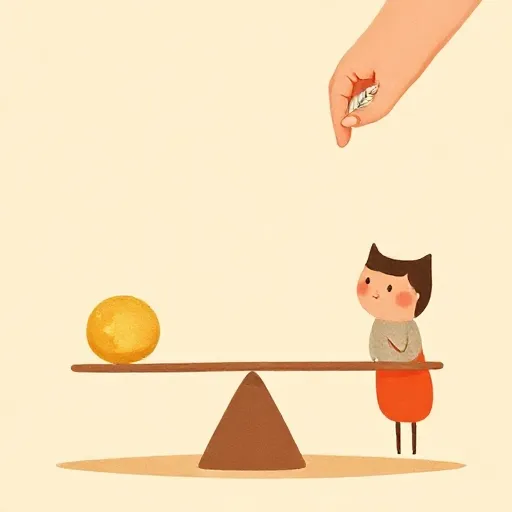
So far, contractarianism looks like it might turn “might makes right” into a philosophy. If the strongest, richest person can threaten to walk away, won’t the bargain just give them everything? Hobbes himself seemed to accept something like that: because the state of nature was so terrifying, people would surrender almost all their rights to a powerful sovereign. That’s a scary conclusion — a contract that leads to totalitarianism.
To avoid that, contractarians need the starting point of the bargain to be fair without sneaking in any outside moral rules. That’s tricky, because the whole point is that no moral rules exist before the contract. Gauthier’s answer relied on what’s called the Lockean proviso. It says: you can’t get a better bargaining position by making others worse off beforehand. If your neighbor’s land was stolen, the bargain should be calculated as if the theft never happened. This makes the outcome less tilted by past violence.
Another tool some philosophers use is the veil of ignorance, made famous by John Rawls (1921–2002). In Rawls’s picture, you choose the rules of society without knowing whether you’ll be rich or poor, healthy or sick. But Rawls just assumes a sense of fairness from the start — which makes him a contractualist, not a contractarian. Contractarians like Gauthier think that relying on an outside idea of fairness makes the whole contract idea pointless. You can’t prove that morality is rational if you’ve secretly put morality into the oven already.
Critics point out that even with the Lockean proviso, natural talents and abilities still give some people an edge. The bargaining table may be unfair from the beginning, and that unfairness can infect the whole deal.
Who Gets Left Out?
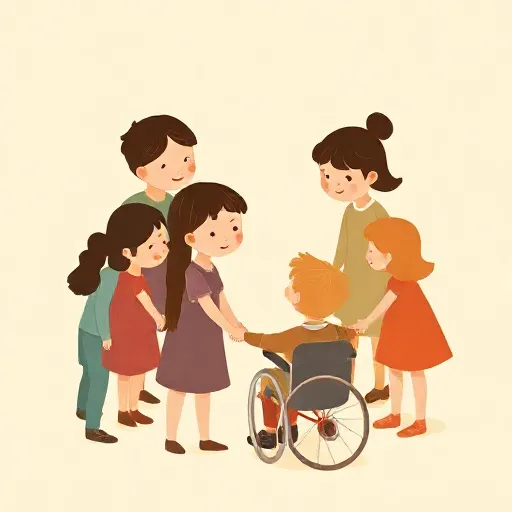
There’s an even deeper worry. Contractarianism says you’re part of the deal only if you can benefit others and reciprocate. That means the whole idea of justice might shut its doors on people who — through no fault of their own — can’t offer much in return. Severely disabled people who need constant care, the global poor far away, and animals are all in danger of being left outside the circle of moral protection.
Disability rights thinkers have tried to push back. Some argue that most disabled people can contribute with the right accommodations, so it’s still in everyone’s self‑interest to include them. Others propose a kind of mutual‑benefit insurance scheme: everyone chips in now, not knowing if they will need expensive care later. But critics reply that for people who will never be able to reciprocate — what some call the “outliers” — contractarianism still has no comfortable place.
A different, explosive use of contractarian thinking comes from philosophers like Carole Pateman and Charles Mills. But instead of imagining a fair bargain, they describe an ugly, real‑life one. Pateman argued that throughout history, men made a sexual contract — a mostly unspoken pact to control women’s bodies and labour. Mills argued for a racial contract — an actual, sometimes explicit, agreement among white people to construct a society that keeps them on top. Both thinkers turn the social contract inside out: what it produces is not justice, but justification of domination.
The contractarian can reply that a deal like that isn’t rational. If women and non‑white people can benefit and reciprocate just as well as anyone else, excluding them leaves potential gains on the table. A truly mutually advantageous contract would have to include everyone who can contribute. Pateman herself isn’t so sure: she thinks the very tool of contract thinking has domination baked in. Mills, more cautiously, believes the contract idea might still be rescued if we start from a more honest, non‑ideal picture of the world. But his later work leans toward a contractualist approach, where people are recognised as moral equals before any bargain begins.
Can You Really Trust a Deal You Made Only for Yourself?
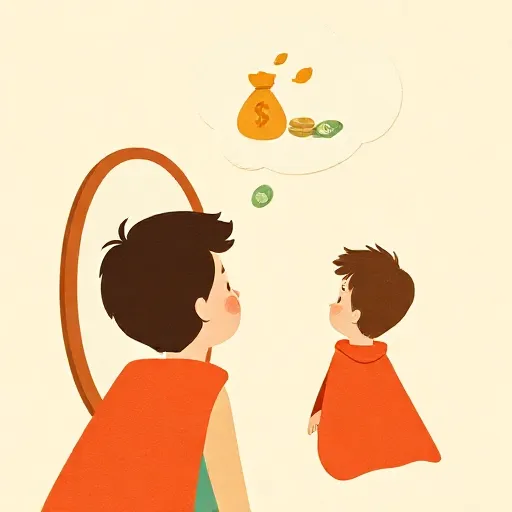
Even if contractarianism could agree on a fair set of rules, there’s another knife blade to walk. Why would you actually follow the rules once the deal is made? This is the compliance problem. Suppose you know you can break your promise without getting caught. A purely self‑interested person, it seems, would cheat.
Gauthier’s answer was that a rational person would train themselves to be a constrained maximiser — someone who adopts a genuine disposition to keep their agreements whenever they’re among others who do the same. By reshaping your own character, you make yourself trustworthy, and then you can access all the good things that come from cooperation. But many philosophers find the idea slippery. If you’re only self‑interested to begin with, can you really will yourself into becoming the kind of person who doesn’t think about their self‑interest first? That looks like it secretly assumes you already have a moral core.
Other critics, like Jean Hampton, pointed out that contractarianism’s own story can backfire. If people in the state of nature refuse to cooperate because they’re greedy and fearful, what stops those same passions from tearing apart the contract later? And if they refuse to cooperate because doing so is simply the smart self‑interested move, then they have the same reason to break the contract when they can get away with it.
Then there’s the worry about feelings. Contractarian morality is driven entirely by what’s good for you. That means, as the philosopher Nicholas Southwood argued, it gives you no real reason to feel guilt for hurting someone else — only regret that you made an irrational choice. But that doesn’t seem like morality at all. It may be smart, but it’s hard to see how it’s good in the way we usually mean.
Why This Old Argument Still Feels Alive

Contractarianism isn’t just an old philosophical puzzle. You live inside it every time you join a group project and wonder who will do the actual work. Every time you lend a pencil and secretly hope you’ll get a favour back. The questions it asks are startlingly bare: can we build a world where people play fair without pretending they’re angels? Can self‑interest, all on its own, draw the line between right and wrong?
The theory has sharp teeth. It forces you to notice that many of the things we call “fair” might really be agreements that benefit the people with the most power. At the same time, it shows that cooperation can be genuinely rational, and that trust is worth building — not because you’re a saint, but because you’re smart. Whether that’s enough to count as morality is still an open fight, and it’s a fight that won’t end soon.
Think about it
- If a classmate is certain that no one will ever find out they cheated on a homework, is it still rational for them to do the honest work? Why or why not?
- Can a friendship built only on what each person gets out of it ever be a real friendship? What might be missing?
- Should a society provide support for people who, through no choice of their own, can’t contribute equally — even if it costs you something? What rule would you want if you didn’t know your own abilities?