Can a Map Teach You to Love? Madeleine de Scudéry’s Tender Geography
The Map That Wasn’t Just for Lovers
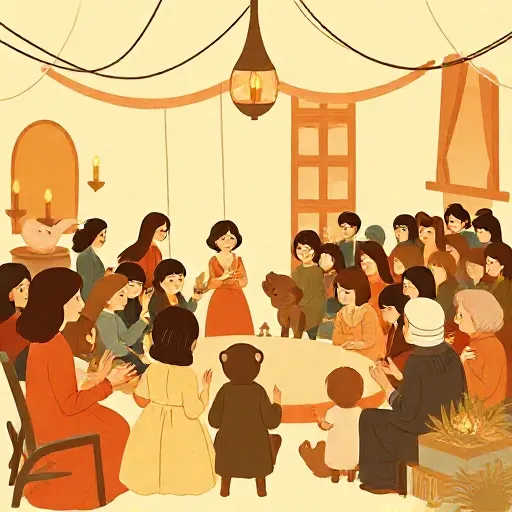
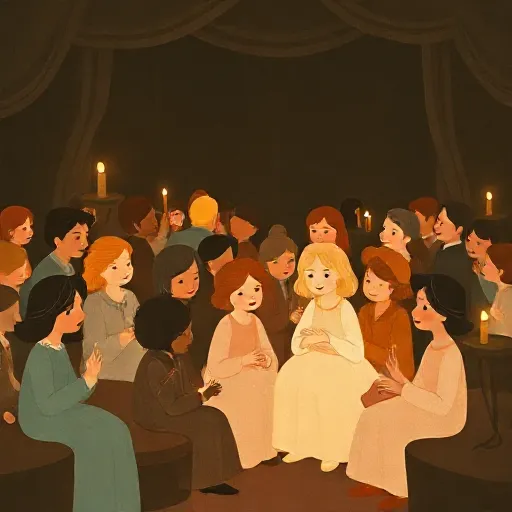
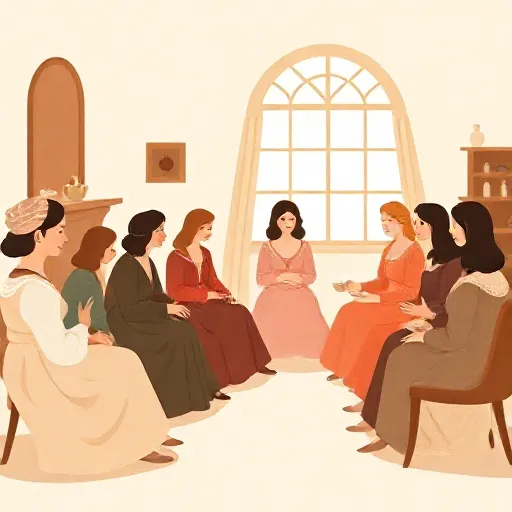
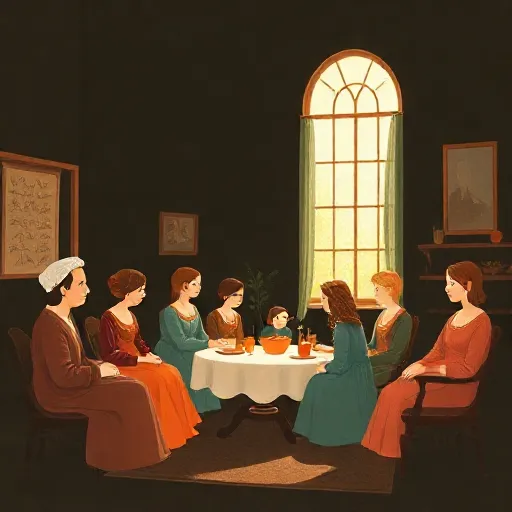
In the 1650s, in a fashionable Paris neighborhood, a woman named Madeleine de Scudéry (1607–1701) painted a map. It was not a map of countries but of a country called Tendre — a heart-shaped land where every road led toward true friendship or love, but only if you had the right virtues. This Carte de Tendre appeared in her enormous novel Clélie, and soon it became famous across Europe. Young nobles studied it like a geography lesson, yet it was really a moral map. To reach “Tendre-sur-Estime” (Tender-on-Esteem) you had to pass through villages named Patience, Generosity, and Respect. If you wandered down the River of Inclination or got stuck in the Lake of Indifference, you would never arrive. Scudéry used the map to argue that love and friendship are not just feelings; they are choices we make by practicing virtues. Every Saturday she gathered writers, philosophers, and aristocrats in her home to debate such choices. They called the gathering the samedis (Saturdays). And there, wisdom had no gender.
What Makes a Virtue? Sitting in a Salon
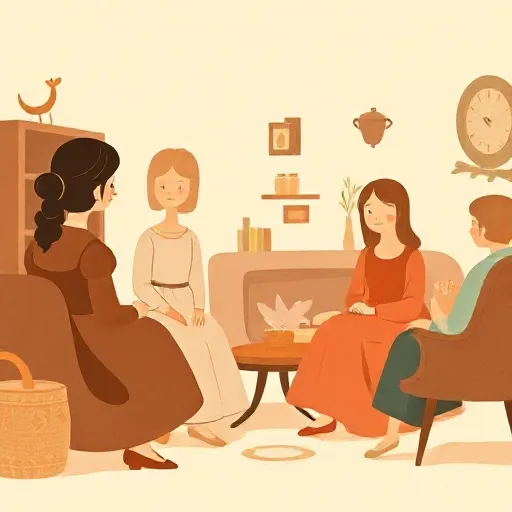
Scudéry and her circle believed that the highest goal was to be honnête — decent, fair, and tolerant. They turned politeness into a moral virtue. True politeness meant treating others as you would want to be treated, never interrupting, never mocking. Scudéry called it refusing to be “the tyrant of conversation” — leaving space for every voice. In an age when men often dominated talk, that was a radical claim. She also praised magnanimity: the habit of knowing your own worth and aiming high, but without despising fate or others. She insisted women could be magnanimous, giving the example of Porcia, the Roman wife of Brutus, who endured pain without complaint. Another key virtue was discretion: knowing what to say and what to keep quiet, depending on your relationship to the other person. Even kindness had a hundred varieties, and in some situations it could become a vice if it turned sugary or flattering. Scudéry also explored glory — the inner shine that comes from any act of virtue, not just winning battles. By making fine distinctions (she called it the distinguo), she showed that virtues are not one-size-fits-all. Yet she never gave up on the idea that some actions are simply wrong, like lying or oppressing women, no matter how many people do them.
Why Doubt Almost Everything (But Not Everything)

How can we be so sure about right and wrong? Scudéry grew up reading Michel de Montaigne (1533–1592), the great skeptic who asked “What do I know?” She adopted a stance we can call moderate skepticism. She believed most human knowledge is full of doubt, because our temperament — the mix of humors like choleric, melancholic, sanguine, and phlegmatic — colors how we see the world. A person of fiery humor will feel anger when another would laugh. Custom also tricks us into thinking something is true just because it’s familiar. Yet Scudéry was not a complete doubter. She argued that reason could prove God exists through the design argument: the universe and the human soul are so intricately structured that they must be the work of an intelligent, eternal being. To reject that, she said, was as illogical as believing travelers’ tales about magical stones that make you invisible while dismissing more trustworthy testimony. She also insisted that true self-knowledge requires moral courage. You cannot see your own faults unless you are just, sincere, and brave enough to examine your actions in the mirror of social life. For Scudéry, knowing yourself happens in conversation, not in a closed room with your own thoughts.
Women Who Talk Back: Sappho’s Dare

In many of her dialogues, Scudéry gave a voice to women silenced by custom. Her character “Sappho” (based on the ancient poet) delivers a fiery speech: young women are taught a false modesty that convinces them their minds are inferior. Society says beauty is for women, and arts and sciences are for men. But Scudéry saw that as a “custom and corruption of our time.” Nature equipped women with reason just as it did men; to deny them study is to rebel against how the world is made. She condemned practices like forced marriage, polygamy, and even foot-binding in China as customs that trapped women. Writing, she urged, was women’s path to glory. By publishing, a woman could speak to the future, shaping how she is remembered far better than having someone else paint a flattering portrait. Her own life proved it; she became one of the most famous authors in Europe. And she did it not by hiding, but by hosting conversations where everyone could argue freely.
Why It Still Matters: When Custom Says It’s Right

Today, we don’t draw heart-shaped maps to navigate friendships, but Scudéry’s questions are alive in every middle-school cafeteria. How do you know if a group’s rule is a good moral habit or just an unfair custom? She gave us a tool: reason combined with open, polite debate. Her salon method — where multiple voices correct each other — is like a classroom discussion where no one mocks you for changing your mind. She also reminds us that politeness isn’t about fancy manners; it’s about making space for everyone. Self-knowledge still takes courage. It’s easier to scroll past your own mistakes than to face them. Scudéry’s map of love may look quaint, but its message endures. True connection, whether between friends or within yourself, is a journey that requires patience, respect, and the stubborn belief that you have the right to speak.
Think about it
- Scudéry believed that politeness means not being a “tyrant of conversation” and letting others speak. When you’re in a group, how can you tell if you’re dominating the talk or if it’s okay to share your ideas?
- Her map of love suggests that true friendship requires overcoming obstacles like “Indiscretion” and “Neglect.” Do you think all deep friendships have to go through hard times, or can some friendships just be easy?
- Scudéry argued that some customs (like forcing women to be silent) are wrong even if everyone accepts them. Can you think of a custom today that many people follow but might be unfair when you look closely?