What If Evolution Doesn’t Happen in Slow Motion?
The Puzzle in the Rocks
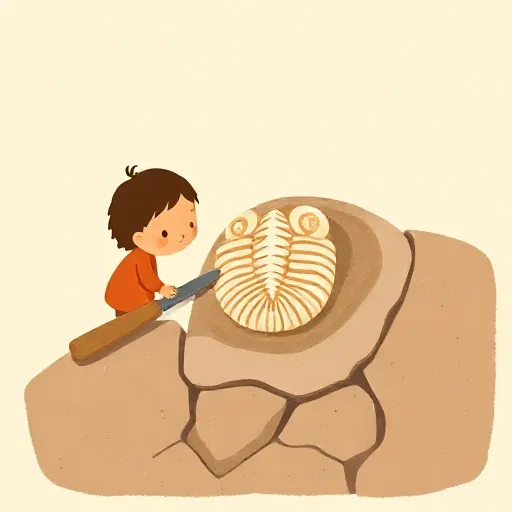
In 1971, a young paleontologist named Niles Eldredge (born 1943) was studying trilobite fossils. As he traced the layers of ancient rock, he saw something odd. One kind of trilobite would vanish, and right above it a completely different trilobite would appear — with no step-by-step change in between. A few years later, Eldredge and Stephen Jay Gould (1941–2002) teamed up to ask: what if the fossil record isn’t missing the gradual parts? What if the sudden jumps are real?
Darwin’s Gradual World
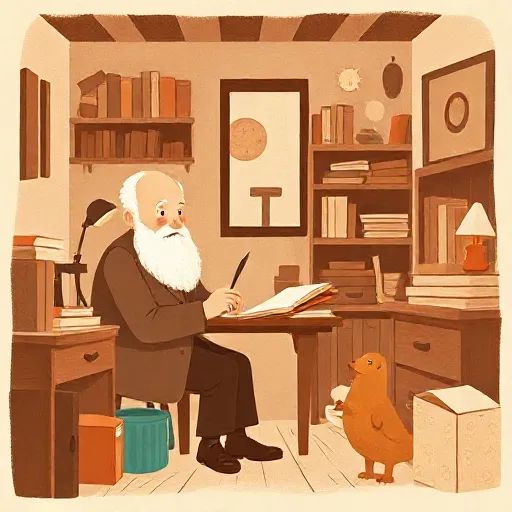
Charles Darwin (1809–1882) already knew that the fossil record looked jumpy. In his Origin of Species, he blamed the gaps on a bad record — “Nature may almost be said to have guarded against the frequent discovery of her transitional or linking forms.” Darwin believed in phyletic gradualism, the idea that species change very slowly, accumulating tiny tweaks over immense spans of time. He thought the fossils were simply too incomplete to capture that gradual march.
For over a century, paleontologists mostly agreed. They assumed that if we could find every missing rock layer, we’d see a smooth ramp of changes. The real story of evolution would be a long, patient snail’s crawl.
A New Idea: Punctuated Equilibria
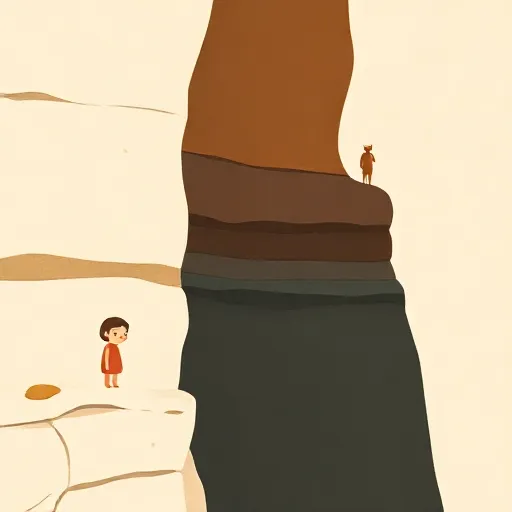
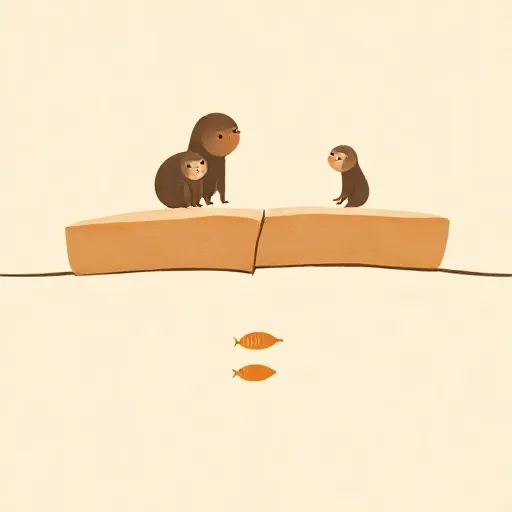
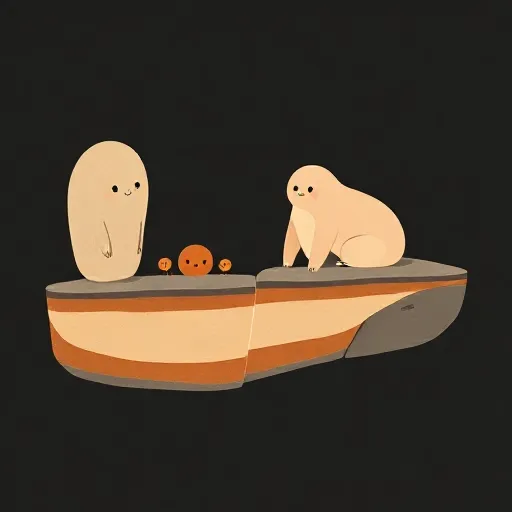
Eldredge and Gould looked at the same jumpy pattern and drew a different conclusion. They argued that most new species don’t arise slowly, right under our noses. Instead, they form when a small group gets isolated — say, by a new river or mountain range. In that separate spot, evolution can happen relatively fast, in geological terms, while the main population stays unchanged. Then the new form shows up abruptly in the fossil record.
They called their model punctuated equilibria. The word “equilibria” (meaning stable, balanced states) refers to long periods when species barely change. The “punctuations” are the quick bursts of change during geographic isolation. This process — called allopatric speciation — was already a mainstream idea. Eldredge and Gould simply realized that if speciation usually happened this way, the fossil record should look jumpy, not like a smooth movie.
As they later wrote, they were “hoping to validate our profession’s primary data as signal rather than void.” The gaps weren’t just missing data; they might be telling the real story.
Stasis: The Real Mystery
The most surprising part of punctuated equilibria wasn’t the quick bursts — it was the claim of stasis. Stasis means that once a species appears, it often stays nearly the same for millions of years. Eldredge and Gould argued that stasis is the normal state, not a rare exception.
This idea sparked a huge fight. If stasis is so common, what keeps species from changing? Darwinian natural selection — especially directional selection, which pushes a population toward a new form — should be driving constant tweaks. Critics argued that stasis could just be the result of stabilizing selection, a well-known microevolutionary process that nudges a population back to its tried-and-true average whenever it drifts. If that’s right, stasis is no puzzle at all — it’s just selection keeping things the same.
But Gould pushed the claim further. He began to suggest that stasis shows directional natural selection is less powerful than many biologists thought. If selection could easily reshape species, why does the fossil record show so much long-term standing still? Biologists who loved the power of selection — like Richard Dawkins and Daniel Dennett — pushed back hard. The debate grew louder through the 1980s and 1990s.
Meanwhile, new statistical studies of giant fossil samples (like the work of Jeremy Jackson and Alan Cheetham in 1999, and Gene Hunt in 2007) showed that stasis really does show up surprisingly often. Yet a puzzle remained: studies of living populations (such as Peter and Rosemary Grant’s finches, or Richard Lenski’s bacteria) found plenty of directional change. Why would living populations change so much while fossils stay frozen? Scientists call this the “paradox of stasis,” and it’s still being explored.
From Stasis to Species Selection
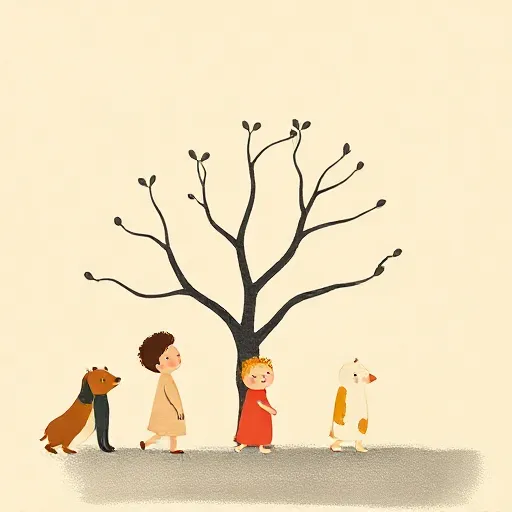
Eldredge and Gould needed an explanation for stasis. They suggested that species might act like homeostatic systems — they somehow “buffer” themselves against change, like a thermostat keeping a room steady. This idea led somewhere unexpected. If species can hold themselves stable, maybe they can also be the targets of selection.
At first, Eldredge and Gould were clear: “we postulate no ‘new’ type of selection.” But soon, paleontologist Steven Stanley pointed out that their model made species look a bit like organisms. A species “birth” (speciation) and “death” (extinction) start to resemble the survival and reproduction of individuals. In 1977, Gould and Eldredge agreed: this was species selection — natural selection playing out at the level of whole species, not just individuals.
This challenged a standard picture. Traditionally, evolution was taught like this: organisms compete and reproduce; species are the populations that change as a result. Organisms are the units of selection; species are the units of evolution. Species selection flips that. Now a species itself could be the unit that gets “chosen” — if one species has a trait that makes it more likely to survive or split into new species, that trait can spread across a clade. To critics, this either threatened the core of Darwinian theory or, if species are individuals (as some philosophers like Michael Ghiselin and David Hull argued), it was just individual-level selection at a higher rung. The debate over whether species selection is real, and how important it is, is very much alive.
Why It Still Matters Today
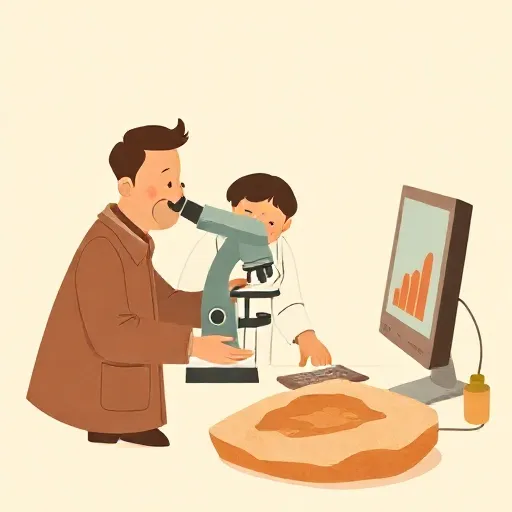
Punctuated equilibria didn’t just stir a scientific fight — it changed how we look at the history of life. It forced paleontologists to develop better statistical tools to test whether the fossil record really favors stasis over gradual change. It also opened the door to hierarchical thinking in evolution — the idea that selection can happen at many levels at once: genes, organisms, species, even whole clades.
Today, the tension between stasis and change isn’t settled. Some researchers think things like developmental constraints or ecological interactions can lock species into stasis for ages. Others point to massive bursts of change — like the rapid rise of flowering plants — as huge macroevolutionary events. The same rock layers that puzzled Eldredge half a century ago still hold secrets about whether evolution is a quiet hum or a series of explosions. And every time you see a fossil, you’re looking at a single frame in that long, bumpy movie.
Think about it
- If a species stays the same for millions of years, does that mean natural selection is weak, or that it’s working hard to keep things the same? Can both be true at once?
- Could the fossil record ever be complete enough to prove once and for all whether evolution’s pace is mostly gradual or bursty? Or is there always going to be a missing layer somewhere?
- If species can be “selected” like organisms, why don’t we talk about the “death” of the dinosaurs as a species-level extinction and the rise of mammals as a species-level success? What changes in how you picture the tree of life?