Can You Tell a Lie Without Trying to Deceive?
When the Truth Is Obvious, Can You Still Lie?

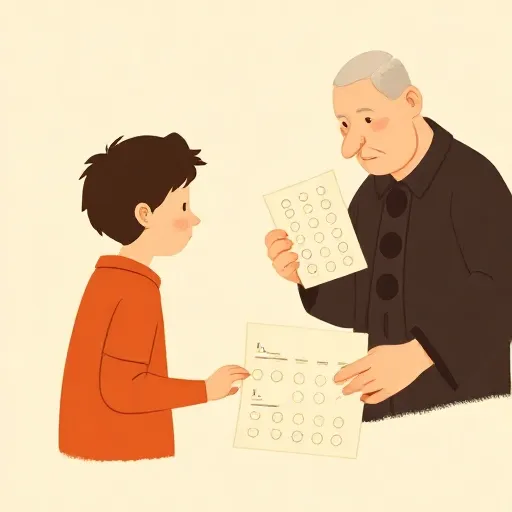
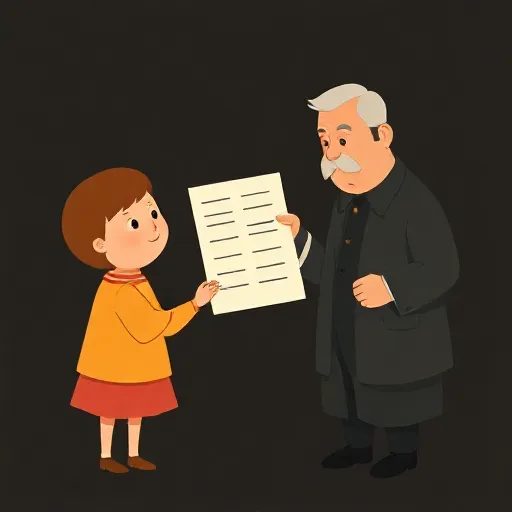
Imagine a student named Alex. The principal calls Alex into her office and holds up a test sheet. It shows all the correct answers in Alex’s handwriting. She says, “You cheated on this exam.” Alex looks her straight in the eye and answers, “I didn’t cheat.” He isn’t trying to fool her. The school’s rule is “no punishment without a confession.” Alex just wants to avoid trouble—he doesn’t expect the principal to believe him. So is Alex lying?
Many philosophers would say no. They believe that telling a lie always includes the goal of tricking someone—what they call an intention to deceive. Without that, a false statement might be defiant, silly, or even forced, but it isn’t a lie. Yet a growing number of philosophers disagree. They argue you can lie without any attempt to deceive, just by saying something you know is false. To understand this fight, we first need to look at the classic recipe for a lie.
The Classic Recipe for a Lie

For centuries, philosophers have tried to define exactly what a lie is. The most widely accepted answer has four necessary parts. If any one part is missing, the statement is not a lie.
First, you must make a statement. You can use words, sign language, Morse code, or even a nod. Wearing a fake police uniform or a wedding ring when you’re not married isn’t a statement—those are signs, but they aren’t language. So you can’t lie just by putting on a costume.
Second, the statement must be untruthful. That doesn’t mean it has to be actually false. It means you believe it is false when you say it. Imagine a prisoner during a war. He tells the guards that his comrade is hiding in the cemetery, thinking that’s a lie. But it turns out the comrade really is there. The prisoner still lied, because he believed his statement was false. On the other hand, if you tell your friend the train leaves at noon and it really does leave at noon, you aren’t lying—even if you secretly hope she misses it. Honest statements are not lies, no matter how sneaky your motives are.
Third, you must aim your statement at another person—the addressee. Lying to your goldfish doesn’t count, nor does muttering a falsehood to yourself. You can lie to a whole crowd, like in a TV commercial, but you need a real, thinking audience.
Fourth, and this is the most debated part, you must have an intention to deceive the addressee. The classic definition says you want the other person to believe your false statement. If you make an untrue joke, act in a play, or tell a story everyone knows is fiction, you’re not lying, because you don’t intend anyone to actually believe it. White lies—like telling a friend her new haircut looks great when you think it’s awful—still count as lies on this definition, because you want her to believe you. Even polite code can escape: if a servant says “Madam is not at home” to an unwanted visitor and both know it just means “she’s busy,” then nobody is trying to trick anyone, so it’s not a lie.
This four‑ingredient model seems to cover most everyday cases. But it crashes into a problem when someone says something false out in the open, with no hope of being believed.
The Big Objection: Lying Without Deceiving

Think about Alex again, or imagine a witness in a criminal trial. Everyone in the courtroom already knows the defendant is guilty. The witness takes the stand and swears, “He didn’t do it.” He isn’t trying to change anyone’s mind. He’s just saying it because he fears retaliation from the defendant’s gang. Is that witness lying?
Philosophers like Thomas Carson and Roy Sorensen answer with a firm yes. They defend a view called Non‑Deceptionism: you can lie without intending to deceive. Sorensen calls these bald‑faced lies—false statements made right in the open, where everyone knows the truth. According to this view, what makes something a lie is simply making an assertion you believe to be false. When you assert something, you put it forward as true in a conversation, even if nobody buys it. You still “warrant” the truth of your words—you act as if you’re playing by the rules of honest talk, then you break those rules.
Carson gives another example: a student who tells the dean “I didn’t cheat” even though they both know he did, just because the dean’s policy is never to punish without a confession. The student isn’t trying to fool the dean; he’s just gaming the system. Yet Carson says he is still lying, because he states something he believes is false in a context where truthfulness is normally expected.
For Non‑Deceptionists, the key is not what you hope will happen in the other person’s head. It’s what you do with your words. Even a joke can be a lie if, somehow, the joker intends the listener to accept it as true—though usually jokes aren’t lies. But in a bald‑faced case, you don’t need anyone to accept it. You just need to say it.
Defending the Traditional View: Trust and Broken Promises

Those who hold the classic definition—often called Deceptionists—push back. They say a bald‑faced “lie” isn’t really a lie at all. Why? Because lying isn’t just about making a false sound. It’s about inviting someone to trust you and then betraying that trust.
Some Deceptionists, like Roderick Chisholm and Thomas Feehan, argue that a lie requires an assertion made under conditions that give the hearer good reason to trust the speaker. When you lie, you intend the other person to believe not just the statement, but also that you yourself believe it. That’s what makes lying a breach of faith. In Alex’s case, the principal has no trust to give—she knows Alex cheated. So Alex isn’t inviting trust. He’s just performing defiance, not lying. Similarly, if a thief grabs you and demands to know where your money is, and you say “I have no money” when you do, many philosophers argue you aren’t lying, because the thief has no right to your honesty and no trust exists to break.
This view helps explain why we feel a special sting when someone we love lies to us. It’s not just that we were misled. It’s that the person promised, through the very act of speaking, to be straight with us—and then broke that promise. In bald‑faced cases, that promise is never really on the table, so the sting is different.
However, Non‑Deceptionists reply that even when trust is absent, the liar still breaks a kind of public rule: “Say only what you believe.” The courtroom witness who perjures himself, even pointlessly, still corrupts the whole system of testimony. That’s why many people want to call it a lie.
Why the Debate Still Matters

This isn’t just a word game for philosophy classrooms. How we define lying shapes how we judge people’s actions—and whether we trust them again.
If lying always requires an intention to deceive, then someone who makes a false statement while knowing nobody will believe it might not be lying at all. That could let public figures off the hook when they say things that are obviously false, so long as they can claim they were “just putting it out there” and not actually trying to fool anyone. On the other hand, if we label every deliberately false statement a lie, we might accuse people of lying even when they’re only being polite, ironic, or protective—like telling a frightened child “There’s no monster under your bed.” That might seem too harsh.
The debate also touches your own friendships. When a friend asks if you like their new shoes, and you say “They’re cool!” even though you hate them, the classic definition says you’re lying, because you want them to believe it. But Non‑Deceptionists might say you’re still making a kind of false assertion. Either way, you’re bending the truth. Whether that’s a lie or just a nice thing to say depends on which definition you pick.
Philosophers haven’t settled this. Some think we need a new definition, like “a lie is an untruthful statement that violates a moral right” or “a lie is an assertion that the speaker does not believe.” Others hold fast to the traditional idea that deception sits at the heart of lying. The question remains open. And it’s one you face every time you open your mouth—or even when you stay silent.
Think about it
- If you tell a friend an obvious joke that’s not true, but part of you secretly hopes they’ll believe it, have you just lied? Why or why not?
- Imagine a witness in court who says something false that everyone already knows is false. Should the law treat that as lying, or is it something different? What would justice require?
- Can you be dishonest without telling a lie? Can you be a liar without ever intending to deceive anyone?