

How Can You Lie to Yourself — and Believe It?
The Test You Refuse to Read

Imagine you submit an article to your school magazine, and the editor returns it with detailed criticisms, pointing out weak arguments and factual errors. Instead of accepting the feedback, you tell yourself the editor is biased, the criticisms are petty, and your piece is brilliant just as it is. You genuinely believe it — even though deep down you know there are problems. That’s self-deception: holding a false belief despite evidence to the contrary, often because you want it to be true.
But how can you fool yourself? You know the evidence against your belief is strong. How can the same mind both know the truth and hide it? This puzzle has kept philosophers busy for centuries. Some even think self-deception is impossible. Yet we see it every day — in the friend who insists their terrible singing is amazing, or the student who knows they’ll pass a test without studying. The question isn’t just about lying to others; it’s about lying to yourself in a way that really convinces you. So, let’s dig into the puzzle.
The Impossible Trick: The Classic Puzzles
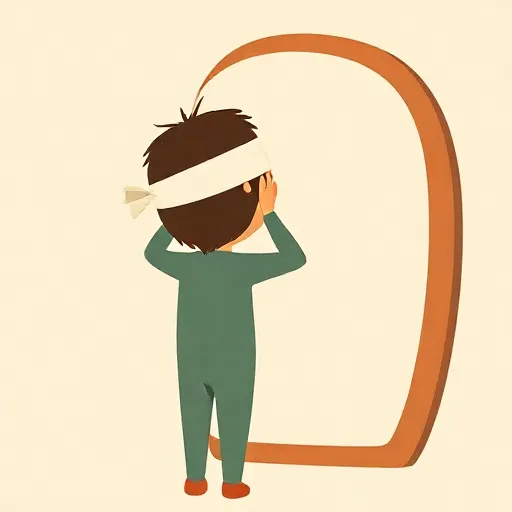
If we think of self-deception like tricking another person, we run into two huge problems. Imagine you want to make your friend believe there’s a monster under the bed, even though you know there isn’t. You’d have to scheme to convince them, while you yourself know the truth. Now apply that to yourself: you’d need to intentionally get yourself to believe something false, while continuing to know it’s false. That seems impossible. Philosophers call this the traditional model of self-deception.
The first puzzle is the static paradox: you’d have to hold two contradictory beliefs at the same time — believe the monster is real and also believe it’s not. You’d be both the deceiver (who knows the truth) and the deceived (who believes the lie). Believing p and not-p at once seems like a mental impossibility. The second puzzle is the dynamic paradox: you’d have to plan a deceitful strategy while knowing exactly what you’re doing, yet the plan would only work if you forgot you were plotting. If you’re aware of your own trick, you can’t be taken in by it. It’s like trying to surprise yourself by jumping out from behind a door after you’ve already told yourself the surprise is coming.
These paradoxes led some philosophers, like Stanley Paluch in 1967, to claim that self-deception cannot happen — it’s conceptually impossible. But most philosophers disagree, because we see it happen all the time. The challenge is to explain how it’s possible without breaking logic. Two main camps have emerged: those who keep the idea that self-deception is intentional (called intentionalists) and those who abandon that idea (called revisionists).
Intentionalists: Splitting the Mind into Parts

Intentionalists believe self-deception is intentional — you really do try to make yourself believe a falsehood. To avoid the paradoxes, they suggest that the mind has separate parts that don’t fully communicate. Imagine your mind as a house with a hidden attic: the part that knows the ugly truth stays in the attic, while the part that runs your everyday thoughts lives downstairs and believes the comforting lie. The deceiver part can pull strings without the deceived part noticing. This is psychological partitioning.
For example, philosopher Donald Davidson (1917–2003) argued that self-deception works because two of your own attitudes can conflict without your consciously holding them as a single contradiction. One part of you recognizes the evidence, another part refuses to accept it, and a boundary prevents the two from meeting. One version even imagines a sort of subconscious agent — a mini-you inside — that engineers the deception. This mini-agent harbors the true belief and intentionally feeds biased evidence to the rest of you. These divisions sound exotic, but intentionalists think they’re necessary to make sense of the phenomenon.
Other intentionalists use temporal partitioning: self-deception happens over time. You might start out knowing the truth, then intentionally create false evidence or avoid the real evidence, and over days you forget your own trick and end up believing the lie. For instance, an athlete who knows she’s insecure about her performance writes a diary full of exaggerated praise for herself, then later reads it and genuinely believes she was always confident. The dynamic paradox is avoided because by the time you’re deceived, you’ve forgotten the plan. Yet critics point out that many cases of self-deception happen in a flash — like instantly reinterpreting a harsh comment as a joke — without a long-term plot.
Revisionists: Self-Deception Without a Secret Plan

Revisionists think the intentional model is too complicated and that real self-deception doesn’t require an intention to deceive yourself. Instead, they say, we can end up with false beliefs simply because our desires, fears, or emotions bias how we handle evidence. The most influential revisionist account comes from philosopher Alfred Mele (born 1951). He argues that for self-deception, you need no contradictory beliefs and no secret strategy — you just need a false belief that you formed in a motivationally biased way.
Picture a mother who desperately wants her son to succeed in school. She overlooks his failing grades, distorts his teacher’s worried emails into “the teacher is too strict,” and focuses only on the one test he barely passed. She ends up truly believing he’s doing well. She isn’t intentionally fooling herself; her powerful desire biases her perception and reasoning without her noticing. Mele sets out conditions: the person acquires a false belief, treats relevant data in a biased way because of motivation, the data she has actually supports the opposite belief more, and she is at least somewhat aware that the opposite might be true — she has a suspicion or feeling that something is off. That suspicion creates the inner tension we recognize in self-deceivers: a knot in your stomach while you insist everything is fine.
But why doesn’t desire always bias us toward whatever we want? Sometimes we’re careful despite strong wishes. Mele and others explain this with error-costs: we unconsciously weigh how bad it would be to be wrong in each direction. If you’d be devastated to find out your favorite chocolate was tainted by unfair labor, but you don’t think it matters much, you might self-deceive. If being wrong would ruin your reputation as a fair-trade activist, you’ll scrutinize evidence more carefully. So self-deception strikes selectively, depending on what’s at stake for our lives and identity.
This view neatly avoids the static and dynamic paradoxes because you never hold full contradictory beliefs, nor do you intend to deceive. But critics worry it blurs the line between self-deception and wishful thinking: simply wanting something to be true and believing it without evidence. Deflationists reply that self-deceivers actively ignore or downplay evidence they know exists, whereas wishful thinkers might never encounter contrary evidence at all. Still, the debate continues over whether the tension in deep cases — like someone who claims to love their job but constantly procrastinates and dreads mornings — requires an unconscious true belief or just a strong suspicion.
Are You Responsible for Fooling Yourself?

If you end up believing a lie because your desires bent your thinking, can you be blamed for it? This question matters because self-deception often has moral consequences. Imagine a mother who refuses to believe her husband is hurting their daughter, because facing that truth would shatter her world. As a result, she never protects her child. Is she morally responsible for that failure?
Intentionalists have a straightforward answer: if you intentionally set out to deceive yourself, you’re responsible just as you would be for any intentional act. But for revisionists like Mele, the process is sub-intentional — motivation biases you automatically. Yet Mele still thinks we can often be responsible because we have some control over biases. We can notice when strong desires are at play and deliberately double-check our reasoning. That’s like having an inner alarm that warns you: you want this to be true very badly — be extra careful. When you ignore that alarm, you’re blameworthy. Other philosophers argue that self-deception often reveals character flaws like epistemic cowardice — a lack of courage to face uncomfortable truths — for which you can be responsible if you could have cultivated better habits.
However, some doubt we have enough control. If the biasing happens unconsciously, you might never realize it’s happening until it’s too late. And even if you suspect something, might your desire still overwhelm your effort? Philosopher Neil Levy argued in 2004 that in many cases self-deceivers lack the awareness needed to resist, so they shouldn’t be blamed as harshly. The debate is far from settled, but it underscores an important idea: becoming a careful thinker often means watching out for your own wishes and fears, and questioning beliefs that feel too good to be true.
Why It Matters: The Mirror You Can’t See

Back to that rejected article. Maybe after a week, you reread the editor’s notes when you’re less defensive, and it dawns on you: they were right. You feel a strange mix of embarrassment and relief — you finally see what you’d been hiding from yourself. That moment reveals something deep about how our minds work. Self-deception isn’t just a weird logical puzzle; it’s part of everyday life. It can protect us from painful truths, but it can also keep us from improving, hurt people we care about, and make us strangers to ourselves.
Philosophers continue to argue about exactly what self-deception is and how to explain it. Some think it’s an intentional trick, others that it’s a glitch of motivated reasoning. But all agree that we’re vulnerable to it, and that understanding it can help us live more truthfully. So next time you catch yourself ignoring clear evidence because you don’t want it to be true, pause. Ask yourself: Am I really being honest with myself, or just telling a comforting story? Your answer might surprise you — and that’s philosophy in action.
Think about it
- If your friend insists they’re an amazing singer, but you hear them hit all the wrong notes, could they be self-deceived, or are they just mistaken? How could you tell the difference?
- Imagine someone who believes their partner loves them, even though their partner is cruel and neglectful — and they’ve hidden all evidence of the cruelty from themselves. Are they partly to blame for believing the lie? Why or why not?
- Is it ever better to believe a comforting lie about yourself than the painful truth? Give an example and explain your reasoning.