Why Does the World Feel Like a Thing? Georg Lukács’s Answer
Why Did Everything Stop Making Sense?
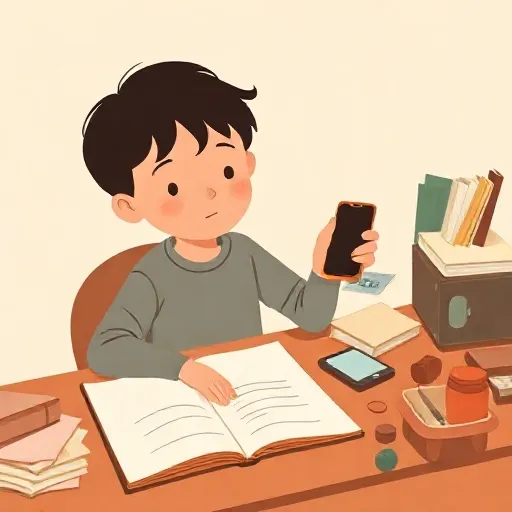
Imagine you are trying to write a short story about a talking fox, but every few minutes your phone buzzes with a new grade, a new like, a new advertisement. You can feel two different versions of yourself: the creative fox-lover and the number-collector. The Hungarian philosopher Georg Lukács (1885–1971) spent his life thinking about that gap. He believed that modern society creates a world where everything—including people—starts to feel like a thing we can measure, buy, or control. Lukács asked why this happens and whether we could ever feel truly alive and connected again.
His journey began in literature and art, took a sharp turn into revolutionary politics, and ended with a new way of seeing the entire social world. At its heart, his work keeps asking one pressing question: can human beings build a world where meaning isn’t just a memory, but something we actually experience together every day?
The Battle Between Life and Form
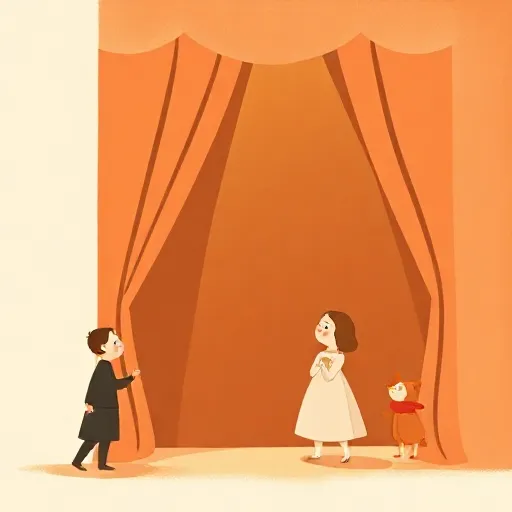
As a young man, Lukács was obsessed with form and life. By form he meant the fixed patterns, rules, and structures that make our actions understandable—everything from the rules of a poem to social manners. By life he meant the messy, rich, always-changing stream of real experience and feeling. He believed that in the ancient world of Homer’s poetry, life and form were one. When a Greek warrior acted honorably, the meaning of honor wasn’t a rule in a book; it was woven into the way people actually lived. That kind of meaningful unity Lukács called a totality—a whole where every piece only makes sense because of all the other pieces.
Modern life, Lukács argued, broke that wholeness apart. Now forms feel like they come from outside, not from inside our own lives. Think of a school dress code that seems to have nothing to do with who you are, or social media etiquette that makes you perform a version of yourself you don’t recognize. In his 1916 book The Theory of the Novel, Lukács said that the modern novel is the art form of a world that has lost its totality. Unlike ancient epic poetry, the novel follows characters who are desperately searching for meaning in a society that offers only empty conventions. The hero never quite fits; the world appears as a “second nature” of dead rules.
Even at this early stage, Lukács saw a tiny utopian hope. The very fact that novels keep being written, he believed, shows that we cannot stop longing for a world where life and form could embrace each other again.
When the World Turns into a Thing
After the First World War, Lukács made a surprising decision: he joined the Hungarian Communist Party. His old friends were baffled, but Lukács thought he had found a way to actually solve the form-and-life problem, not just write about it. His big idea arrived in a 1923 book called History and Class Consciousness, particularly in an essay on reification.
Reification (from the Latin res, “thing”) is the process through which human relationships and human-made arrangements start looking like natural, unchangeable objects. Lukács built this on an idea from Karl Marx (1818–1883). Marx had shown that in a capitalist economy, relations between people—like a boss and a worker—appear as relations between things: money, commodities, prices. Lukács took this further. He argued that the commodity form (the pattern of treating everything as a thing to be bought and sold) spreads into all of life. It shapes how we see ourselves, how we think, even how modern science and law work.
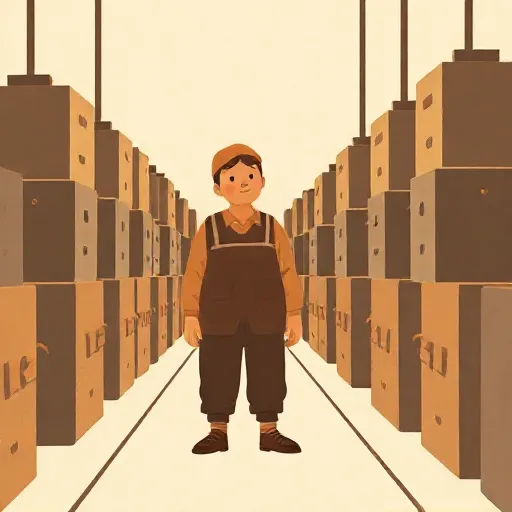
In a factory, a worker’s labor is chopped up into tiny, interchangeable parts. No single person makes a whole chair; each person performs one mechanical motion. Lukács said this doesn’t just happen on the assembly line. Our own mental abilities begin to feel like possessions we “own” or “dispose of,” not like organic parts of who we are. We become contemplative—we watch our own lives as if we were reading a script written by some impersonal system. Friendships get measured in likes; intelligence gets reduced to test scores. The world turns into a giant machine of calculable things, and we forget that human beings are the ones who built the machine in the first place.
This creates a strange blindness. Modern philosophy, Lukács claimed, keeps hitting a wall—the wall between formal rules and the messy content of life. The German philosopher Immanuel Kant (1724–1804) had called this the “thing in itself,” the part of reality that our rational systems can never quite capture. For Lukács, this wasn’t just a philosophical puzzle; it was a symptom of living in a society that treats everything as an object.
The Workers’ Secret Advantage

If reification makes people passive, is there any way to wake up? Here Lukács introduced a version of what later became known as standpoint theory. He claimed that the proletariat—the class of workers who sell their labor—has a unique epistemic possibility. That sounds fancy, but the logic is simple.
Members of both the working class and the middle classes experience a reified world of things and numbers. But for the middle-class person, this experience can feel consistent: you can believe that your success comes from your own individual choices, and you rarely feel the contradiction. A factory worker, however, cannot avoid it. The worker is treated as an object—a cost to be managed—yet also must act as a subject who plans, decides, and creates. As Lukács put it, the worker “appears to himself immediately as an object and not as the active part of the social process of labour.” That split is painful, but it also creates a kind of double vision. The worker is forced to ask: “If I am not an object, who actually made this world this way?”
The answer, Lukács thought, is that we all made it together through collective labor—but under capitalism we have forgotten that we are the authors. The proletariat, because it cannot afford to forget for long, has the opportunity to grasp that society is a totality produced by humans and can therefore be changed by conscious collective action. This discovery isn’t automatic and it doesn’t happen just by thinking. It requires practical struggle—a revolution, not just in government, but in the way we see and make our social world. When workers realize they are the “subject-object” of history, reification can start to break apart.
Lukács’s Second Thoughts: Is Objectivity Always Bad?
In the 1930s and later, Lukács had to face a difficult problem with his own theory. Critics pointed out that if all objectivity is a curse, then we would need to abolish every institution, every law, every tool—which sounds impossible and even dangerous. In a 1967 preface to a new edition of his famous book, Lukács admitted a mistake. He had blurred the line between objectification and alienation.
Objectification, as Lukács now followed the thinker Georg Wilhelm Friedrich Hegel (1770–1831), is simply the process of turning an idea or a skill into something external—like a table you build with your hands, or a traffic rule everyone agrees on. That’s not bad; it’s a necessary part of being human. Alienation, by contrast, happens when those external forms turn against us, when the very systems we created start to dominate our lives and block our ability to develop. A schedule that helps you play soccer is objectification; a schedule that makes you feel like a robot who never gets to choose is alienation.
This distinction changed everything. Lukács could now criticize how modern society dehumanizes people without demanding that we tear down all organized life. A better world would not be formless; it would be one where the forms finally feel like our own again—where institutions and social bonds let us grow into our full capacity as human beings.
Why This Still Matters Today
Lukács died in 1971, but his central worry hasn’t gone anywhere. Social media platforms treat your friendships as countable connections and your attention as a resource to be bought and sold. School systems sometimes value you according to a single test score. It is easy to feel like a collection of numbers rather than a whole person. This is reification at work, right in a twelve-year-old’s everyday life.
The hopeful part of Lukács’s story is that reification is not natural or forever. It happens because of specific social arrangements, and understanding it already loosens its grip. When you notice that a grade is just a human-made category, not a final judgment on your soul, you’ve taken a small step away from contemplating yourself as a thing. When you and your friends laugh about the weird pressure of streaks and streaks on an app, you’re already doing something collective—reminding each other that you are people, not profiles.
Lukács would not tell you that one brilliant insight solves everything. He insisted that the fight against reification is never-ending. But he also believed that in the struggle itself—the shared act of making meaning—we become a little less like things and a little more like the kind of human beings who build a world worth living in.
Think about it
- If an app knows what you’ll click next before you do, does that mean your choices aren’t really free—or does it just mean you’re predictable the way a close friend is predictable?
- Lukács thought that feeling like a thing makes people want to join with others to change the system. Can you think of a time when sharing a frustration with friends made the situation feel less hopeless?
- Can a painting, a song, or a story ever truly capture what it feels like to be alive, or is there always something missing that rules and forms cannot touch?