Why Can't You Say "Three Waters"? The Riddle of Mass and Count
A Kitchen Mystery: Milk and Eggs

You open the fridge. You ask, “How many milk do we have?” That sounds wrong. “How much milk?” sounds right. But with eggs you say “How many eggs?”—never “How much eggs?” What is going on?
Words like milk, gold, furniture, wisdom, and love belong to a special grammatical group called mass nouns. Words like rabbit, bottle, and idea are count nouns. The difference shows up in the grammar: count nouns can be singular or plural (one rabbit, two rabbits), while mass nouns stay the same in number (you don’t normally say “milks”). In English, you use much with mass nouns and many with count nouns, and you can say “a bottle” but not “a milk”—unless you mean a glass of milk, which is a count use.
But the grammar is trickier than it seems. You can say “Two waters, please,” in a restaurant, and you might find “a lot of rabbit” in a forest. So many philosophers argue that the mass–count distinction isn’t baked into each noun like a permanent label. Instead, it lives in the way a noun is used inside a whole phrase. A noun like water can be used in a mass way (“much water”) or a count way (“two waters”). Still, most experts stick with the idea that nouns themselves come in mass and count varieties—English just lets us borrow one for the other now and then.
The Waterfall Rule: When Adding Doesn’t Change the Name
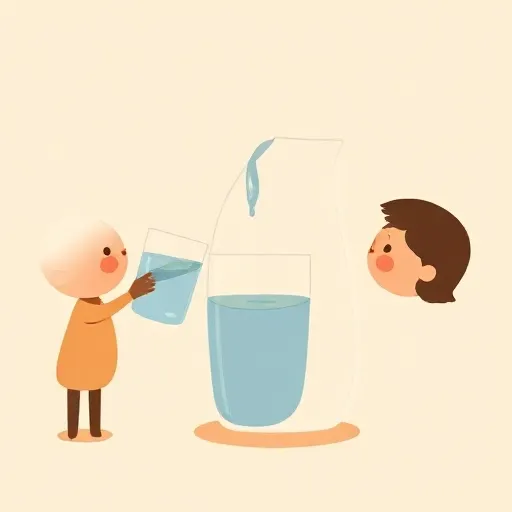
The philosopher Willard Van Orman Quine (1908–2000) noticed a special pattern. If you point to some water in a cup and say “This is water,” and point to some water in a bottle and say “This is water,” then you can point to both together and still say “This is water.” This property is called cumulative reference: adding water to water just gives you more water. Plural count nouns work the same way: “These are rabbits” and “those are rabbits” together are still rabbits.
Some thinkers have claimed mass nouns also have distributive reference—meaning that any part of something you call water should also be water. But that runs into trouble fast. Water is made of oxygen and hydrogen, yet oxygen alone is not water. A table is a piece of furniture, but a leg of the table is part of the table—and the leg isn’t furniture. So distributive reference fails for many mass nouns. These semantic clues—cumulative yes, distributive no—tell us something about the logic of mass nouns, but they aren’t enough to nail down a definition. The real distinction, most philosophers now agree, is grammatical, not semantic.
The Everything-of-Water Puzzle: Sums and Surprises
In the early 1970s, the philosopher Julius Moravcsik (1931–2009) proposed a simple picture. Take the mass noun water. It refers to the gigantic mereological sum of all the water in the universe. Mereology is just the study of parts and wholes; a sum is what you get when you combine things. So the sentence “This is water” is true if the stuff you are pointing at is part of that universal water-sum.
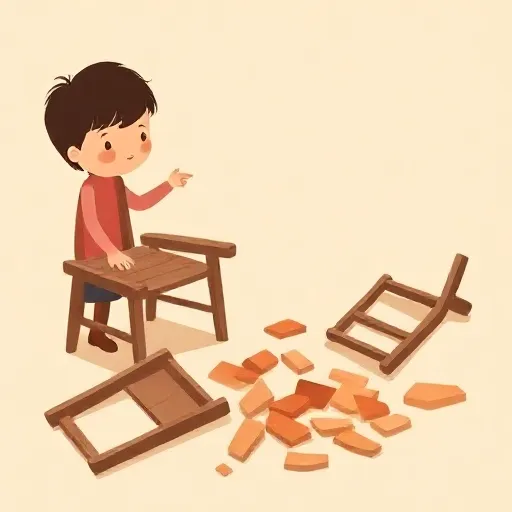
The idea is elegant but cracks appear quickly. If a water molecule contains oxygen, then oxygen is part of the water-sum—yet oxygen is not water. Water seems to have smallest parts that still count as water, and oxygen atoms are too small to make the cut. Even more dramatically, the philosopher Charles Parsons pointed to the wood = furniture problem. Imagine a world where all wood is made into furniture and all furniture is made of wood. Then the sum of the wood would be the same object as the sum of the furniture. But the sentence “The furniture is expensive” could be true while “The wood is expensive” is false. A mereological sum alone can’t tell them apart.
Sets, Sums, and the Half-Safe Gold

To fix these problems, a mixed approach emerged from work by Tyler Burge (born 1946) and others. Think of a mass noun M as picking out a set of portions of M—not just a single sum. Any portion of water is in the set, and those portions can be summed together. This structure is called a join semi-lattice: you can combine any two portions into a bigger one, and the set always contains those sums.
Now “This is water” means the demonstrated stuff is a member of that set. When we say “The gold on the table weighs fifty grams,” the phrase “the gold on the table” picks out the sum of all the gold on the table, and that sum can be weighed. This mixed set-and-sum approach also handles identity over time. Suppose you leave some clay on a desk on Monday and rearrange it on a table on Tuesday. Is it the same clay? The mixed view says yes if the sum of the Monday clay-parts equals the sum of the Tuesday clay-parts.
But an awkward puzzle waits just around the corner: negation. Imagine a safe with two gold bars. Bar A is inside; bar B is outside. Under the mixed view, “The gold is in the safe” is false because the sum A + B isn’t entirely inside. Then its negation “The gold is not in the safe” should be true. Yet that seems just as wrong—half the gold is inside! Some philosophers, like James Higginbotham, proposed using a Boolean algebra, where you define negation as a complement operation, so both sentences come out false. That fits certain intuitions, but it only works if the predicates are homogeneous—applying both cumulatively and distributively. Furniture broke that rule, and now the Boolean fix struggles with non-homogeneous predicates like “made by John.” The negation riddle remains open.
Many Ways to Read “The Silverware Costs 100 Euros”
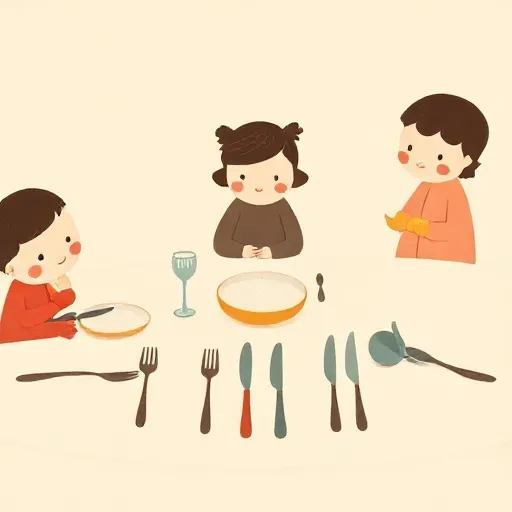
The philosopher Brendan Gillon showed that mass nouns, like plurals, can be understood in several ways at once. Consider the sentence “This silverware costs a hundred euros.” It might mean:
- Collectively: all the silverware together costs 100 euros.
- Distributively: each piece costs 100 euros.
- Intermediately: the silverware comes in two boxed sets, each costing 100 euros.
Gillon’s idea is that the interpretation depends on choosing a covering—a way of grouping the items so that the sum of the groups equals the total stuff. The sentence is true if, for some covering, the predicate applies to every group in the covering. This lets us capture the in-between readings without requiring the noun to have smallest parts. The same machinery explains why “This fruit was wrapped in that paper” can describe several pieces of paper each enfolding a few pieces of fruit, not necessarily one-to-one.
Coverings also offer a fresh angle on identity over time. In the clay example, the clay on Monday and the clay on Tuesday might be identical if there is a common covering of tiny bits of clay that kept their identity through the rearrangement. This doesn’t demand minimal parts—just a shared way of dividing the stuff into stable pieces. A more recent proposal by David Nicolas says mass nouns work like non-singular terms: they can refer to many things at once, not just a single sum. A mass noun is like a plural in that it points to a bunch of individuals simultaneously, which elegantly handles the clay puzzle without relying on fixed sums.
Love, Wisdom, and the Furniture Problem

So far we’ve talked about concrete stuff: water, gold, furniture. But what about abstract mass nouns like sadness, wisdom, and love? They follow the same grammatical rules: you say “much wisdom” not “many wisdoms,” and “a little love” rather than “three loves.” Yet they don’t seem to refer to piles of physical stuff. Nicolas argues that abstract mass nouns refer (or pretend to refer) to instances of properties or relations. “Julie’s love for Tom lasted several years” introduces a particular instance of love into the conversation, just as “the gold on the table” introduces a particular portion of gold. The same covering rules apply: “The strength of these two teams is impressive” can mean each team’s strength is impressive, or their combined strength, or something in between.
This suggests that mass nouns, concrete or abstract, share a deep semantic core. They all live in a join semi-lattice of portions—whether those portions are bits of clay, moments of love, or flashes of wisdom. The furniture problem—where a table is furniture but its leg isn’t—reminds us that even abstract mass nouns can resist being chopped up mindlessly: a brief flicker of wisdom still counts as wisdom, but a single word taken from a poem about love might not be love itself.
Why Your Brain Cares About Water vs. Coins

You’ve been using mass nouns since you learned to talk, and your brain handles their special logic with ease. But the puzzles they create go far beyond the kitchen. When you say “the water in this lake,” you rely on a notion of sums that lets you track a substance across time and space. When you say “much furniture,” you tap into a system that can handle things that don’t have natural smallest parts. These patterns shape how you reason about identity, counting, and even emotions.
The fact that philosophers still disagree about the right logic for mass nouns tells us something important: language is not a simple mirror of the world. It’s a tool that carves up reality in surprising ways—sometimes grouping stuff into parts, sometimes into coverings, and sometimes refusing to be forced into either box. The next time you ask for “some water,” notice that you are speaking a language that has chosen to treat water like a spread-out substance rather than a collection of countable drops. That choice makes everyday talk smooth, but it hides a landscape of logical puzzles that continue to challenge the smartest minds.
Think about it
- If you pour water from one cup into another, is it the same water? What if you freeze it into ice? What stays, and what changes?
- Can you imagine a situation where “The furniture in this room is expensive” is true even though a cheap stool is part of the room? Explain how a covering could make that work.
- If you had to measure love in liters—like you measure water—what would you gain, and what would you lose?