

What Should You Do When a New Fact Smashes Your Belief?
A Belief Crisis at the Library

Maya is eleven years old and loves books about ancient Egypt. She has read that Cleopatra had a son and a daughter. For weeks she’s told her friends, as if it’s a fact. Then at the library she discovers that the book she trusted is actually a historical novel — full of made‑up details. Suddenly she isn’t sure anymore. She stops believing the whole story.
A few days later, a reliable encyclopedia tells her that Cleopatra did have at least one child. Should Maya now believe everything she believed before — that Cleopatra had both a son and a daughter — just because part of the old claim turned out to be true? That feels wrong. But if she simply tosses out all her old beliefs, she’ll lose a lot of other knowledge she still trusts. How should a perfectly careful thinker handle a moment like this?
Philosophers and computer scientists have been wrestling with exactly that problem since the 1980s. They call it belief revision — the study of how to change your mind in a smart, consistent way when new information arrives.
The Smartest Box of Beliefs

To study belief change, you need a tidy picture of what a person believes. Researchers imagine a belief set, a collection of sentences the thinker is committed to if she were perfectly logical. If you believe “Paris is in France,” then logic forces you also to believe “Either Paris is in France or the moon is made of cheese,” even though you never thought about that before. A belief set is logically closed: it contains every statement that follows logically from what’s already in it.
Of course, real people aren’t perfect reasoning machines. The philosopher Isaac Levi (1930–2018) said the belief set isn’t what you actually keep in your head right now; it’s the set of statements you are committed to believe — the things you would have to accept if you were a flawless logician. This idealization helps us see the structure of believing without getting tangled in human forgetfulness.
The most famous framework for belief change was built by three thinkers: Carlos Alchourrón (1931–1996), Peter Gärdenfors (born 1949), and David Makinson (born 1941). Their 1985 work is called the AGM model after their initials. It is still the starting point for almost every conversation about belief revision today.
The Three Moves: Expand, Cut, and Revise

The AGM model describes three basic operations on a belief set.
-
Expansion. You simply add a new sentence and accept all its logical consequences. Nothing is removed. If you learn that it’s raining, you expand your belief set with “It is raining” and all the logical things that come with it.
-
Contraction. You must give up a belief — but you want to lose as little as possible. If you used to think “Maya’s storybook is a factual biography” and later discover it’s a novel, you remove that statement. At the same time, you try not to throw away other beliefs that still make sense.
-
Revision. You add a new belief that clashes with something you already hold, so you first contract to make room, then expand. This is the trickiest move. The AGM team proposed a formula called the Levi identity: to revise by a new sentence p, first contract by the opposite of p (so p can fit without contradiction), then expand by p.
For contraction, they invented a clever tool. Imagine all the ways you could drop just enough from your belief set so that you no longer believe the unwanted sentence. These are called remainders — the largest possible subsets that don’t force you to believe it. A selection function then picks the best remainders, the ones that hang on to the most valuable beliefs. The final contracted set is the overlap of those chosen remainders. That way you keep only what all the best options agree on.
The Recovery Trap
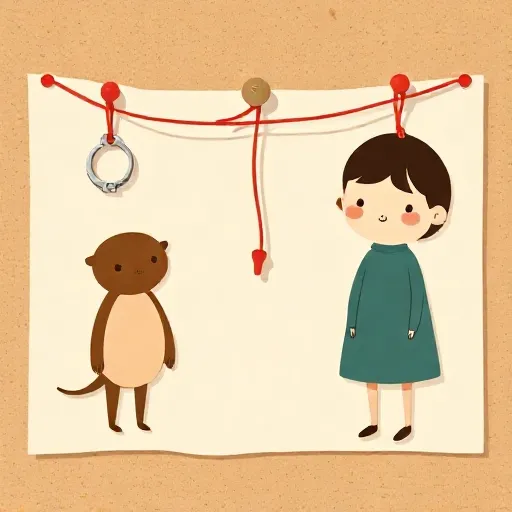
The AGM model includes a rule called Recovery. It says: if you contract a belief p and then later expand by p again, you should get back exactly the belief set you had before. That sounds sensible — you just “undo” the removal. But Recovery creates odd results in everyday situations.
Consider Maya’s case. She initially believed that Cleopatra had a son and a daughter. Then she learned the book was fiction and contracted the belief “Cleopatra had a child.” Later a reliable source told her that Cleopatra did have a child, so she added it back. Recovery would force her to also believe again that Cleopatra had a son and a daughter — even though she has no good reason to accept those specific details. That seems wrong.
Here’s another well‑known example, directly from the research. Suppose you once believed both “George is a criminal” and “George is a mass murderer.” When you find out the first belief is false, you contract it — and because the second belief logically implies the first, you must drop “George is a mass murderer” too. Then you receive solid evidence that George is a shoplifter. That new belief logically implies that George is a criminal, so by Recovery you would be forced to believe again that George is a mass murderer, simply because it follows from your old, rejected picture. That’s clearly irrational.
These puzzles convinced many philosophers that Recovery cannot be a universal law of rational belief change. Researchers have tried to build contraction operations that avoid Recovery, but so far every attempt has either been too weak (losing too many beliefs) or produced bizarre side effects, such as forcing you to give up completely unrelated beliefs whenever you drop one. The search for a perfect contraction rule without Recovery is still an open problem.
Which Beliefs Do You Love Most?
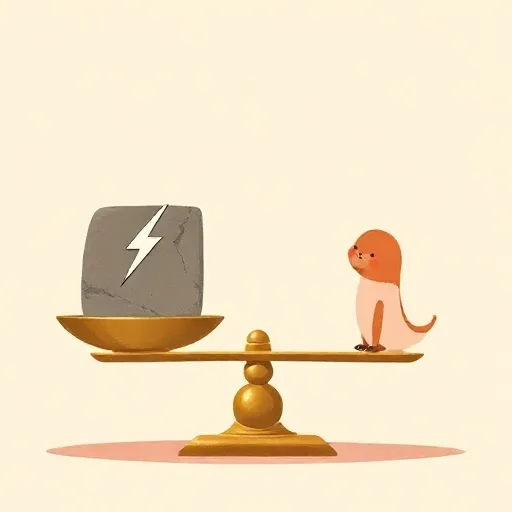
If you can’t rely on Recovery, what should guide you when you decide which old beliefs to keep? Peter Gärdenfors suggested that beliefs come with a kind of stubbornness score called epistemic entrenchment. A belief is highly entrenched if it has great explanatory power or is extremely useful in many situations — like a law of nature. Everyday factual statements (where your car is parked right now) tend to be less entrenched.
When you must give up something, you sacrifice the beliefs with the lowest entrenchment first. This idea matches the way a selection function picks the “best” remainders — the ones that protect the most entrenched sentences. Contraction built on an entrenchment ordering works beautifully; it even turns out to be equivalent to the most orderly kind of partial‑meet contraction the AGM authors studied.
Still, entrenchment does not make the Recovery problem disappear. It only guarantees that you lose beliefs in a reasonable order. The strange spring‑back effect (like the Cleopatra or shoplifter cases) can still happen if you aren’t careful. So entrenchment is a helpful addition, but not a complete solution.
Picture Your Beliefs as Worlds

Philosopher Adam Grove, working in the late 20th century, invented a visual way to think about belief change. Imagine all the possible worlds — complete descriptions of how reality might be. Your current belief set picks out the worlds where every one of your beliefs is true; those worlds form a circle. When you revise by a new sentence p, you need to move to worlds where p holds. If your current worlds already allow p, you just shrink the circle to the overlap. If not, you must jump outside.
To stay as close as possible to your old picture, Grove placed the original belief worlds at the center of a system of nested spheres. Worlds in the inner spheres are more similar to your old beliefs than worlds farther out. When you revise by p, you go to the closest sphere that contains at least one p‑world, and then you keep all the p‑worlds in that sphere. This sphere‑based revision exactly matches entrenchment‑based contraction. So the same structure shows up whether you think in terms of importance scores or in terms of distances between worlds.
Contraction works in reverse. You want to make room for a belief’s opposite, so you add the closest worlds where that opposite holds. The picture is intuitive: you gently expand your set of possibilities rather than leaping blindly to a contradictory state.
These diagrams are more than just pretty drawings; they helped researchers prove deep connections between the AGM rules and the idea of minimizing change.
Why Bother With Such Fancy Rules?

You might wonder: does any of this matter outside of philosophy classrooms? It absolutely does. Every time a computer database gets updated, every time a self‑driving car’s sensors detect fog after the car “believed” the road was clear, a belief‑revision process takes place. The AGM model grew partly out of computer scientists trying to maintain databases that don’t fall apart when new facts arrive. Today, artificial intelligence systems that must reason about changing environments rely on similar logic.
Even in daily life, you are constantly revising. You hear a rumor, then a correction. You change your mind about a friend’s loyalty. The question is not whether you revise, but whether you do it in a way that makes sense. The AGM rules give a checklist: keep your beliefs logically consistent, change as little as necessary, treat logically equal sentences the same way. The strange behavior of Recovery warns us that some obvious‑sounding principles can lead us astray.
Maya, back at the library, doesn’t need to solve the Recovery puzzle. But she does need to notice when an old belief reappears for no good reason just because she once held it. The study of belief revision doesn’t hand you a decision‑making robot; it offers a clearer sense of what’s at stake when you have to un‑learn something you once swore was true.
Think about it
- Imagine you discover that a favorite family story you always believed is actually a myth. Later you find new evidence that a small part of it might be true. How would you decide which details, if any, to put back into the “I believe this” pile?
- A robot car’s computer believes both “the road ahead is clear” and “safety rules say never drive fast in fog.” Suddenly its sensors say there is fog. If you were the programmer, what rule would you give the car for deciding which old beliefs to keep and which to drop?
- Some people think a perfectly rational brain should always be able to trace every belief back to a strong reason. But in real life we often hold onto beliefs simply because nobody has ever challenged them. Should a thoughtful mind ever keep a belief that has never earned a special reason? Why or why not?