
If You're Both Equally Smart, Whose Belief Should You Trust?
Two Friends, One Dinner Check

You’re splitting a pizza dinner with your best friend. The bill comes to $48 before tax and tip. You do the math in your head and decide your share is $12. Your friend does the math and gets $14. You both take the same classes and usually get the same grades. There is no obvious mistake. Yet you’re stuck with two different answers. What should you do with your belief?
Philosophers call this a belief disagreement: you hold one view about a claim (your share is $12), and your friend holds another. Because you think your friend is just as good at this kind of calculation as you are, you consider them an epistemic peer on this question — someone equally likely to get the right answer. You didn’t cheat, you weren’t distracted, and you both saw the same numbers. Still, you disagree.
The puzzle is: when you realize a peer disagrees with you, should you lose confidence in your own answer? Should you meet somewhere in the middle — maybe decide you’re both uncertain? Or should you stick with your own brain? That is the central question in the epistemology of disagreement: what should a reasonable person believe when someone equally smart and well-informed thinks the opposite?
When You Have to Act, Not Just Believe

Not all disagreements are about facts. Suppose you want to move in together this summer, and your friend doesn’t. That’s an action disagreement — you clash over what to do, not what to believe. With a belief disagreement you can simply suspend judgment: neither believe nor disbelieve, just say “I’m not sure.” But with an action, you can’t just sit on the fence. If you keep thinking and don’t decide, you’ve actually chosen not to move in. You have to act.
Philosopher Richard Feldman noted that we can turn action disagreements into belief disagreements by stating what we should do. For example, “We should move in together” becomes a claim that is either true or false. So, at root, all disagreements can be seen as disagreements about what to believe. But the action case reminds us that sometimes the world forces a choice.
Our focus will be on belief disagreements. Even here we can be more precise. You might be 70% confident that the share is $12, while your friend is 90% confident it’s $14. That’s a degree of confidence difference. Philosophers ask how you should adjust that level once you learn about the disagreement. Should you always move closer to your peer’s confidence, or can you stand firm?
Who Counts as a Peer?
Before you decide what to do, you need to know whether the person disagreeing with you is really your equal. If a child tells you Hell is a real place inside the earth, you brush it off because you think you’re in a far better position to know — you’re an epistemic superior on that topic. If a sports writer who has written books on baseball history says Babe Ruth wasn’t the greatest player ever, you probably step back because you think the writer is an epistemic superior. But if your sibling, who has the same memory as you, disagrees about the name of a town you once visited, you might think you’re epistemic peers.
Peers are people who are equally likely to get the right answer. Many factors go into that: how smart you are, what evidence you’ve seen, how much time you’ve spent thinking, whether you’re biased, and how attentive you are. Philosophers call these Disagreement Factors. If you think someone is your peer, you judge that even though you might differ on some factors, overall you’re about equally well placed to figure out the truth.
There is a subtlety. You might think someone is a likelihood peer — equally likely to be right in general — but not a conditional peer. Imagine you believe global warming is happening. You think your friend Taylor is equally likely to judge that correctly, so she’s a likelihood peer. But you’re so confident in the evidence that you think if Taylor came out disagreeing, there’s a 95% chance she’s wrong. In that sense you don’t treat her as a full peer once disagreement happens; you see her as a conditional inferior. In contrast, Danny and Janice have a long track record: whenever they disagreed on math homework, each turned out to be right about 40% of the time. So Danny thinks Janice is both a likelihood peer and a conditional peer. That difference will matter when we look at what you should do.
Meeting in the Middle: The Equal Weight View

The most talked-about answer to the puzzle is the Equal Weight View. It says that when you learn a peer disagrees with you, you should lower your confidence and treat your peer’s opinion as just as strong as your own. The view has three parts. First, you get a reason to think you might be mistaken — that’s called Defeat. Second, that reason is exactly as weighty as the reason you have from your own thinking — Equal Weight. Third, you can’t dismiss your peer’s view just because it contradicts yours; any reason to distrust them must be independent of the disagreement itself. For example, you can note that they were tired or hadn’t studied, but you can’t say, “She thinks the share is $14, but mine is $12, so she must be wrong.”
The view was made vivid by philosopher David Christensen’s Restaurant Check Case. Five friends go out, agree to split the bill evenly, and one calculates a share of $43 while another calculates $45. If they are peers and have no special reason to doubt each other, Christensen argued, each should become roughly equally confident in both answers — essentially splitting the difference in confidence. He wouldn’t suddenly believe the share is $44; instead, he would think $43 and $45 are both equally likely.
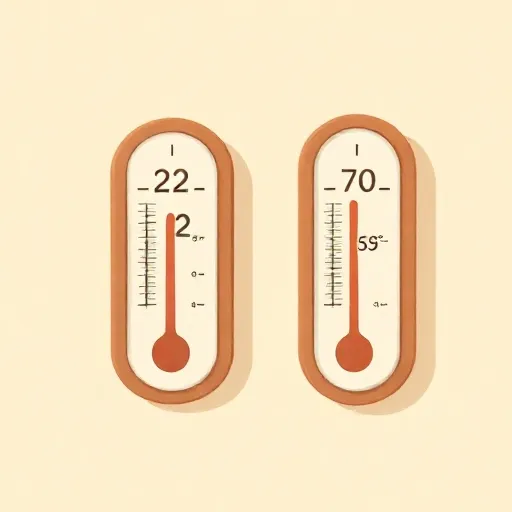
One motivation comes from an analogy with thermometers. If you and a friend both know you have equally reliable thermometers, but yours reads 75°F and theirs reads 72°F, it would be irrational for you to keep believing it’s 75 just because the thermometer is yours. You should doubt both readings and lower your confidence. People are like cognitive thermometers — so why should your own “reading” automatically win?
A famous case that supports the Equal Weight View is the Dean on the Quad. You and a friend are looking out a window onto a college quad. You both have good eyesight and are honest. You seem to see the dean standing in the middle of the quad; your friend sees no one there. When you discover the disagreement, most philosophers, including Feldman, think you both should become much less confident. Even though each of you has private visual evidence, you can’t simply trust your own eyes over your peer’s. You need independent reasons to think your eyes worked and theirs didn’t.
Sticking to Your Guns: The Steadfast View

On the opposite side is the Steadfast View. It claims that in a peer disagreement, it can be perfectly rational to keep your original belief unchanged. Different defenders reject different parts of the Equal Weight View.
Peter van Inwagen (b. 1942) argued that you may have private, incommunicable evidence — a special insight or intuition — that your peer lacks. Because you can’t hand over your experiences, your peer is evaluating a different body of evidence, so their disagreement doesn’t force you to doubt your own answer. A related idea is self‑trust: you must fundamentally trust your own faculties; you can’t give that same trust to another person. From your first‑person perspective, your own reasoning counts for more.
Another steadfast route relies on epistemic permissiveness: the thought that a single body of evidence can sometimes support more than one rational belief. If evidence is permissive, then you and your peer might both be rational even though you disagree — so neither of you needs to change.
Defenders of the Equal Weight View push back. In the Dean on the Quad case, both parties have private evidence, yet conciliation still seems required. And the Müller‑Lyer illusion shows a problem with trusting “what seems true.” The two lines look different lengths, but careful measuring proves they are equal. Even after you know the truth, line B still seems longer. But you are not justified in believing it is longer just because it still seems that way. The higher‑order evidence from the ruler beats the seeming. Similarly, just because your belief still feels true after disagreement, you might not be rational to keep it.
When the Whole World Disagrees, What Should You Think?
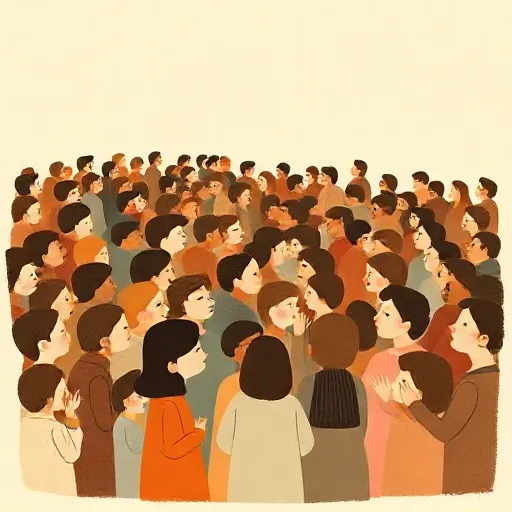
So far we’ve looked at one‑on‑one disagreements. But many of your beliefs sit in a much bigger storm. You might think, say, that humans have free will, or that some actions are right and wrong, or that a particular god exists. You almost certainly know that millions of intelligent, well‑informed people disagree — and that experts have argued about these topics for centuries. Those who share your view aren’t clearly smarter or better‑informed than those on the other side.
This reality leads to disagreement skepticism: the idea that if you know that huge numbers of peers and superiors disagree with you, and you have no special reason to think your side is better, then holding on to your belief is irrational — and it can’t count as knowledge. The threat is powerful but also limited. It only affects beliefs where you recognize a deep, long‑standing controversy among experts. It doesn’t touch everyday beliefs like “my parents love me,” where such controversy doesn’t exist.
Interestingly, this skeptical argument applies to beliefs about disagreement itself. The Equal Weight View and rival views are themselves hotly debated, so even the advice about what to do faces its own problem. That’s part of what makes the topic so alive: it challenges us to think about whether any belief can survive when we look around and see so many thoughtful people who see things differently.
For you, the puzzle might feel personal. When you’re absolutely sure about something — whether a math answer, a moral rule, or a big idea about the universe — and you discover that someone you respect sees it the opposite way, should you become less certain? Philosophy doesn’t give a final answer, but it hands you a toolkit to ask better questions and to argue respectfully. Knowing when to stick to your guns and when to change your mind is a skill worth practicing.
Think about it
- If a group of your smartest friends all disagreed with you about whether a movie was good, would you change your opinion, or would you trust your own taste? Why?
- Could a person ever be so sure about something that no amount of disagreement from peers should make them doubt it? Think of a belief you hold that you think could never be shaken.
- If it turned out that all experts were evenly split on whether a new medicine was safe, should a doctor be allowed to prescribe it? What should the patient decide?