What Is Life? The 2,500-Year-Old Puzzle That Still Stumps Scientists
Something Strange on Mars
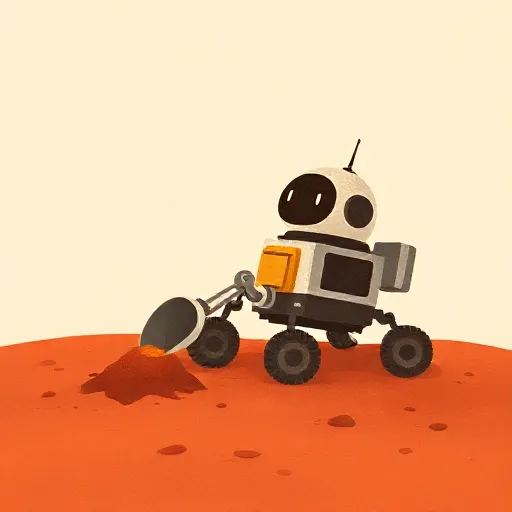
In July 1976, the Viking 1 lander scooped up a pinch of Martian soil and mixed it with a warm nutrient broth. Onboard instruments lit up: something in the soil was releasing gas, exactly as if tiny microbes were gobbling the meal. But when another experiment heated the soil to destroy any living things, the gas still appeared. The scientists were stumped. They couldn’t agree whether they had found Martian life — because they couldn’t agree on what “life” even means.
That is the puzzle at the heart of this story. For over two millennia, philosophers and scientists have tried to draw a sharp line between the living and the non-living. Every attempt has broken on stubborn counterexamples. Yet the answer matters enormously, from searching for aliens to deciding when a human life begins or ends.
The Definition Puzzle
Imagine you want to define “game.” You might say a game has rules, players, and a winner. Then someone points to a solitary puzzle or a game of make-believe, and your neat definition crumbles. Defining life runs into the same problem, but with higher stakes.
Many thinkers have tried a theoretical definition — a list of necessary and sufficient conditions that exactly capture the concept. For “bachelor,” you might say “unmarried adult male.” But that includes male dogs and widowers, so it fails. For life, any list of conditions seems to fail too: life uses energy, but so does fire. Life grows, but so do crystals. Life evolves, but so do prions — misfolded proteins that can change and spread. Life maintains itself, but what about parasites that cannot survive alone? No single set of features catches every living thing and excludes every non-living thing.
Frustrated by this back-and-forth, some researchers turn to operational definitions — rough-and-ready checklists that work in practice. NASA famously used this one: “a self-sustaining chemical system capable of Darwinian evolution.” That definition includes viruses but leaves out mules, which cannot reproduce. It works for some purposes, but it doesn’t settle the deep question.
Others think of life as a prototype concept — a fuzzy list of features shared by most, but not all, members of the category. The textbook lists of life’s properties (organization, growth, reproduction, energy use, response to the environment, adaptation) are like that. But prototypes still don’t tell you what to do with the weird border cases, like viruses that sit inert on a lab bench but spring into action inside a cell. The real world is far too messy for a clean line.
What the Ancients Thought

The struggle is ancient. Plato (c. 428–348 BCE) divided life into three kinds of soul: vegetable, animal, and rational. All living things had the first — the powers of nutrition and reproduction. Animals added sensation and movement. Humans alone possessed rational souls. That picture shaped later Christian thought, where human life had an eternal spiritual soul.
Aristotle (384–322 BCE), Plato’s student, took a different angle. For him, a living thing had a form, a material, and a built-in goal — a drive toward self-motion and self-preservation. What distinguished a tree from a stone was the tree’s ability to resist disturbances and repair itself.
Centuries later, René Descartes (1596–1650) drew a sharp line between animals and humans, not between plants and animals. He saw animals as complex biological clocks — remarkable, but without inner experience. This mechanistic view helped spark a countermovement called vitalism, whose supporters argued that something extra — a life fluid, an immaterial force, a special arrangement of matter — made living beings fundamentally different from non-living ones. Vitalism faded only gradually. When Friedrich Wöhler synthesized urea from simple chemicals in 1828, many took it as proof that the chemistry of life was just chemistry. Yet vitalist ideas lingered well into the 20th century.
Skeptics Ask: Do We Even Need a Definition?
Some philosophers today are skeptical that defining life is the right goal. Carol Cleland, a contemporary philosopher, uses the story of water. Ancient alchemists spoke of “aqua regia” (royal water) and “aqua fortis” (strong water) as if they were varieties of the same thing. Once atomic theory revealed that water is H₂O while royal water is a mixture of acids, the old category shattered. Cleland worries that if we settle on a fixed definition of life now, we might blind ourselves to real novelties — say, a life form based on silicon instead of carbon. She proposes using flexible, provisional criteria instead of rigid definitions.
A more radical view is eliminativism. Linguistic eliminativists think the word “life” is too confused to be useful and should be dropped, or at least split into precise sub-terms like metabolic life and evolutionary life. Ontological eliminativists go further: they doubt there is a single natural kind called “life” out there in the world, rather than a messy collection of overlapping phenomena. For them, the search for the one true definition is a wild goose chase.
Why Definitions Change Everything
These philosophical disputes aren’t just abstract games. They shape real science and real life.
In artificial life research, scientists build computer programs or robots that mimic living processes. In the “Terra” experiment, software competed for processing power — and unexpected parasites evolved, stealing resources from other programs. But is this software alive? If you think life requires physical biochemistry, no. If you think organization alone is enough, maybe it is a kind of life.
Synthetic biologists work with “wetware” — real cells — to create minimal organisms or self‑replicating molecules. Their success or failure hinges on what features they aim to recreate. That choice, in turn, depends on which definition they (often silently) accept.
The search for alien life is even more tangled. In 1996, a Martian meteorite, ALH84001, showed bacteria‑like shapes that some scientists hailed as fossils. Since then, telescopes have spotted methane on Mars and phosphine in the clouds of Venus — gases that on Earth are often produced by living things. But are these true biosignatures? Answering that requires a material conception of life. The James Webb Space Telescope is now scanning the atmospheres of exoplanets, hunting for similar chemical signatures. Every result will be interpreted through the lens of some working definition.
Closer to home, legal and ethical arguments over abortion, euthanasia, and life‑sustaining medical treatment all turn on a question: when does an individual human life begin or end? Biology doesn’t offer an uncontroversial answer. Some link the start of life to conception, others to the development of a nervous system, others to birth. When machines can keep a body breathing long after the brain has stopped, even the line between life and death blurs. Those debates will never be neat, but being clear about what we mean by “life” — and what else we might be smuggling in, like sentience or personhood — can at least make the disagreement more honest.
A Decision Instead of a Discovery?
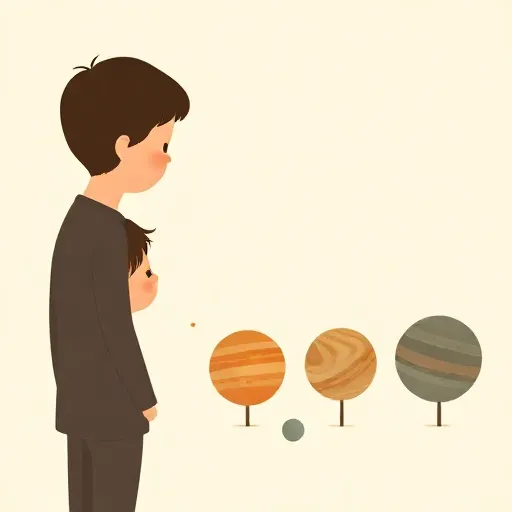
So, will the definition of life ever be settled? The history of another concept gives a clue. For centuries, the word “planet” included the Sun and the Moon. When asteroids were discovered in the early 1800s, they were called planets too — until astronomers decided, on purpose, to demote them. Much later, after finding many distant objects like Pluto, astronomers voted in 2006 to create the category “dwarf planet.” They didn’t discover a hidden truth about Pluto; they made a practical decision that better organized their knowledge.
Something similar might happen with life. Scientists may gradually carve the concept into smaller, more useful pieces: biochemical life, evolutionary life, cellular life, and so on. The word “life” might become a family of terms that researchers define precisely whenever they start an investigation. The debate, in that case, wouldn’t be solved — it would be outgrown.
One thing is clear: the question of what it means to be alive is not going away, because it touches everything from the alien organisms you might one day discover in a telescope image to the medical decisions your generation will face. The definition of life is still a live question — and you might be part of the conversation that finally moves it forward.
Think about it
- If a robot behaved exactly like a dog — playing, learning, showing what seemed like emotions — would you consider it alive? Would it matter whether it had a chemical body or a metal one?
- Imagine scientists on a future mission find a strange crystal on another planet that grows, repairs itself, and copies its shape, but has no DNA. Should they announce they’ve found life — or something else entirely?
- Many ethical debates about birth and death rely on an idea of when life begins and ends. Do you think those debates can be solved by better science, or do they always involve a human choice that science alone cannot make?