
Why Does a Stranger’s Face Stop You in Your Tracks?
Philosophy in a Prison Camp
In 1940, Emmanuel Levinas (1905–1995) was a French soldier captured by the Nazis. They sent him to a labor camp. All around him was hatred and death. But instead of asking, “Why is there evil?” he began a stranger question: What makes a face so powerful that I feel I must not harm it? That question became his obsession. Levinas had studied with the famous thinkers Edmund Husserl and Martin Heidegger. When Heidegger later supported Nazism, Levinas turned away and built his own philosophy. He lost almost his entire family in the Holocaust. Yet his work would insist that the most real thing wasn’t power or survival—it was the simple encounter with another human being.
Even before the war, in 1935, Levinas published a tiny book called On Escape. He argued that just existing can feel like a prison. You know the feeling: stuck in a dull classroom, watching the clock, aching to be anywhere else. That urge to escape, Levinas said, is what it means to be human. But every attempt—daydreams, pleasure, excitement—fails. The only real way out, he later realized, comes through another person. And so his philosophy took a sharp turn: ethics doesn’t start with rules; it starts with a face.
The Face That Commands Without a Word

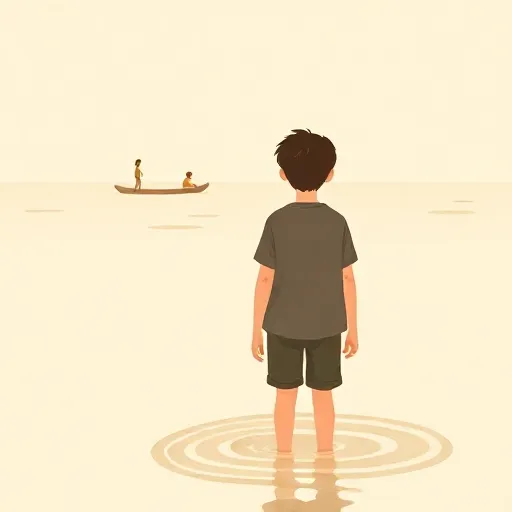
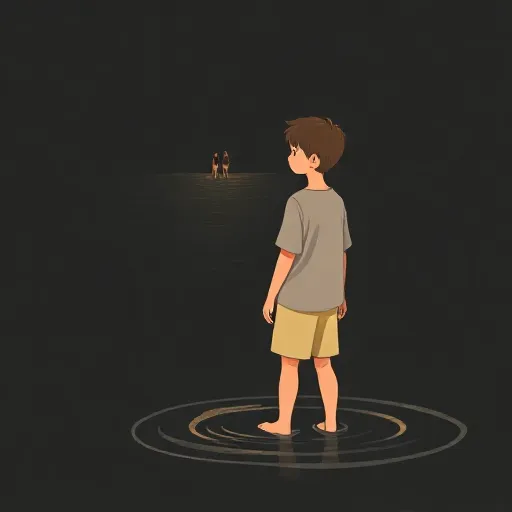
Imagine walking down the street, head down, thinking about your next math test. Suddenly someone steps in front of you. Before you can speak, your eyes meet. Something shifts. Levinas would say that in that split second, you are already responsible. The face, he argued, is not a collection of eyes, nose, and mouth. It is an expression that “speaks” before any words. It says, silently, “You shall not kill me.” It issues a command you can’t argue away because it arrives before thought.
Levinas called this surprising interruption transcendence—a breaking-in from beyond your private world. The other person is completely different from you; he used the word alterity to mean the other’s absolute strangeness. You can’t reduce this person to a label like “classmate” or “stranger.” When you look at a face, you’re facing something infinite—something you can never fully capture. So Levinas borrowed the term infinity to describe the face’s endless meaning.
This meeting upsets your freedom. Normally, you’re the star of your own movie. But the other’s naked, defenseless face makes your self-centered freedom seem greedy. You feel shamed, almost, and you’re “elected” to respond, as if a spotlight has turned on you. You could still shove past or ignore—but the ethical moment already happened. You’re now someone who could help, and that changes everything. Levinas called this ethics as first philosophy. Before you ask “What is real?” you owe something to the person in front of you.
Think of when your little sibling appears with a tear-streaked face. You didn’t cause the tears, yet you feel pulled to fix them. That’s the ethical call.
Substitution: Feeling Responsible for Everyone
In his later masterpiece, Otherwise than Being (1974), Levinas went deeper. He said the encounter doesn’t just flash and vanish; it leaves a trace inside you, like a memory without a picture. He called this substitution—feeling responsible for another person as if you were standing inside their skin, even taking the blame for them. This isn’t a choice. Have you ever seen a stranger get hurt and felt a pang of guilt, even though you did nothing? That’s the raw seed of ethics.
Levinas used strong words to describe it: obsession, persecution, even maternity—the way a mother carries a child not as a possession but as a weight of care. This inner stirring he named the Saying. It’s the silent urge to respond that rises before any words form. The Saying is sincere; it’s your very vulnerability opening up. The actual sentences you later speak he called the Said. Once you talk, you enter shared rules and definitions. But underneath those words, the Saying hums like a heartbeat. So being ethical isn’t about memorizing commandments. It’s about being so open to another person that their pain feels like yours. But this creates a giant problem: if I’m responsible for you, what about all the other people in the world?
When You Have to Choose: The Third Party and Justice
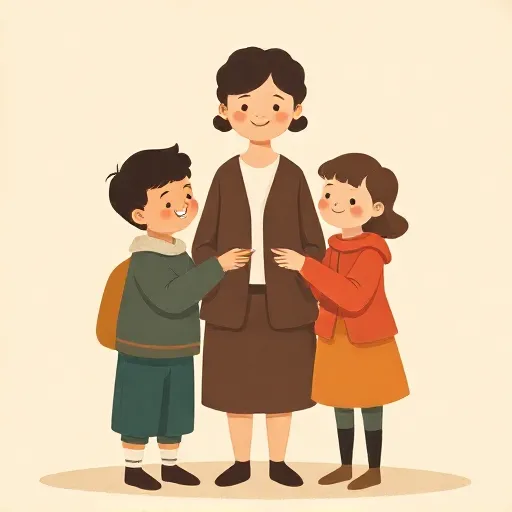
Levinas knew that life contains millions of faces, not one. He introduced the third party—the person who also needs me, who might even get hurt if I help only the first. Once a third person appears, I can’t just pour all my care into a single other. I have to compare, weigh, and create rules. This is the birth of justice, politics, and laws.
Levinas insisted that the third party already looks at me through the eyes of the first. When you stand before me, I’m also responsible for everyone you might represent—your family, your community. So the face-to-face pushes us toward fairness. But he worried that politics, left to itself, forgets the face. Laws can become cold machinery. The challenge is to keep the heartbeat of responsibility alive inside the systems of justice. A school’s anti-bullying policy matters, but it’s meant to flow from that same twinge you feel when you see a kid eating alone. Levinas didn’t offer a tidy answer. He often turned to the debates in the Talmud, the Jewish collection of law and story, to wrestle with mercy and fairness. He believed that every rule should still be haunted by the original human face.
Why a Stranger’s Look Still Matters Today
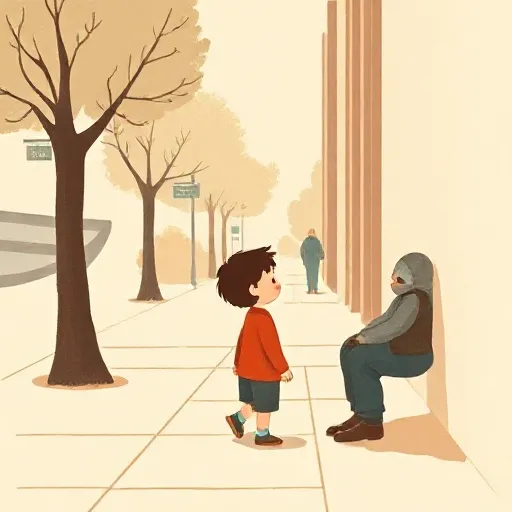
You might think this is dusty philosophy from another century. But consider: every time you walk past someone holding a cardboard sign, every time you scroll past sad news on your phone, you feel a faint echo of that ethical pull. Levinas would say you can’t escape it. You’re wired to be responsible even before you decide to care. That doesn’t mean you’re a failure if you don’t help everyone. It means you already know, deep down, that another person’s look matters.
The next time a friend meets your eyes, hurt or hopeful, notice that split second before you speak. That silent space is where your humanity lives. Levinas’s ideas still challenge activists, teachers, and designers today: how do we build schools, apps, and cities that remind us of faces instead of hiding them behind screens? His life, scarred by terrible loss, was a stubborn witness that even in a world of violence, the face of the other can stop you in your tracks—and maybe startle you into being good.
Think about it
- Have you ever felt a sudden urge to help someone without even thinking? What made you feel that way, and did you act on it?
- If everyone is responsible for everyone else, how do we decide who to help first—the person in front of us or the thousands far away?
- Can a school or government really “see” faces the way a person does, or does it always turn people into numbers?