Could God Have Made 2 + 2 Equal 5? Antoine Le Grand’s Bold Idea
The French Monk Who Made Oxford Furious
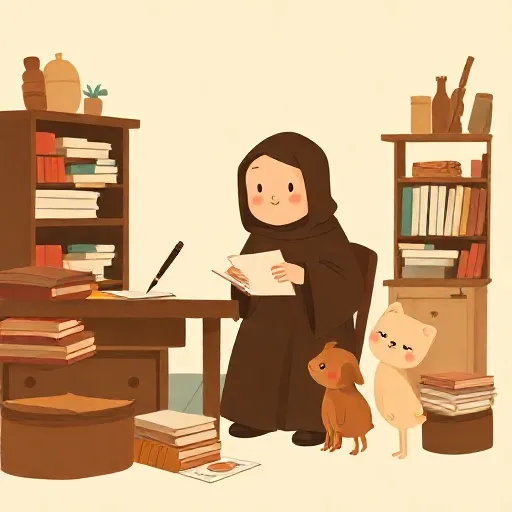
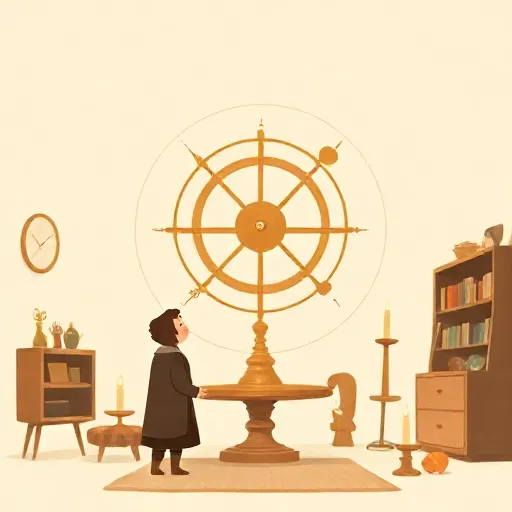
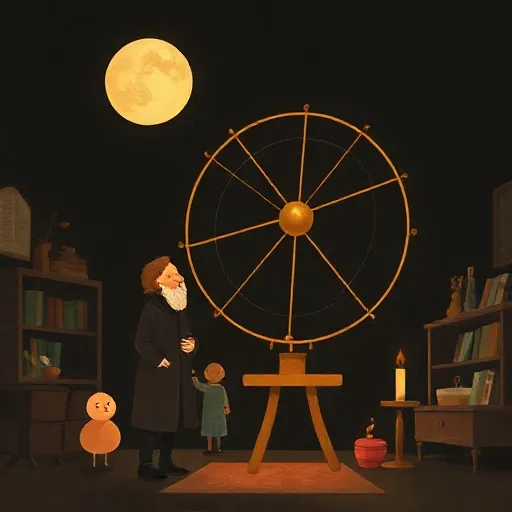
In 1679, a French philosopher named Antoine Le Grand (d. 1699) sat at a writing desk in Oxford, his quill scratching rapidly. He was answering a furious accusation: that the philosophy he had spent his life teaching led straight to atheism. Outside the room, students were being warned not to read a single word by his hero, René Descartes. But Le Grand refused to back down.
Le Grand had moved to England decades earlier, after embracing the ideas of Descartes. At the time, those ideas felt daring and new. Descartes had argued that the mind and body are two totally different substances, that animals are soulless machines, and that the physical world runs on precise mathematical laws. Le Grand’s own writings—especially his Institutio Philosophiae (1672)—quickly became a “must‑read” at Cambridge University, where many thinkers were excited by the promise of a full, rational science of nature.
Oxford saw things differently. An influential priest named Samuel Parker lumped Descartes together with Thomas Hobbes, calling both dangerous atheists. Soon, Descartes’s works were banned from Oxford entirely. Le Grand fired back with a Latin defense, Apologia de Descartes (1679), offering detailed proofs that God was central to the Cartesian system. The argument boiled over into a long-running battle with John Sergeant, an Aristotelian critic who challenged Cartesian ideas about knowledge and truth. Le Grand refused to back down; he kept debating and publishing until his death in 1699, leaving a trail of fierce exchanges that defined how England first wrestled with modern philosophy.
The Invisible Thread Between Mind and Body
A puzzle sat at the heart of Descartes’s philosophy. If the mind is made of non-physical thought and the body is made of physical extension, how can they possibly connect? When you decide to wave hello, something must cross the gap between your intention and your moving arm. Le Grand tackled this head‑on.
He began with a surprising claim: no physical thing can move itself at all. Matter, he argued, is utterly passive—a block of marble does not decide to roll downhill. Motion is not part of what it means to be a body. So where does all the motion in the universe come from? Le Grand answered: God. God is the total and efficient cause of every motion. God infused the universe with movement and laid down the fixed laws of motion, like a cosmic engineer flipping the master switch.
But if God runs everything, what about the ordinary pushing and pulling we see? Le Grand gave local objects a real job. A football, for example, does not generate motion, but the particular arrangement of its leather panels directs exactly how the motion passes through it when it gets kicked. Bodies are secondary causes—they steer the ship while God is the non‑stop motor.
This opened a path to explain mind‑body interaction. Since God already works as the power source for all bodily motion, there is no extra mystery in God also linking mind and body. The union, Le Grand said, is a mutual dependence: the mind’s thoughts depend on certain motions in the body, and some bodily motions depend on certain thoughts in the mind. He called it “a mutual commerce of actions and passions.” As long as this two‑way activity is actually happening, mind and body are joined. Some philosophers later called this view occasionalism—the idea that God is the only true cause, and created things merely provide the occasions for God to act. Le Grand’s position is close to that, but he also insisted that creatures genuinely direct the flow, which makes him hard to pin down completely.
Are Animals Just Furry Machines?
If God is behind all motion, what about a dog barking, a bird singing, or a cat chasing a string? Le Grand devoted an entire book to the claim that animals are pure machines, without any feeling or thought. He followed Descartes closely: all animal behaviors, even complex ones, can be explained by the same mechanical laws that make a clock tick.
Le Grand’s reasoning was razor‑sharp. Minds think; bodies extend. Animals lack the kind of mind that can reason about universal truths or say “I exist.” Therefore, their bodies must operate purely by material mechanisms—nerves, muscles, and fluids moving by local contact. A dog yelps when you step on its tail not because it hurts, but because the pressure sets off a chain reaction that produces the sound, just as a bell rings when you strike it. For Le Grand, calling a dog a machine was not a way of being cruel; it was a way of protecting a hard boundary between human beings, who have immortal souls, and everything else in nature.
Other Cartesians were drawn to this idea because it made biology a fully predictable science. If animals are just material machines, then studying a living body is no different from studying a clock or a water pump. Le Grand’s detailed catalog of experiments on plants, insects, and human anatomy showed how bold this project could be. The debate he stirred still echoes today whenever scientists ask whether a chimpanzee, an octopus, or even a future robot could truly be said to feel anything.
How Your Mind Paints the World (Without Seeing It)

A sword cuts your skin and you feel pain. The sword itself, Le Grand pointed out, does not contain any “pain” that it slips into you. The motion of steel against flesh is nothing like the sharp, unpleasant thought in your mind. So where does the idea of pain come from?
Le Grand’s answer was bold: all our ideas must be innate. Sensory impressions are just local motions rumbling through nerves and brain. They are not miniature pictures or copies of objects. Since those motions share no resemblance with the rich ideas we actually experience—coldness, redness, pain, or the shape of a rose—the mind itself must supply the content. In other words, we are born with a built‑in toolkit for making sense of the world.
To explain how ideas can represent things without resembling them, Le Grand used the idea of substitution. Think of a flag. A piece of cloth doesn’t look like a whole country, but we accept it as a stand‑in. In a similar way, the mind takes raw bodily motions and substitutes mental concepts for them. The sword’s motion becomes the idea of pain not because they are alike, but because the mind, like a translator, assigns one to stand for the other. Le Grand’s substitution theory gave Cartesians a fresh way to explain how a purely thinking substance can have accurate knowledge of a purely extended world.
Could God Have Made a Different Universe?
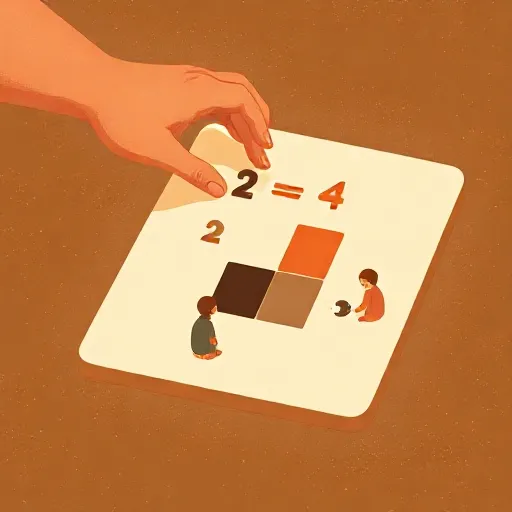
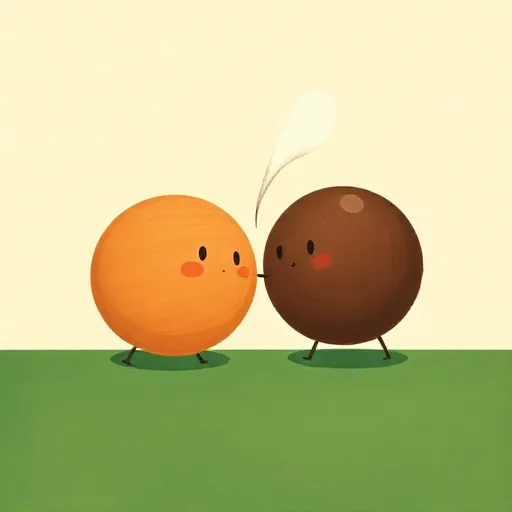
Most people today think that 2+2 must equal 4, no matter what—it feels necessary, unchangeable. Le Grand thought something more radical. Yes, 2+2=4 is necessarily true, but only because God freely willed it to be so. Before that choice, it could have been otherwise.
This is the creation doctrine, a startling idea that Descartes first mentioned in 1630 and then largely set aside. Le Grand was one of the very few Cartesians who picked it up and defended it in public. He argued that God is the total cause of everything—including the eternal truths of mathematics and logic. God did not look at some independent realm of facts and decide what to create. Instead, God invented the facts, like a game designer writing the code for a new world. Once God decreed that 5 plus 1 equals 6, that truth became immovable, because God’s will is unchangeable—a perfect being does not flip-flop. But if God had willed a different rule set, a different universe would have resulted, and its inhabitants would have found that math just as obvious as we find ours.
Critics, including the famous philosopher Nicolas Malebranche, were frightened by this view. If God could have made 2+2 equal anything, they worried, then science loses its sure foundation; everything becomes arbitrary. Le Grand answered by using a distinction from earlier thinkers: antecedent necessity and consequent necessity. Before God decided, the opposite of 5+1=6 was possible. After God decided—consequently—it is impossible for 5+1 not to equal 6. So once the divine choice is made, we get a world of solid, trustworthy laws. The foundation of our certainty is not a set of independent eternal ideas, but the steady, faithful will of God. It is a strikingly different way to think about why the universe is orderly.
Why Le Grand’s Questions Still Haunt Us
Le Grand is not a household name. Yet the arguments he poured his life into are far from settled. The mind‑body problem he wrestled with is alive every time neurologists ask how conscious experience emerges from firing neurons. The question of animal minds surfaces in court cases about the rights of apes, and in your own home when you wonder if a dog feels joy or a fly feels panic. And the creation doctrine—the idea that mathematical truths might depend on something deeper, even on a choice—returns whenever mathematicians debate whether they are discovering a pre‑existing realm of numbers or inventing useful fictions.
You do not need to believe in God to feel the force of Le Grand’s point: the rules of the universe might have been otherwise, yet here they are, rock‑solid enough to build bridges, launch rockets, and predict eclipses. Why is that? Antoine Le Grand would say it is because something absolutely trustworthy stands behind them. Whether you agree or not, facing that question—what makes truth true?—still sits at the center of philosophy. His life shows that a quiet monk with a fierce pen can make a whole country think again.
Think about it
- If you could design a universe where 1+1=3, would its inhabitants think that was just as obvious as we think 1+1=2? What makes a truth feel necessary?
- Le Grand thought animals felt nothing. If a robot dog behaved exactly like your pet, would you treat it like a living being? What gives something the right to be called a conscious creature?
- Some scientists say every decision you make is determined by brain chemistry. If that were true, would you still feel free? Is there a difference between feeling free and really being free?