Why Does Yesterday’s Court Case Control Today’s?
The Judge’s Puzzle: Why Follow the Past?

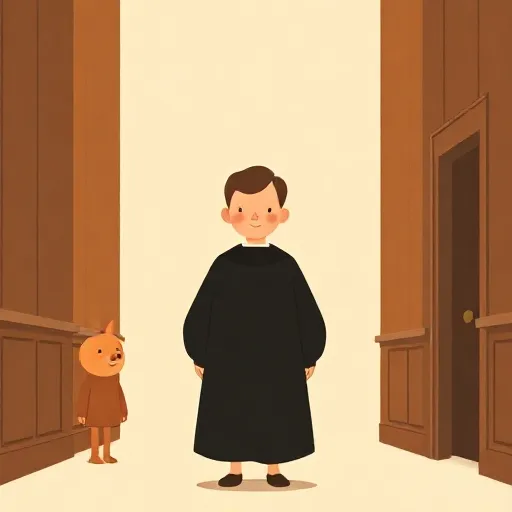
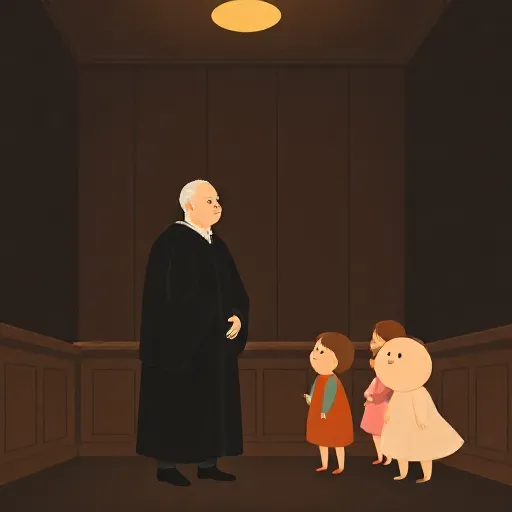
Imagine you’re a judge. Two neighbors each borrow a friend’s bike. One returns it with a bent wheel; the other returns it in perfect shape. Last month, in a case just like the first, you ruled that the borrower must pay for repairs. Now the second case, identical except the bike came back fine, lands in front of you. Should your old decision push you to rule the same way again? In everyday life, you might shrug and decide each situation on its own. But in a legal system, the story is different. Courts treat their own past decisions as having special force—a force called precedent.
In ordinary thinking, if you made a choice before and now suspect it was wrong, you feel free to change your mind. But law imposes a duty: later judges are often bound to follow earlier rulings, even when those rulings now look mistaken. This practice is known as stare decisis —Latin for “to stand by things decided.” It’s not just a habit; it’s a core rule of legal reasoning. And it raises a deep puzzle: why should what a court did yesterday control what a different court does today, maybe about a person who wasn’t even alive when the first case happened?
The Ratio: Finding the Heart of a Decision
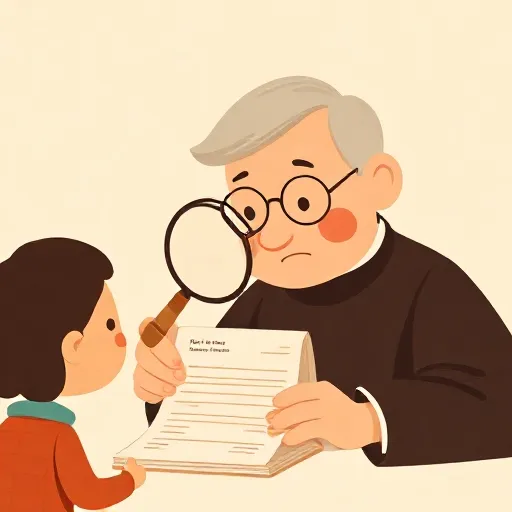
Not everything a court says in a ruling counts as binding law. Only a part called the ratio decidendi —the “reason for the decision”—has that power. Imagine a trust case. A trustee wrongly gives away a piece of land to someone who didn’t pay for it. The original owner sues to get the land back. The court might rule: “Because the recipient was a volunteer (they gave nothing in return), the property must be returned.” The ratio is the key fact the court relied on: the recipient didn’t pay. Other comments the judge makes along the way, like a remark about the weather or a guess about future cases, are obiter dicta —things said “by the way” that don’t bind anyone.
But here’s the catch. A judge doesn’t stamp the ratio with a highlighter. Later courts chase it through the judgment’s paragraphs and the background of that area of law. Should the ratio be stated very specifically (“no money was paid for this piece of farmland”) or more broadly (“the recipient gave nothing of value”)? The level of abstraction matters. A broad ratio stretches the precedent over many new situations; a narrow one keeps it tightly locked to the original story. Philosophers of law have spent decades debating how to pin down exactly what makes two cases “the same” in legally relevant ways.
Three Theories of What Precedents Really Are

How should we understand a precedent once the ratio is set? Legal thinkers offer three main pictures.
The first treats a precedent like a mini-statute—a rule laid down for all future cases that match its keywords. On this view, the court that said “a volunteer recipient must give back the property” created a rule: whenever someone receives trust property without paying, they must return it. Later judges simply apply that rule mechanically. This idea fits the way lawyers talk about ratio decidendi as a “holding,” but it struggles with a practice called distinguishing.
Distinguishing lets a later court avoid following a precedent even when the facts fall inside the ratio, as long as it can point to some new, relevant difference. For example, a later case might involve a volunteer who—beyond just receiving the land—spent money improving it, relying on the belief that it was theirs. The second court can rule that the person gets to keep the property, adding an extra condition (“unless they reasonably relied on the receipt”). Lawyers do this constantly, and it suggests precedents aren’t rigid rules that must be obeyed. A lower court can narrow a higher court’s rule, as long as it doesn’t contradict the original outcome. Why give lower courts that power? It’s puzzling on the rule model.
A second picture says precedents aren’t about rules but about the underlying principles that justify the result. What binds later judges is not the ratio itself but the best moral or legal justification behind it. This explains why judges spend pages explaining their reasoning: the justification is the real engine. It also makes distinguishing natural—you distinguish when the justification doesn’t reach the new facts. But this view fails to account for why lawyers and judges focus so much on the ratio itself, not just the justification. And it blurs the line between binding precedents and looser analogies (which we’ll meet in a moment). If the justification were binding, every parallel case would be mandatory, and the law would lose its sharp edges.
A third approach says a precedent is a decision on the balance of reasons in one concrete case. The court weighed all the facts (some pointing toward the owner, some toward the volunteer) and reached a conclusion. The ratio simply lists the factors the court thought were decisive. Later courts must treat that outcome as correct, but they can still distinguish if new facts tip the balance a different way. This neatly explains why courts record so much detail and why they don’t bother crafting a fixed phrasing of the ratio. The duty is not to apply a rigid rule but to treat the earlier case as a solved puzzle, only departing when fresh reasons genuinely tell a different story.
Why Follow a Bad Decision?
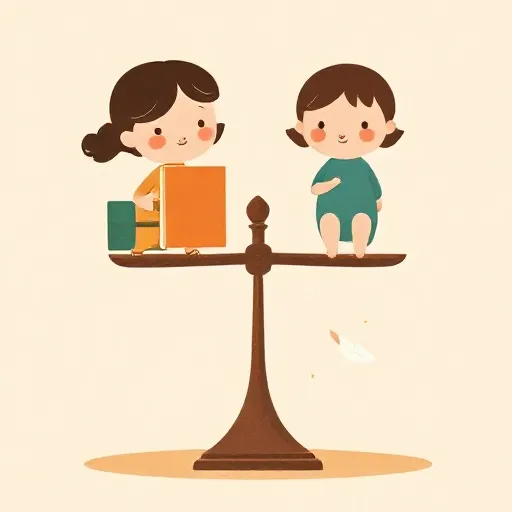
If a precedent was genuinely wrong—say it misread the statute or ignored a key value—why should a later judge repeat the mistake? Isn’t that compounding injustice? The debate over this question has produced several answers.
One appeal is to consistency, what philosophers call formal justice: like cases should be treated alike. If you can’t change the past case, at least treat the new person equally. But equality doesn’t demand repeating an error. Giving one person an undeserved win doesn’t mean you should give the next person the same undeserved win. Equality only pulls when the original decision fell in a zone where more than one outcome was legally permissible—when the law was indeterminate. In those situations, following precedent prevents arbitrary swings and treats future litigants the same.
A more practical argument rests on expectations. If courts have signaled they’ll stick to old rulings, people rely on those signals: they sign contracts, buy houses, and plan their lives trusting the law won’t flip overnight. But this argument has a circular worry: expectations are only legitimate if there’s already a good reason for the practice of following the past. You can’t bootstrap a justification just because a custom exists.
The strongest grounding, many philosophers now believe, is replicability—the idea that legal decisions should be predictable. In a system with many judges working from scattered materials, perfect agreement is impossible. Precedent makes outcomes more forecastable, so that a lawyer can advise a client without guessing what mood a judge will be in. Predictability isn’t an absolute value, though; sometimes it can be outweighed by the chance to correct a truly harmful rule. That’s why even strong systems of precedent allow high courts to overrule their own decisions in special circumstances, though doing so is treated as a grave step.
When Cases Are Only Similar, Not Identical

What happens when a new case doesn’t fall inside any existing ratio, but feels very close? Then the judge reaches for an analogy. An analogy argues that because case A was decided a certain way, and case B is relevantly similar, case B should get the same treatment. Unlike a binding precedent, an analogy doesn’t command; it offers a reason that can be outweighed. A strong analogy —say, impersonating a boyfriend to obtain consent is like impersonating a husband—carries force because the justification behind the earlier decision seems to cover the new situation. A weaker analogy—comparing duress (being forced) to provocation (being provoked)—may fail because the reasons behind the two aren’t a close fit.
The logic of analogy mirrors the logic of distinguishing in reverse. In distinguishing, a precedent gets narrowed; in analogy, it gets extended. But there’s an asymmetry: a precedent must be treated as correctly decided even when distinguished, while an analogy can be ignored if a later court finds its underlying rationale unconvincing. So a flawed rule about husbands could be confined to the past, never extended to other relationships. Judges use analogies partly to check their own thinking (like testing a principle on a new scenario) and partly to nudge the law toward coherence without locking it into a mistake. Behind the scenes, the drive for replicability again does much of the work: analogies make legal reasoning more transparent and its outcomes more guessable.
Arguing Fairly in the Lunch Line

You may never sit in a courtroom, but you’ve already used the bones of precedent and analogy. When you argue that you should get the bigger piece of cake because your sister got it last week, you’re treating your family’s past decision as a reason for a new one. When you claim that staying up until ten is like staying up until nine-thirty—just a little different—you’re drawing an analogy. In both cases you’re asking others to see your situation as falling under a rule they’ve already accepted.
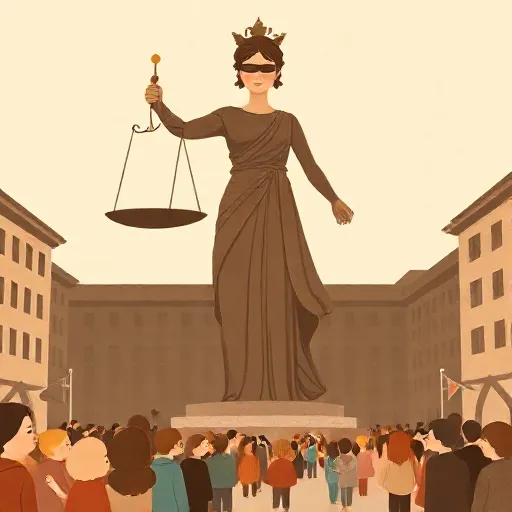
Legal reasoning takes these instincts and turns them into a systematic practice. It forces us to confront the tension between two important goods: predictability and improvement. A world with no precedent would feel arbitrary, with judges making decisions the way a novelist invents a plot. A world with frozen precedent would be stuck with old errors forever. The law’s solution—binding but distinguishable rulings, supplemented by non-binding analogies—is a careful attempt to keep both fairness and flexibility alive. So the next time you protest, “But you said last time…,” you’re doing philosophy, whether you notice it or not.
Think about it
- If a school principal always punishes the second student more harshly because an earlier similar case was handled that way, is that fair? When, if ever, should the principal break the pattern?
- Imagine your family treats a rule from five years ago as unchangeable, even though everyone now thinks it was silly. Would you rather live with a silly rule that everyone knows, or risk new rules that might be better but also unpredictable? Why?
- Can you think of a situation from your own life where you felt you should follow a past decision even though you now think it was wrong? Did continuing the pattern help or hurt someone?