When a Judge Decides a Case, Are They Finding Law—or Making It?
A Judge’s Hidden Puzzle: Find Rules or Invent Them?

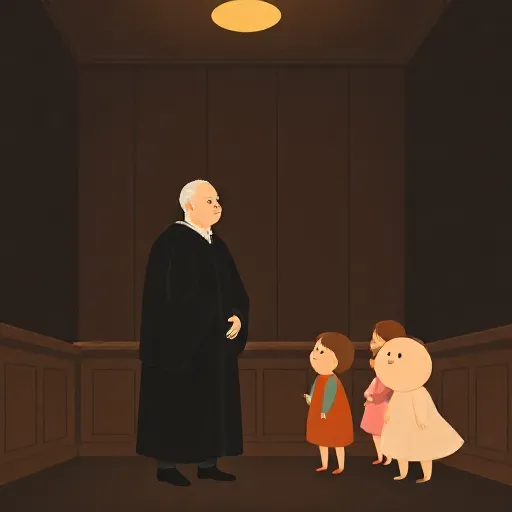
It is 2028. A self-driving car rolls into a mailbox. The police hand a ticket to the car’s owner for “failure to stop at the scene.” But the law in her state says a driver must stop. The car drove itself; no human was at the wheel. The owner says, “I wasn’t driving, so I didn’t break the law.” The judge opens a leather-bound motor vehicle code written in 1985. There is nothing in it about robot cars. Now she must decide: does the old law cover a new machine nobody imagined?
This is the kind of moment that makes legal reasoning so slippery. Legal reasoning is simply how judges think their way from the law to a decision. But that little journey hides a huge question. Some legal thinkers say the judge’s job is to discover what the law already says and apply it. Others say that when the words run out, the judge must create something new—quietly filling a gap the legislature never thought about. That dispute has been raging for decades, and it touches every courtroom on earth. To understand it, you need to meet two camps who see law in radically different ways.
The Finders and the Makers: Positivists vs. Interpretivists

On one side you have legal positivists like H. L. A. Hart (1907–1992) and Joseph Raz (1939–2022). Positivists are not grumpy nay-sayers—the name comes from “posited,” meaning laid down. They think law is a system of rules that human authorities have deliberately created: legislatures vote, judges rule, and those official decisions add up to law. Crucially, positivists believe that “what the law is” and “what a judge should decide” are two different questions. Sometimes the rules run out and leave a gap. In those situations, positivists say, judges have discretion—they may look outside the law itself (to morality, to practical wisdom) and, in effect, make a small piece of new law to settle the case. In our self-driving car example, a positivist would say, “The written law says ‘driver,’ and a robot is not a driver. The law has a gap here. The judge must step in and fill it, deciding whether we want to extend the rule to self-driving cars.”
Then came Ronald Dworkin (1931–2013), who turned this picture upside down. Dworkin is an interpretivist. He denies that law is just a set of written rules that sometimes run out. In his view, law is a deep social practice—a story—and everything a judge may properly rely on is already part of that practice. There are no gaps. So when a judge decides a case, she never steps outside the law to grab extra-legal materials. Instead, she interprets the whole legal landscape to find the one decision that makes the law the best it can be. Dworkin called this activity constructive interpretation: you treat the law as if it were a novel being written by a single author—the community itself—and you ask what the next chapter must be to make the whole story fit together beautifully and justify the state’s power. For Dworkin, the self-driving car case isn’t about a gap at all; it’s about interpreting the deeper principles that run through traffic law, safety rules, and fairness, in order to arrive at the right answer—an answer that was waiting to be discovered all along.
This deep disagreement—finders vs. makers—comes to a head whenever a judge sits down to interpret a law.
Interpretation’s Two Faces: Looking Back and Looking Forward

Many legal philosophers agree on one striking image: interpretation is Janus-faced. The Roman god Janus had two faces, one looking back and one looking forward, and interpretation does the same thing. It has a conserving side—you must be faithful to the original law, the text, the precedent—so that you are not just inventing whatever you please. But it also has a creative side, because applying an old rule to a new case always means bringing something out that wasn’t there before. When the judge reads the 1985 traffic code and asks whether a self-driving car counts as a “driver,” she is both honoring the lawmakers’ words and stretching them into fresh territory.
The real fight is over how much backward-looking loyalty and how much forward-looking creativity is proper. At the conserving extreme, you find views like originalism in U.S. constitutional debates: followers of Robert Bork (1927–2012) insist that a judge should search only for the meaning the ratifiers understood when the text was written, and stick as close to that as possible—otherwise judges might grab power that belongs to elected lawmakers. At the creative extreme, thinkers like Stanley Fish (born 1938) argue that texts have no fixed meaning at all until an interpretive community of judges and lawyers trains itself to read them in a certain way. On that view, the constraint does not come from the words themselves but from the shared habits of the legal profession. Between these poles, theorists like Owen Fiss (born 1939) have tried to show that both the original text and extra “disciplining rules” of the judicial craft—like always checking how history understood a phrase—keep interpretation from flying off the rails.
So how do judges decide which interpretation is better? Some philosophers, including Dworkin, say that interpretive answers can be objectively better or worse, correct or incorrect, like a well-built house. Others, like John Finnis (born 1940), warn that the values we use to judge interpretations—fairness, predictability, justice—may not be commensurable, meaning you can’t always put them on a single scale and pick a single “right” answer. This leads to a central question: if interpretation is always pulling in two directions, can we ever agree on what law really demands?
Making Law Speak with One Voice: The Allure of Coherence
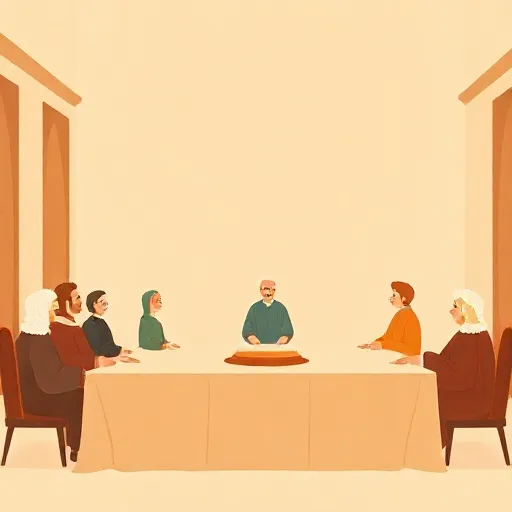
Dworkin believed that a judge should decide each case so that the law as a whole speaks with one voice. This value is called coherence—though it is much more than just avoiding contradictions. Logical consistency means you do not say “it is illegal” and “it is legal” at the same time. Coherence goes further: it means that the rules and principles behind different court decisions should fit together as if they belonged to a single, sensible plan. Imagine a TV series written by a hundred different screenwriters. A new writer who respects coherence will not simply slap down a cool scene; she will ask what themes already run through the characters, what their deepest motivations are, and then write a scene that makes the whole series better. Dworkin’s slogan law as integrity tells judges to do exactly that: identify legal rights and duties by assuming they were all created by one author—the community personified.
But coherence has sharp critics. Joseph Raz argues that judge-made decisions should never be forced to fit artificially with everything else just for the sake of smoothness. Why, he asks, should a judge ever reject the morally best resolution of a case simply because it does not match some detail of older cases? Raz thinks coherence can be desirable but not a trump card; sometimes judges should introduce a better rule even if it feels a bit jarring with the past. Moreover, he warns, courts have limited power. Unlike a legislature, a judge cannot rewrite an entire field of law at one blow; she decides the one case in front of her. That means if she tries to be too creative, she may leave the law looking like a patchwork blanket rather than a unified story—and that could make it harder for people to know what the law is.
There is also a question of size: should a judge chase global coherence, making her decision match the entire legal system, or aim only for local coherence within a particular area, like traffic law? Barbara Levenbook has defended the local version. She points out that the principles that make sense for criminal law might have nothing to do with tax law, and forcing them to cohere could produce bizarre results. Raz, too, thinks local coherence is the realistic aim, because the very nature of court decisions limits how far a judge can smooth connections between distant branches of law.
Why It Still Matters When You Open a Rulebook

The hunt for what legal reasoning really is does not stay in dusty courtrooms. It leaks into ordinary life. Suppose your school handbook says, “No electronic devices may be used during class.” Your friend checks the time on her smartwatch. Did she break the rule? You might argue that the rule was written before smartwatches existed and that its point is to stop distractions, not to ban time-telling. If you take a positivist-flavored approach, you might say the written words plainly forbid any electronic device, and if that seems too harsh, it is the rule-makers’ job—not yours—to update the policy. If you think more like Dworkin, you might search for the deeper principles that glue the school community together (focus on learning, mutual respect) and interpret the rule so that the whole system makes moral sense. Which side you lean toward changes whether your friend gets detention.
The same puzzle runs through family debates, video game communities, and every constitution ever written. When rules run into situations their creators never imagined, the people who apply them must choose: conserve the original words, or create something that fits the new world. Both choices carry risks. Conserving too tightly can leave you with silly results, like punishing a robot-car owner for a law meant for human drivers. Creating too freely can give unelected judges too much power, allowing them to reshape society without the people’s say. The self-driving car judge cannot escape this tension: whatever she decides, she will be accused of either sticking woodenly to the past or drifting off into her own ideas of fairness. And the decision she writes will settle not just one mailbox bump—it will become a small stitch in the giant fabric of law that orders how we live together.
Think about it
- Your sibling says the household rule “no pets on the furniture” does not apply because their guinea pig sits in a cage on the couch, not directly on the cushion. Should the rule be read strictly by its words, or by what your family was really trying to protect? Why?
- Imagine you are a judge in a future city where a hologram insults someone. There is no law about holograms. Do you decide the case using only the closest old rule (say, about shouting insults), or do you craft a new rule? What would make your decision legitimate?
- If judges could always change the law to fit what they think is fair, would that make life more just—or more dangerous? What if you disagreed with the judge’s idea of fairness?