
Can Science Tell Us What the Law Really Is?
The Judge Stares at Two Law Books
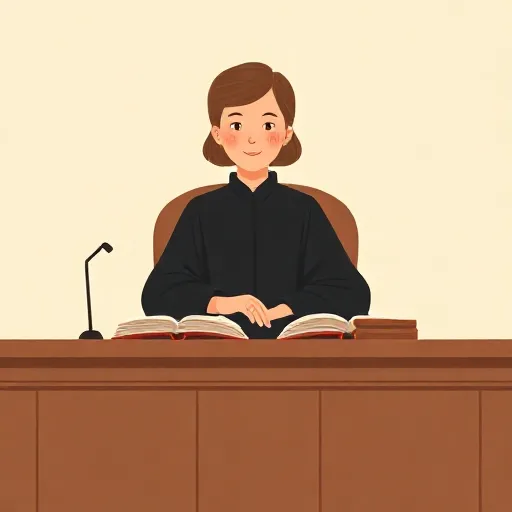
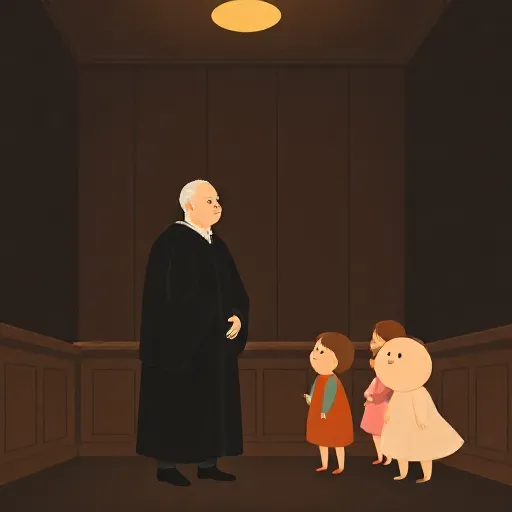
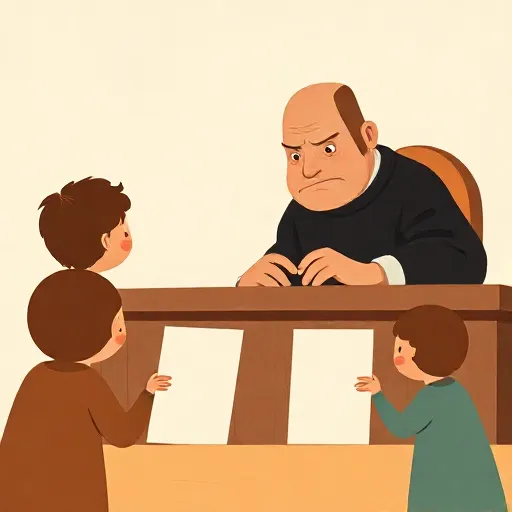
It is a gray morning in 1930. A judge sits alone in chambers, staring at two thick law books. One says a contract is void if it is missing a signature. The other says a contract can still bind people if both sides understood the deal. The judge turns the pages again and again. The legal reasons seem to pull her in opposite directions. She bangs her fist on the desk. “Does the law tell me what to decide,” she wonders, “or do I just have to choose?”
Many legal philosophers have asked the same question. Some answer by becoming naturalists. In philosophy, a naturalist is someone who wants to study things the way scientists do—not by sitting in an armchair and thinking, but by looking at evidence and making predictions. When naturalists turn to the law, they try to understand it by observing how real judges, lawyers, and citizens behave, not just by puzzling over big concepts.
But not everyone agrees. Another group of philosophers thinks that the law depends on moral ideas and logical reasoning that you cannot see under a microscope or measure with an instrument. The fight between these camps has been rumbling for over a hundred years, and it still shapes how we think about fairness, courts, and even playground rules.
Can We Study Law in a Lab?
Naturalists come in two flavors. Methodological naturalism (M-naturalism) is a view about how we should do philosophy. It says that good philosophical theories should be “continuous with” the ways scientists work — using observations, experiments, and carefully collected data. Substantive naturalism (S-naturalism) is a view about what exists. It says that only natural things are real: things made of matter and energy, the kind of stuff that physicists and biologists study.
When legal philosophers are methodological naturalists, they want to replace armchair speculation about the law with something that looks more like science. But why would anyone want to throw away the familiar tools of philosophy? The answer starts with an American philosopher named W. V. O. Quine (1908–2000).
Quine attacked an old idea: that some truths are a priori, knowable just by thinking about meanings, without ever checking the world. For centuries, philosophers thought you could learn a lot about right and wrong, knowledge, or justice simply by analyzing the meanings of words. Quine argued that there is no sharp line between truths that are “true by definition” (like “All bachelors are unmarried”) and truths that are “true by fact” (like “Some bachelors eat peanut butter”). All our beliefs, he said, can in principle be changed by new experiences.
This means conceptual analysis — the habit of testing ideas by asking “What would you say if…?” and trusting your gut feeling — loses its special authority. Some naturalists go all the way. They say we should replace conceptual analysis of law with empirical social science. If you want to know what makes something legally binding, ask what social scientists discover when they study how courts actually work, not what your intuition tells you.
A concrete example comes from the debate about Legal Positivism, the idea that law depends only on social facts, not on moral goodness. The philosopher Joseph Raz (1939–2022) tried to show, using conceptual analysis, that a certain version of Positivism had to be wrong because it contradicted what “authority” means. But other philosophers’ intuitions disagreed. The naturalist leaps in: “Why trust intuitions? Let’s check what social scientists find when they try to predict judicial decisions. They keep drawing the line between legal and non-legal factors in exactly the way Hard Positivism does — they treat only rules with a clear official pedigree as ‘law’. That’s a real reason to take that view seriously, not because it feels right, but because it earns its keep in scientific explanations.”
Critics reply that law is a human invention, like money or chess. Maybe how people ordinarily use the word “law” really matters. And social-scientific predictions of court decisions are still so shaky — barely better than a coin toss — that we might not want to throw away our intuitions just yet.
The Realists: Prediction, Not Persuasion
A different arm of naturalism, Replacement Naturalism, goes even further. It starts from the observation that legal reasons often don’t force a single decision. In most tough cases, the law is indeterminate: the statutes and precedents can be read to support more than one outcome. This insight was made famous by the American Legal Realists in the early twentieth century. They looked at the United States Supreme Court and noticed that the justices often split 5‑4. The “legal reasons” seemed to point in both directions at once.
The Realists drew a radical conclusion. Since legal reasons cannot uniquely justify a decision, why not give up trying to find the one right answer? We could replace normative theory — theories about what judges ought to do — with a purely descriptive science: study which facts and psychological factors actually cause judges to rule one way or the other. One Realist, Underhill Moore (1879–1949), even tried to explain judicial decisions with the tools of behaviorist psychology. For him, the study of law would simply fall into place as a chapter of psychology.
That sounds extreme. And many philosophers have pushed back. They point out that if the law is indeterminate, we still might want a modest normative theory — one that tells judges, “Based on the legal sources, you could fairly choose outcome A or B, but definitely not C.” Is that useless? The naturalist answers, “Maybe it is. Perhaps it collapses into a boring description of what judges already do, not real guidance.”
What Kind of Advice Actually Helps a Judge?

Not all naturalists want to throw out norms. Normative Naturalism tries to keep the idea that philosophy should tell us what we ought to do, but insists that the advice must be built on facts. The American philosopher Alvin Goldman (born 1938) leads this approach. His rule is simple: you cannot cook up good rules for thinking or deciding from an armchair, because which rules actually work is an empirical question.
Goldman uses two powerful checks. First, we have to check whether a recommended practice really brings about our goals — in law, that might mean finding the truth or reaching a fair outcome. This is the Instrumental Constraint. Second, the Ought-Implies-Can Constraint: there is no point telling a judge to do something no real human could ever do. You wouldn’t tell a basketball player to jump fifty feet high; don’t tell a judge to think like a god.
Take Ronald Dworkin (1931–2013), who described an imaginary super-judge, Hercules, capable of finding the single correct answer in any case by weaving together all past legal decisions with the most morally attractive story. A Normative Naturalist would say: that’s like telling a regular person to run faster than light. It’s not usable advice. Instead, we should study which procedures help real judges avoid mistakes — for example, which rules of evidence actually lead juries to believe true things, measured by careful psychological studies.
So the Normative Naturalist still uses norms, but they are norms tied to earth. They want to know what works for creatures like us, with limited attention, fallible memories, and all-too-human biases.
When the Law Is Just a Feeling

So far, we have been talking about how to study the law. But some naturalists start with a bigger claim: only natural things exist. That is substantive naturalism (S-naturalism). If you are an S-naturalist, you think that even concepts like “valid law” or “right” must be reducible to something you could observe — brain states, behavior, social habits.
The Scandinavian Legal Realists, like Alf Ross (1899–1979) and Karl Olivecrona (1897–1980), built their whole theory of law on this foundation. Ross, in his book On Law and Justice, argued that the statement “This rule is valid law” is really just a prediction: it means that judges will actually follow the rule and, at the same time, feel a psychological sense of being bound to do so. For Ross, legal validity was a purely natural fact about behavior and feelings, nothing more.
The English legal philosopher H. L. A. Hart (1907–1992) famously pushed back. Hart pointed out a simple problem. If a judge says, “This rule is valid law,” she is not predicting what she herself will do. She is announcing that she accepts the rule as a standard that guides her decision. A prediction is something you make about other people; a judge uses legal statements from the “inside.” Ross’s naturalistic reduction, Hart argued, misses the way law actually works for those who participate in it.
Still, substantive naturalism has drawn thinkers who want to keep moral and legal concepts firmly grounded in the natural world. Some even try to use a new theory of reference — the idea that words latch onto whatever stuff originally caused someone to use them — to argue that legal terms refer to real, natural facts out there in the world. Most philosophers are skeptical that “justice” points to a natural property the way “water” points to H₂O, but the conversation continues.
Why the Fight Lives On
You do not need to be a judge or a philosopher to stumble into these questions. Next time you and a friend argue about whether a playground rule was broken, you are already inside the naturalism debate. One of you might insist, “That’s not fair — everyone knows you can’t do that.” Another might reply, “I think the other team had a point.” Armchair-style reasoning about what the rule “really” means runs headlong into messy facts about what people actually do.
The naturalist wonders: could a clever psychologist predict, just from measuring kids’ personalities and moods, which way the argument will end? And if so, does that show that fairness is just a feeling, not something real that science cannot capture? We are back to the judge in her chambers.
Philosophers are still wrestling with these questions. Scientific studies of judicial behavior are improving, and they keep forcing us to ask harder questions about whether law is a tidy machine or a tug-of-war between hidden causes. Meanwhile, the defenders of moral reasoning and conceptual clarity remind us that even if you could predict every human decision, that would not automatically tell you which decisions are right.
The fight between naturalists and their opponents is not going away, and it shapes your world more than you might guess. Every time you feel that something is unfair, every time you argue about a rule, you are pulling on one thread of a knot that began winding centuries ago.
Think about it
- If a social scientist could predict what every judge will decide, would that mean the law is nothing more than a predictable set of causes, like the weather? Or could there still be a real “right answer” hidden somewhere?
- When you argue with a friend about what is fair, are you just expressing your own feelings, or do you think you are pointing to a rule that is already there, waiting to be discovered?
- Imagine a judge who always follows her gut instinct rather than looking up the law. Is that judge making a mistake, or is her instinct just one more natural fact that explains what the law becomes?