Philosophy for Kids

Can the Future Cause the Past?

Imagine you’re watching a video of a coffee cup sitting on a table. Nothing happens for a while. Then, suddenly, the cup lifts into the air, rises toward someone’s hand, and the hand catches it. You hit rewind. Now the hand releases the cup, it falls, hits the table, and stops moving. That makes perfect sense to you—cause first (hand letting go), effect second (cup falling).

But now imagine watching the video forward and seeing the same thing: a cup sitting on a table, then floating upward into someone’s hand. You’d think something was wrong. In our everyday experience, causes come before effects, not after. But what if that isn’t a necessary rule of the universe? What if, in some strange circumstances, an effect could happen before its cause?

This is the puzzle of backward causation. Philosophers have been arguing about it for about seventy years, and nobody has settled it yet. The disagreement isn’t about whether we actually see effects happening before their causes in ordinary life—we don’t. The question is whether such a thing is possible in principle. And if it is, what would that mean for everything else we think we know about time, freedom, and the nature of reality?


What Would Have to Be True About Time for Backward Causation to Work?

Before you can even ask whether the future can cause the past, you have to decide what “the future” even is. This is where the philosophy of time gets involved.

Most of us probably think about time like this: the past is gone, the present is real, and the future doesn’t exist yet—it’s just possibilities. This view is called presentism. Only the present moment really exists. If you’re a presentist, backward causation doesn’t make any sense at all, because the cause would have to exist in the future, but the future doesn’t exist.

A slightly different view is called the growing block universe. According to this idea, the past and present both exist, but the future doesn’t. Reality keeps “growing” as new moments become present. Again, backward causation seems impossible here, because the future cause would have to exist somewhere, and it doesn’t.

Then there’s eternalism, also called the block universe. This is the view that past, present, and future all exist equally. They just exist at different locations in spacetime. The “present” is just wherever you happen to be standing—like how “here” is just wherever you happen to be standing in space. Events in 1923 and events in 2123 are equally real; we just can’t get to 2123 yet.

If you’re an eternalist, backward causation becomes at least thinkable. The future event that’s supposed to do the causing already exists somewhere in spacetime. It’s just “later” than us. So the question becomes: can that later event reach backward and influence an earlier one?

Philosophers who argue that backward causation is possible usually end up defending eternalism. If you think the future isn’t real, there’s nothing there to do any causing.


Can the Future Change the Past?

One of the first objections people raise is: “If backward causation is possible, doesn’t that mean you could change the past? And isn’t that obviously impossible?”

Suppose your little brother spills juice on the carpet this morning. If backward causation were possible, could you, this afternoon, cause the spill to unhappen? Could you change the past so that the carpet stayed clean?

Most philosophers who defend backward causation say no. They make a careful distinction between changing the past and influencing the past. In forward causation, you don’t “change” the future—you just cause it. The future happens the way it happens because of what you do now. Similarly, if backward causation were possible, you wouldn’t “change” the past. The past already contains whatever effects your future actions produce. It’s just that those effects were caused by something later.

Think about it this way: when you decide to eat cereal for breakfast, you don’t “change” the future to become a cereal-eating future. You just make it a cereal-eating future. The cereal-eating was going to happen because you caused it. Likewise, if backward causation were real, you could say: “The reason the carpet got spilled on this morning was because of something I’ll do this afternoon.” The spill isn’t changed—it happened. But what made it happen lies in your future.

This feels weird because we’re used to thinking that what’s done is done and nothing after it can matter. But if you’re an eternalist, everything that ever happens exists all at once, and the question is just which events are connected to which others as cause and effect.


The Problem with Distinguishing Cause from Effect

For backward causation to be possible, we need a way to tell causes apart from effects that doesn’t depend on which one comes first in time. That’s harder than it sounds.

The Scottish philosopher David Hume famously defined a cause as “an object followed by another.” For centuries, most philosophers assumed that the temporal order—which happens first—was the only way to tell cause from effect. If you drop a glass and it shatters, the dropping is first, so it’s the cause. If you saw the shattering happen before the dropping, you’d think something was backward.

But if we’re going to allow backward causation, we need a different way to identify which event is the cause and which is the effect—one that doesn’t rely on time order.

One popular approach uses counterfactuals. A counterfactual is a “what if” statement: “If the cause hadn’t happened, the effect wouldn’t have happened either.” For forward causation, this works pretty well. If I hadn’t dropped the glass, it wouldn’t have shattered. The dropping is the cause because the shattering depends on it.

But there’s a problem. Counterfactuals seem to run both ways. If the glass hadn’t shattered, I probably wouldn’t have dropped it either (since the dropping is what caused the shattering). So counterfactuals alone don’t tell us which is cause and which is effect—they just tell us the two events are connected.

Philosophers have come up with various ways to fix this, but there’s no consensus. Some argue that causation is just a basic feature of the world that can’t be analyzed in terms of anything simpler. Others think we understand causation through our ability to manipulate and intervene in the world—we know what causes what because we can push things and see what happens. But even that approach gets complicated when you try to apply it to backward causation.


The Bilking Argument

The most famous objection to backward causation was developed by the philosopher Max Black in 1956. It’s called the bilking argument.

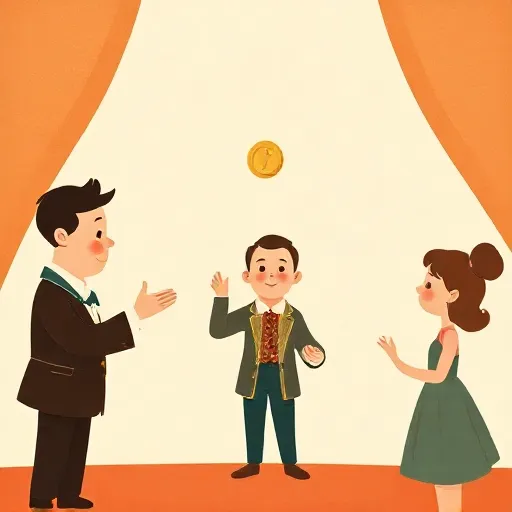
Black asks us to imagine a situation where a person predicts a future event, and the prediction seems to be caused by that future event. For example, suppose a mind reader named Zara predicts the outcome of a coin flip that will happen one minute later. We check her records, and she’s been right 100% of the time. It looks like the future coin flip is causing her present prediction.

But here’s the problem, says Black: after Zara makes her prediction, we can always step in and make the coin flip come out opposite to what she predicted. Or we can just not flip the coin at all. If we do that, then the future coin flip can’t be causing her prediction—because the coin flip either doesn’t happen or comes out wrong. And if we can always do this, then backward causation can’t really be happening.

The bilking argument seems to show that the mere possibility of intervention destroys any supposed case of backward causation. If we can always mess with the cause after we see the effect, then the effect can’t really be caused by that future event.


How Defenders of Backward Causation Respond

Supporters of backward causation have several replies to the bilking argument.

First, they point out that if backward causation is real, then our attempts to “bilk” it would fail—not because we’re incompetent, but because the universe would somehow prevent us from succeeding. If the coin flip really does cause Zara’s prediction, then when we try to make the coin come out opposite, something would go wrong. Maybe the coin slips from our hand. Maybe a gust of wind flips it back. The point is: if backward causation is actually happening, then interventions would be thwarted, just like they can be thwarted in forward causation. (You try to stop a ball from rolling, but you trip and miss.)

Second, defenders note that in many cases of forward causation, we can intervene after we see an effect to prevent the cause from having happened. But that doesn’t mean forward causation isn’t real. If I see that a window is broken (the effect), I can prevent the rock from being thrown (the cause) by grabbing the kid’s arm. But that doesn’t mean the thrown rock didn’t cause the break. It just means I prevented a particular rock from being thrown—maybe another rock caused the break instead. Similarly, in backward causation, our ability to prevent a specific future event doesn’t prove that no future event could have caused the present one.

Third, some defenders argue that if backward causation involves processes humans can’t control anyway—like events at the quantum level—then the bilking argument loses its force. It only seems powerful because we imagine ordinary situations where we can easily intervene.


Does Backward Causation Mean We Have No Free Will?

Another worry about backward causation is that if the future already exists (eternalism) and can reach backward to cause things, then everything is already settled. Our choices don’t matter because the future is fixed. This sounds like fatalism—the idea that whatever will be will be, and nothing you do can change it.

But defenders of backward causation argue that there’s a difference between the future being determinate (it exists and is a fact) and the future being determined (it’s forced to be that way by prior causes).

Think of it like this. Suppose it’s true today that you will eat pizza for dinner tomorrow. Does that mean you have no choice? Not necessarily. It’s true because you will choose to eat pizza. Your choice tomorrow makes it true today. The fact that it’s already true doesn’t force you to do anything—it’s just a record of what you will freely decide.

This is a tricky idea. Many people feel that if the future is already real, then your freedom is an illusion. Others say that as long as nothing is forcing your choice—as long as it’s really you making the decision—then you’re free, even if the outcome is already settled in the block universe.


The Strange Paradoxes

If backward causation were possible, it could lead to some mind-bending situations. Philosophers have identified several types of paradoxes.

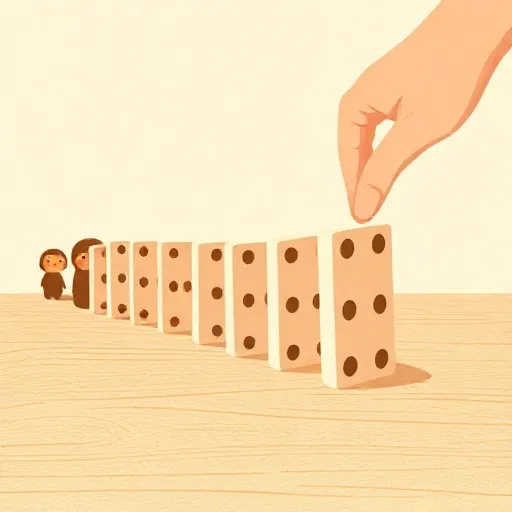
Bootstrap paradoxes involve causal loops. Imagine a time traveler goes back to 1920 and gives a young scientist the plans for a time machine. The scientist builds the machine, and later the time traveler uses it to go back and give the plans. Where did the plans come from? They weren’t invented by anyone—they just loop around in time. Something like this could happen with information or causation: a later event causes an earlier event, which in turn causes the later event, creating a circle with no beginning.

Some philosophers think this is impossible. But others argue that causal loops can be consistent, as long as every event in the loop has a cause somewhere in the loop. It’s strange, but not contradictory.

Consistency paradoxes are more dramatic. Suppose someone from the future tries to kill their own younger self. If they succeeded, they would never grow up to travel back and do the killing. So they must fail. But why must they fail? What stops them?

The philosopher David Lewis argued that “can” is a slippery word. In one sense, the time traveler can shoot their younger self—they have the gun, they’re a good shot, nobody is stopping them. But in another sense, they cannot succeed, because if they did, the past would be different, and the past can’t be changed (it already happened). The solution, Lewis said, is that we’re talking about two different kinds of possibility. The time traveler can do it relative to some facts about their situation, but cannot do it relative to the fact that the past already contains them as an adult.


Does Physics Allow Backward Causation?

This isn’t just a philosophy puzzle. Physicists have also wondered whether the laws of nature might permit effects to precede their causes.

The fundamental laws of physics are mostly time-symmetric. That means they work the same whether time runs forward or backward. If you film a single electron interacting with another, and then run the film backward, what you see is still a perfectly possible physical process. The equations don’t care about the direction of time.

So why do we only see processes going one way? Why do eggs break but never unbreak? Why does cream spread in coffee but never gather back into a droplet? The answer seems to be about boundary conditions—the way things happen to be arranged at the beginning of the universe. It’s not that the laws forbid the reverse; it’s just that the initial conditions make the forward direction overwhelmingly more likely.

Some physicists have proposed theories where backward causation might occur. The Wheeler-Feynman absorber theory (from the 1940s) suggested that electromagnetic radiation involves both “retarded” waves (going forward in time) and “advanced” waves (going backward). Normally the advanced waves cancel out, but in special circumstances they might not.

Tachyons—hypothetical particles that travel faster than light—would, according to relativity, appear to some observers as moving backward in time. If tachyons exist and could carry information, they might allow communication with the past. (Most physicists doubt tachyons exist, but the possibility has been explored.)

In quantum mechanics, some experiments seem to suggest that future measurements might affect past states. The “delayed choice quantum eraser” experiment, for example, produces results that some physicists interpret as backward causation. But others argue these experiments can be explained without backward causation, and mainstream physics doesn’t accept that the future causes the past.


Where Things Stand

The debate about backward causation isn’t settled. Philosophers still argue about whether the concept makes sense, whether the bilking argument is fatal, and whether the paradoxes can be resolved. Physicists continue to explore whether any real phenomena require backward causation to explain them.

Most people—including most philosophers—probably think backward causation doesn’t actually happen in our world. But the interesting question is whether it could happen in some possible world, or whether the very idea is contradictory.

One thing is clear: thinking about backward causation forces you to examine assumptions you probably never questioned. What is time? What does it mean for something to be a cause? Are past and future fundamentally different? These questions are worth wrestling with, even if—especially if—there are no easy answers.


Appendix

Key Terms

TermWhat it does in this debate
Backward causationThe idea that a later event can cause an earlier one
Eternalism (block universe)The view that past, present, and future all exist equally; this is the view of time that makes backward causation possible
PresentismThe view that only the present moment exists; this makes backward causation impossible
Bilking argumentThe claim that backward causation is impossible because we can always intervene to prevent the future cause after we’ve seen the effect
CounterfactualA “what if” statement used to analyze causation; philosophers debate whether counterfactuals alone can distinguish cause from effect
Bootstrap paradoxA causal loop where an event causes itself, creating a circle with no apparent origin
Consistency paradoxA situation where backward causation seems to require changing the past, which appears impossible
Time-symmetric lawsPhysical laws that don’t care about the direction of time; they work the same forward and backward
TachyonA hypothetical faster-than-light particle that would appear to move backward in time from some perspectives

Key People

  • David Hume (1711–1776): Scottish philosopher who famously defined a cause as something that happens before its effect, making backward causation seem impossible by definition
  • Max Black (1909–1988): Philosopher who developed the bilking argument against backward causation, arguing that we can always intervene to prevent the supposed cause
  • David Lewis (1941–2001): American philosopher who argued that causal statements can be analyzed using counterfactuals, and that the consistency paradoxes of time travel can be resolved by being careful about what “can” means
  • Huw Price (born 1953): Australian philosopher who has argued that the fundamental time-symmetry of physics suggests causation itself might be symmetric, making backward causation a natural possibility

Things to Think About

  1. If you discovered that backward causation was real, would it change how you make decisions? Would you worry less about the future if you knew your future actions might influence the past?

  2. The bilking argument assumes we can freely choose to intervene after we see an effect. But if backward causation were real, could our “free choice” to intervene actually be caused by future events we don’t know about? Does this make the argument circular?

  3. Some people find the block universe (eternalism) comforting—everything that ever happens exists forever. Others find it terrifying—nothing can be changed, and the future is already there. Which feels more right to you, and why?

  4. If causal loops are possible (like the bootstrap paradox), does that mean something can come from nothing? Or does it mean our ordinary idea of “origins” is too simple?

Where This Shows Up

  • Time travel stories: Almost every movie or book about time travel has to deal with backward causation, whether the characters can change the past or not
  • Everyday explanations: When someone says “I knew that was going to happen” or “it was meant to be,” they’re brushing up against ideas about future events connecting to the present
  • Quantum mechanics: Some interpretations of quantum experiments (like the delayed choice eraser) suggest that future measurements might influence past states, though this is controversial
  • Fatalism and destiny: People who believe in fate often think the future is already “written”—which is similar to the eternalist view that makes backward causation possible