
If No One Gets Hurt, Can the Law Still Punish You?
A Secret in the Bedroom: The Debate That Started It All

In 1957 a British government committee said that homosexual acts between consenting adults should no longer be a crime. The report sparked a fierce argument between two leading legal thinkers, Lord Patrick Devlin (1905–1992) and H.L.A. Hart (1907–1992). Devlin believed that if most people in a society saw an act as deeply immoral, that gave the law at least a starting reason to ban it. Hart disagreed. He argued that the law should only step in to stop one person from harming another. This was not just a quarrel about a single law. It was a clash over a much bigger question: is it ever the law’s job to punish people simply for doing something wrong, even when nobody gets hurt?
Legal Moralism: When Morality Gives the Law a Reason
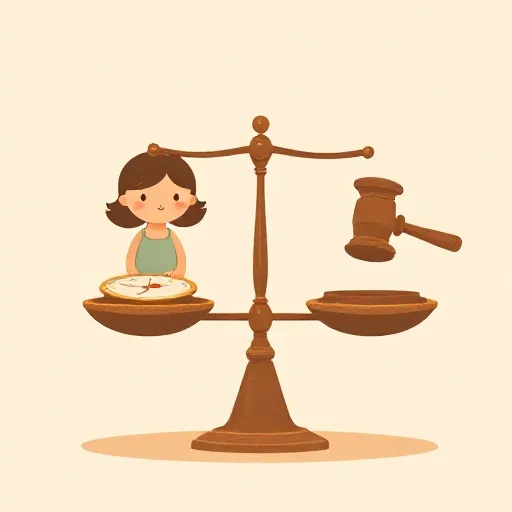
Devlin’s position is called legal moralism. At its heart is a simple link: if an act is immoral, that can be a good reason for the government to make it illegal. Devlin put it carefully. A community’s shared morality, he said, binds it together as much as its government does. So when the vast majority of people feel that a certain behavior is not just unpleasant but deeply wrong, that gives the law a prima facie (first-sight) right to step in. But Devlin did not stop there. He built his view in two parts: first, identify the wrong; second, weigh it against other important values that might defeat the case for a law. Those defeating values he called defeaters. Only if the wrong was strong enough to survive this test would criminal punishment be justified. For Devlin, the real world was full of wrongs that the law should tolerate, not crush.
The Safety Net: Why Devlin Wouldn’t Ban Everything

The defeaters Devlin listed make legal moralism much less harsh than it first sounds. He gave two main ones: privacy and liberty. Take adultery. Devlin assumed it was morally wrong, yet he still insisted it should not be a crime. Why? Because catching adulterers would require officials to spy on the most intimate corners of people’s lives. That invasion of privacy was, he thought, a cost too high. Liberty worked in a similar way. Devlin said there must be “toleration of the maximum individual freedom that is consistent with the integrity of society.” He applied this to homosexual sex between consenting adults in private. Although many Britons at the time regarded it as immoral, Devlin argued that personal freedom and the right to a private life were strong enough to defeat the case for a law. So he ended up supporting decriminalization — not because he changed his mind about the morality, but because the defeaters won. By contrast, cruelty to animals had no such privacy shield, so Devlin thought criminal punishment remained justified. For him, the law was a tool to be used only after careful, case-by-case balancing.
The Harm Principle: Mill’s Wall Between You and the State

Half a century before Devlin, John Stuart Mill (1806–1873) had already drawn a very different line. In his book On Liberty, Mill wrote that “the only purpose for which power can rightfully be exercised over any member of a civilized community against his will is to prevent harm to others.” This became known as the harm principle. If an action does not cause harm to anyone except possibly the person doing it, the law has no business forbidding it — no matter how many people find it immoral. Mill’s principle slams the door on legal moralism. Even a whole society’s disgust, for Mill, is not enough to limit a person’s freedom. He also rejected paternalism, the idea that the law should stop people from harming themselves. For Mill, your life belongs to you. The harm principle was supposed to be a bright, simple rule.
The Blurry Line: Feinberg and the “Wrongful Harm”

Later thinkers realized the harm principle is not so simple. Joel Feinberg (1926–2004) pointed out that the word “harm” needs sharpening. After all, losing a tennis match feels terrible and sets back your goals, but the law obviously should not punish your opponent for beating you. Feinberg argued that to count for the harm principle, a harm must also be a wrong — something unjustified or unfair. So the law still needs to ask moral questions about which setbacks are wrongful. This brought Feinberg closer to the legal moralists than Mill might have liked. He still insisted, however, that the core reason for a law must be a tangible harm, not a bare moral judgment. The harm principle, in his hands, became a partnership between harm and wrongdoing.
Why It Still Matters: Your Room, Your Rules?

This 60-year-old contest is not just for lawyers. It shapes the rules you live under. Should schools punish students for cruel gossip that causes no physical injury, simply because it is mean-spirited wrong? Should the state ban certain drugs because they are “immoral,” or only when they clearly hurt others or the user’s future autonomy? And what about online hate speech — does psychological harm count enough, or does protecting free expression matter more? Devlin’s balance of wrongs, privacy, and liberty and Mill’s bright harm line both still speak. Modern legal moralists like Michael Moore (born 1943) go further: they say only acts that are truly morally wrong should ever be crimes, no matter what the crowd believes. But for many, the prospect of the state entering bedrooms and diaries to enforce moral codes is too frightening. The question the 1960s opened — when, if ever, can the law punish you for being bad, not just for hurting someone? — remains wide open.
Think about it
- Imagine a law against gossiping, passed because most people think gossiping is wrong even if nobody’s reputation is actually ruined. Would you support it? What makes it different from a law against punching?
- Is there anything you think is deeply immoral but completely harmless to others? If so, should the government ever be allowed to ban it?
- Suppose someone believes that eating a certain food on a certain day offends their religion, even though the person eating it harms nobody. Should the state ban that food to respect their moral feelings? Why or why not?