
Can Words Make Laws? The Chicken Coop That Drove Philosophy Crazy
A Chicken Coop, Some Iron Wheels, and a Big Legal Puzzle

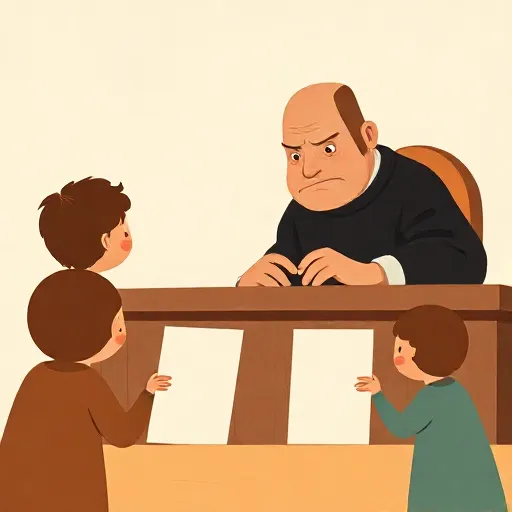
In 1951, an English farmer named Lawrence Burr had a problem. He needed to move his chicken coop, so he fitted it with iron wheels and hitched it to his tractor. He drove it onto a public road. That’s when the law got interested. A rule said any “vehicle” on a road had to have pneumatic (air-filled) tyres, to protect the road surface. Burr was prosecuted. The magistrates said a chicken coop wasn’t a “vehicle” and let him off. Then an appeal court overturned the decision and found him guilty. The Lord Chief Justice declared that even a poultry shed could be a vehicle “for the purposes of this Act.”
At the heart of this small-town case is a giant question: what makes a law a law? And what do the words in a law actually do? Philosophers of law have wrestled with these questions for centuries, and they’ve turned to the philosophy of language to find answers.
Jeremy Bentham’s Big Idea: Laws Are Just Words of the Powerful

The first philosopher to really use language to solve legal puzzles was Jeremy Bentham (1748–1832). He was a radical thinker who believed that only things you could see, touch, or feel were real. That led him to a stark view of law. He defined a law as “an assemblage of signs declarative of a volition conceived or adopted by the sovereign.” In plain English: a law is a bunch of words that express the will of the ruler, backed by threats of pain or promises of pleasure.
Bentham was a legal positivist — someone who thinks that whether something is a law depends on social facts (like what the ruler said), not on whether it’s morally good. He thought talk of “natural rights” was meaningless because you couldn’t point to a right the way you can point to a tree. For Bentham, if you couldn’t translate a sentence into something about real sensations, it was just noise. He tried to paraphrase all legal language into commands and punishments.
But Bentham’s picture had a big flaw: not all law is made up of words. Many legal systems have customary rules that nobody ever wrote down. For example, in common law, murder has been treated as a crime for centuries without there being a single original statement from a sovereign. And even when lawmakers do use written words, the law that results is not the same thing as the ink on the paper. If a police officer raises her hand to stop traffic, her gesture makes a legal norm — but the gesture isn’t an “assemblage of signs” in Bentham’s sense. Words are a tool for making law, but the law itself is the standard of behaviour, not the tool.
H.L.A. Hart and the “Internal Attitude”: Why a Command Isn’t Enough

The philosopher H.L.A. Hart (1907–1992) thought Bentham’s approach missed something essential about how we actually talk about law. Imagine a gunman says, “Hand over your money or I’ll shoot.” You are obliged to obey, but do you have an obligation to do so? Most people would say no. A legal duty feels different. Hart argued that Bentham and his follower John Austin couldn’t explain that difference, because they reduced all law to commands backed by threats.
Hart borrowed ideas from ordinary language philosophers like J.L. Austin (1911–1960). He noticed that when we use words like “ought,” “must,” or “obligation” in a legal system, we aren’t just predicting a punishment. We’re taking a certain internal attitude toward a rule: we treat it as a standard for behaviour that we can criticise ourselves and others for breaking. For Hart, a legal system isn’t just a bunch of commands; it’s a system of social rules that officials and citizens accept as guides. This is what he called the normativity of law — the way law presents itself as something that gives you reasons to act, not just something you’re forced to do.
Hart’s theory was a big step, but it left a puzzle: if law is just about what words mean to a community, why do smart, honest lawyers disagree so much about what a law requires?
Ronald Dworkin’s “Semantic Sting”: What If Words Don’t Decide?
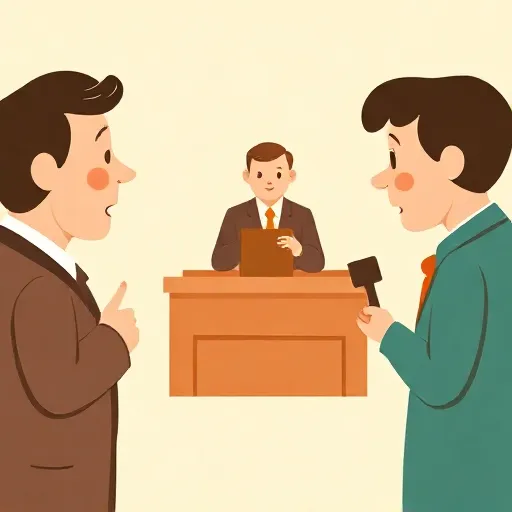
Ronald Dworkin (1931–2013) launched a powerful attack on the idea that law is just a matter of shared linguistic rules. He called it the semantic sting. If the meaning of a word like “vehicle” is fixed by a list of criteria that all speakers agree on, then when two lawyers argue about whether a chicken coop on wheels is a vehicle, one of them must simply be wrong about the definition — or the word must be too fuzzy to cover the case, meaning there’s no law at all. But real judges don’t throw up their hands and say “the law is silent!” Instead, they give reasons, appeal to principles, and sometimes change their minds after careful argument. That looks like genuine disagreement, not confusion.
Dworkin’s own answer was that legal interpretation is a kind of constructive interpretation. The job of a judge isn’t to retrieve a fixed meaning from the words, but to make the whole legal practice the best it can be — to fit the past decisions and rules, while also showing the law in its best moral light. On this view, words in a statute don’t determine the law all by themselves; they’re just one part of a bigger story about justice and fairness.
Dworkin’s challenge made philosophers wonder: can we keep the idea that lawmakers make law by using language, without falling into the trap of thinking words have a magical automatic meaning?
Can Words Make Law? Yes, but It’s All About Context
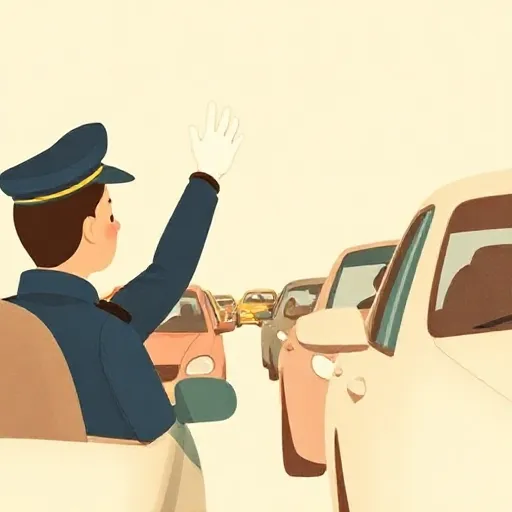
Let’s step back to a simpler case. A police officer at an accident scene waves her arm at a driver: that gesture means “stop.” In that moment, a new legal norm comes into existence. The driver now has a duty under the law to stop, not because the officer said any magic words, but because the legal system gives her authority to direct traffic. The officer’s arm movement is not itself the law; the law is the duty that the gesture creates in context. This is the communication model of lawmaking: an authorised person or body uses language (or other signs) to do something, and the law treats that act as establishing the norm.
Now think about Garner v Burr. Parliament used the word “vehicle” in a statute. The meaning of that word didn’t come with a built-in checklist that either includes chicken coops or doesn’t. Instead, judges had to look at the whole speech situation — the purpose of protecting roads, the principle that criminal laws should be clear, and the context of a moving shed on wheels. The disagreement between the magistrates and the appeal court wasn’t about what “vehicle” means in a dictionary; it was about what Parliament had done by using that word in that legal setting. Both sides understood the word perfectly well, but they weighed the purposes and principles differently.
Philosophers today generally agree that you can reject the content-retrieval view (the idea that a word’s meaning just retrieves a fixed set of examples) without giving up on the communication model. Dworkin’s semantic sting hurts only if you cling to the simplistic picture that legislative language is a container already filled with all the answers. Once you see that even ordinary conversations are full of pragmatic inferences and context-dependent adjustments, the fact that legal disputes exist stops being a paradox. It just shows that language is a rich tool that we use together, not a machine.
Why This Still Matters: You, the Rules, and the Words in Between

The chicken coop case isn’t just a weird bit of legal history — it’s happening every day around you. A school announces a rule: “No running in the hallways.” Is speed-walking running? What if you skip? The words don’t come with a ruler. Someone — a teacher, a principal — has to interpret them. That’s what judges do in a legal system. The rule of law doesn’t mean we have a book with every possible situation already decided. It means we have fair processes and impartial people who take the words seriously, consider the purposes behind them, and explain their decisions.
Understanding the philosophy of law and language shows you that justice isn’t just about writing down good rules. It’s about the ongoing work of hearing arguments, weighing principles, and making the system coherent. When you wonder whether a hoverboard is a “vehicle” under a park regulation, you’re doing the same mental gymnastics as the Lord Chief Justice in 1951. And that’s not a bug in the system — it’s a sign that law is a living human practice, made of words, for people.
Think about it
- Your town passes a law: “No vehicles in the park.” Would a child’s tricycle count? What about a motorised wheelchair? How would you decide fairly?
- If you and a friend make a promise but later disagree about what it meant, who gets to say what the promise really required? Does the promise have a fixed meaning, or does it depend on what you both intended?
- Could a law be perfectly clear in its words but still deeply unjust? If so, what should a judge do — apply it exactly as written, or try to bend it toward fairness?