
Can Regular People Figure Out What a Law Really Means?
The Ambulance in the Park: A Rule Puzzle
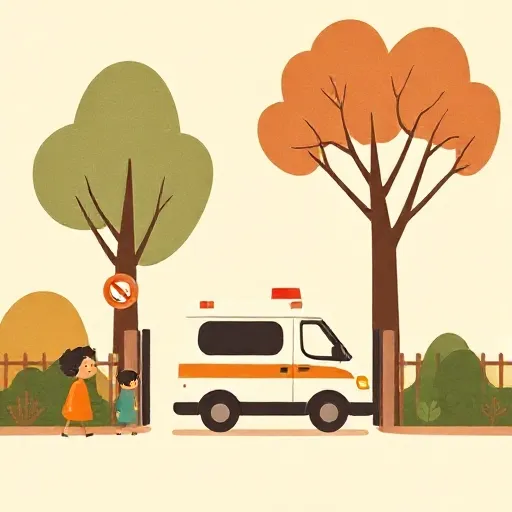
Imagine a sign at the park gate: No vehicles allowed. A car, a bus, a motorcycle — all clearly rule-breakers. But one afternoon a child is badly hurt inside the park. An ambulance rushes up, sirens wailing. Does the ambulance break the rule? The letter of the rule says yes: an ambulance is a vehicle. Yet the whole point of the rule is to keep people safe. If the ambulance is forbidden, someone could die. So what should a judge decide?
This puzzle, borrowed from two famous legal philosophers, H. L. A. Hart (1907–1992) and Lon Fuller (1902–1978), gets at something deep. Law has words, but it also has purposes. When the words point one way and the purpose another, how do we know what the law really means? And who gets to decide: a judge who knows all the details, or the ordinary person reading the sign?
For centuries, legal philosophers tried to answer questions like this by sitting in their armchairs and thinking very hard. Recently, a group of thinkers called experimental jurists — people who study legal ideas with the tools of psychology — started doing something different. They began asking you — ordinary people — what you think. This article is about what they have found, and why it has caused a big, respectful fight among philosophers.
Imagining Angels: How Philosophers Test Ideas

Before we get to the experiments, let’s see what philosophers were doing in their armchairs. Traditional jurisprudence — the philosophy of law — often uses thought experiments: imagined situations that are supposed to uncover what we all believe about law without realizing it.
One of the most famous is the society of angels, created by the philosopher Joseph Raz (1939–2022). Raz asked: could there be a legal system without any punishment or force? What if you had a world of perfect beings — angels — who set up public rules and courts but never broke the rules, so they never needed police or prisons? Raz declared that everyone would still call such a system a legal system. Therefore, he concluded, having a coercive force is not a necessary feature of law — law can exist without it.
Thought experiments like this assume that the philosopher’s own gut reaction matches what all people would think. But is that true? If you told a class of eleven-year-olds about the angels, would they agree that the angels’ rules are a legal system? Philosophers can’t just assume the answer; they have to check. That’s where experimental jurisprudence comes in.
From Armchair to Clipboard: The Birth of Experimental Jurisprudence

Experimental jurisprudence uses methods from psychology — especially surveys and carefully designed stories — to look at how real people think about legal concepts. Instead of one philosopher trusting their own intuition, researchers ask hundreds or thousands of ordinary people and look at the patterns.
Take the park rule about vehicles. Researchers gave participants four types of cases: (1) a car driving at full speed (forbidden by both words and purpose); (2) a working truck mounted on a pedestal as a statue, so it breaks the words but not the purpose; (3) someone swinging a chainsaw around, which is dangerous but involves no vehicle at all — this goes against the purpose but not the words; and (4) a calm walker, which violates neither. As you might expect, almost everyone said the car violated the rule, and almost no one said the walker did. The interesting cases were (2) and (3): many people said the rule was broken in both situations. This shows that when ordinary people decide whether a rule has been violated, they weigh both the text and the purpose. They don’t just follow words slavishly, but they don’t ignore them either.
Now back to the angels. A team of experimental jurists (Miotto, Almeida, and Struchiner) turned Raz’s thought experiment into a real study. They found that 59% of laypeople agreed with Raz — they said a society of angels would count as having a legal system, even without coercion. But they also found something surprising: many people thought a non-coercive human society was possible too. That challenges Raz’s other claim that law in the real human world always involves force. So experiments can both confirm and unsettle what philosophers thought everyone believed.
Unjust Laws and the “True” Law

One of the deepest questions in the philosophy of law is whether an unjust rule is really a law. If a government passes a statute that is horribly unfair — say, it takes away people’s homes for no good reason — is it still law? Some philosophers say yes: it’s a law, just a bad one. Others say no: to be a genuine law, it must meet certain moral standards.
When experimental jurists asked people about this, they found a fascinating pattern. Imagine you’re told about a country with statutes that legalise cruel treatment. Asked “Is that statute a law?” many participants say yes. But then, if you ask “Is it a true law?” or “Is it a law in the fullest sense?” they lean toward no. It’s like calling someone a scientist who does experiments every day but doesn’t really care about truth — in one obvious sense they’re a scientist, but in a deeper sense they aren’t. This has led some researchers to propose that the concept law has a dual character: there’s a descriptive sense (what the official books say) and a normative sense (what a law ought to be). Experiments suggest that everyday people already carry this dual character around in their heads, even if they’ve never read a word of philosophy.
This kind of finding doesn’t end the debate about unjust laws, but it gives philosophers new evidence to work with. It shows that our shared concept of law might be more complicated — and more interesting — than anyone guessed.
Why Not Just Ask Experts?
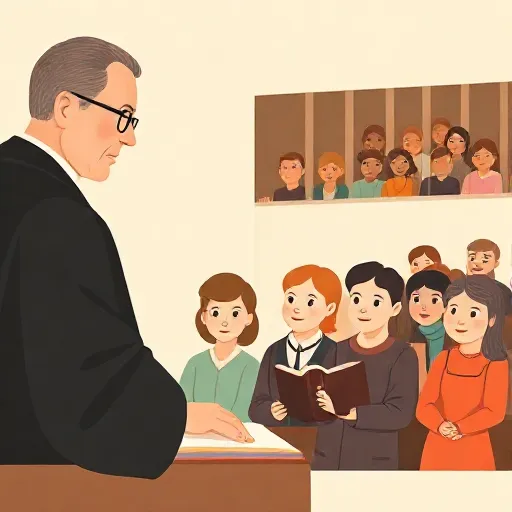
Not everyone is happy with asking regular people. Critics argue that experimental jurisprudence studies the wrong crowd. Figuring out what law really is, they say, requires special training — years of law school or deep philosophical study. A random person on the street might be confused by tricky hypothetical cases; an expert can spot hidden assumptions and keep their reasoning straight. If we want to understand legal concepts like proximate cause or reasonable care, we should ask judges and legal professors, not just anyone.
This is called the expertise defense. It’s a serious challenge, and experimental jurists have taken it seriously. In some cases, they have run the same studies with lawyers and judges and compared the results. The outcomes are mixed. For example, when researchers tested how professional French judges assign responsibility, the judges showed the same tendency as laypeople: they blamed a person more when the outcome was worse, even if the person’s actions were identical. So in that case, expertise didn’t wipe out the intuition. In other studies, legal experts and ordinary people do differ. And sometimes, even different groups of experts disagree — in one survey, American law professors were far more likely to endorse legal positivism (the view that law and morality are separate) than philosophy professors were. So deciding which experts to trust is itself a philosophical puzzle.
Experimental jurists often reply that their work is not meant to replace traditional philosophy. Instead, it adds a new tool: gathering careful evidence about what people actually think, which philosophers can then interpret, criticise, or even try to change. After all, law doesn’t exist in a vacuum. Juries are made up of ordinary citizens; judges often ask what a “reasonable person” would do; and laws are written in language that ordinary speakers are supposed to understand. Finding out what ordinary people think is therefore part of understanding how law works in the real world.
What This Means for You

So why does this whole debate matter to a twelve-year-old who’s never opened a law book? Because legal concepts are already in your life. When you download an app and click “I agree,” you’re entering a contract. The idea of consent — what it means to genuinely agree to something — is at the heart of that tap. Experimental jurists have found that most people think a person can give valid consent even if they’ve been deceived about important details — which bump against how the law often sees it. If you were designing a rule about online agreements, whose idea of consent should matter: the law’s, or the one that most people carry around in their heads?
Or consider the reasonable person standard. In many court cases, you’re judged by what a reasonable person would have done in your situation. But what is reasonable? Experiments show that people’s idea of reasonableness is shaped by what is average, what is ideal, and — disturbingly — by how a story turns out. Outcomes can color our judgment of whether an earlier action was careful. If you ever sit on a jury, or simply want to be fair when you’re in charge of a decision, knowing about these hidden biases could help you see more clearly.
Experimental jurisprudence doesn’t hand down final answers. Instead, it places real data on the philosopher’s table, forcing us to ask: when we talk about law, whose voice counts? The armchair thinker’s? The expert’s? The ordinary citizen’s? The answer will shape how laws are written, interpreted, and taught — and maybe, one day, how you think about the rules all around you.
Think about it
- If a rule says “no flying objects in the gym,” and a kid’s paper plane lands on the basketball court, did they break the rule? Should we care only about the words, or about why the rule was made?
- Suppose most people believe that a promise made under a lie isn’t a real promise. Should the law automatically treat it that way, or are there reasons the law might need a different standard?
- Imagine you could build a legal system from scratch. Would you let ordinary people’s everyday ideas about fairness shape all the rules, or would you let experts work everything out behind closed doors? What could go wrong with each choice?