Why Koreans Thought Opposites Could Both Be True
A Letter That Started a Three-Century Argument

In the spring of 1559, a Korean scholar named Yi Hwang, pen name T’oegye (1501–1570), sat down to write a letter. He was troubled by a question that sounds personal but was deeply philosophical: Where do our feelings come from, and why are some good and others dangerous? His answer would ignite the most famous debate in Korean Confucian history — the Four-Seven Debate.
T’oegye believed that humans have two kinds of emotional seeds. The Four Sprouts — a feeling of sympathy, a sense of shame, a desire to yield to others, and a gut sense of right and wrong — are tiny moral shoots that, like a new plant, can grow into full virtues. He thought these sprouts arise from something pure: Principle (i), the universal, invisible pattern of goodness that structures reality. The Seven Emotions — joy, anger, love, fear, sorrow, hatred, and desire — bubble up from Vital Force (ki), the psycho-physical energy that makes things move, feel, and change. Because Vital Force is turbulent and mixed, those emotions can turn out good or evil.
T’oegye’s friend Ki Taesŭng, pen name Kobong (1527–1572), fired back a bold reply. He insisted that the Four Sprouts are not a separate species of feeling. They are simply the good side of the Seven Emotions — like the sweetest piece of fruit in the same basket. If you treat them as completely different, you risk splitting the heart into two rival camps. For Kobong, our best moral impulses and our messiest passions all come from one unified human nature.
This disagreement looks abstract, but it pointed to something huge: Is the good inside you a special, untainted core, or is it just the healthier stretch of a single emotional landscape? The letter war would force Korean thinkers to rethink reality itself.
How Wŏnhyo Made Peace Between Every Buddhist School
Long before T’oegye picked up his brush, Korean Buddhist monks had already faced a similar puzzle: how can radically different teachings all be true? When Buddhism arrived from China in the fourth century, it came as a storm of sutras that seemed to contradict each other. Some texts said reality is empty; others described a luminous Buddha-nature inside every person. Most East Asian thinkers tried to rank the teachings. A monk named Wŏnhyo (617–680) did something different — he practiced harmonization (hwajaeng), treating every view as a partial glimpse of a single whole.
For Wŏnhyo, the key was the One Mind. This is not your private thinking mind. It is the deepest, most fundamental ground of everything — the source from which all beings arise. The One Mind has two aspects, which Wŏnhyo called “gates.” One gate is absolute, still, and perfectly pure, like a mirror’s clear surface. The other gate is the world of constant change, birth, and death — the messy realm where dust gathers and thoughts flicker. These two gates are not separate; they are the same mirror seen from different angles. That means delusion and enlightenment are not enemies trapped in a war. They belong to the same single reality.
Inside this vision hides a hopeful doctrine: tathāgatagarbha, the “womb of Buddhahood.” Even an ordinary, confused person carries the seed of enlightenment. The mind is like a lamp covered by a dirty cloth — the light is always there, just hidden rather than broken. Wŏnhyo’s ability to embrace opposing views without melting them into mush became a trademark of Korean philosophy. Later, when Neo-Confucians took up paired concepts like Essence and Function — the inner nature of the mind and its outward activity — they were walking a path Wŏnhyo had already cleared.
Chinul and the Word That Broke Language
Wŏnhyo harmonized; Chinul (1158–1210) practiced. As the founder of Sŏn (known in China as Chan and in Japan as Zen) in Korea, Chinul thought that words and doctrines could only take you so far. He gave his students a tool designed to short-circuit the thinking mind: the hwadu, or critical phrase.
The most famous hwadu is a story. A monk asked the master Zhaozhou, “Does a dog have Buddha-nature or not?” — a question loaded with centuries of theory. Zhaozhou answered simply, “Mu,” meaning “no,” “nothing,” or “not.” This was not a logical answer. It was a verbal bomb that exploded ordinary categories. Chinul taught his students to hold the Mu hwadu in their minds without analyzing it, to sit with the baffling taste of it until the mind’s usual chatter collapsed. In that silence, sudden enlightenment could flash: a direct, wordless insight into the true nature of mind.
But Chinul did not stop there. He insisted on gradual cultivation. After the lightning bolt of awakening, old habits still cling to you like mud. You must slowly, kindly, scrub them away. Chinul called this “sudden enlightenment followed by gradual cultivation” — a signature Korean balancing act. You see the whole mountain in one glance, but you still have to walk down it step by step.
The Confucian Showdown: Where Good and Evil Really Live
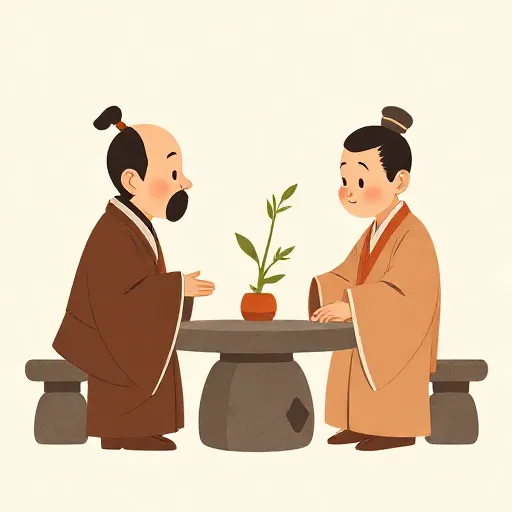
Back to T’oegye and the Four-Seven Debate. Under Kobong’s pressure, T’oegye refined his view. He now admitted that both Principle and Vital Force are present whenever the heart stirs. But he still insisted they work differently: when the Four Sprouts arise, Principle takes the lead and Vital Force follows; when the Seven Emotions arise, Vital Force stirs first and Principle rides along. This let him keep the sprouts pure while acknowledging our messy embodied life. To train yourself, T’oegye recommended Reverent Mindfulness — a constant, calm attention to inner propriety that respects the moral order of Principle.
A younger thinker, Yi I, pen name Yulgok (who lived in the 16th century), flatly rejected this. He argued that Principle has no power of its own. It is like a road map — it shows the shape of goodness, but it cannot make anything happen. Only Vital Force actually moves, limits, and individuates things. For Yulgok, the Four Sprouts are simply the good portion of the Seven Emotions, not a separate category at all. Self-cultivation means building Integrity (sŏng) — a wholehearted sincerity that gradually transforms your inner Vital Force so that your whole being, not just a special core, inclines toward the good.
So two towering figures offered two paths: one looked to a transcendent moral anchor, the other to the slow reshaping of the energy that makes you you. Neither side won outright. The debate echoed for centuries.
Tasan and a God Who Cares About Your Choices
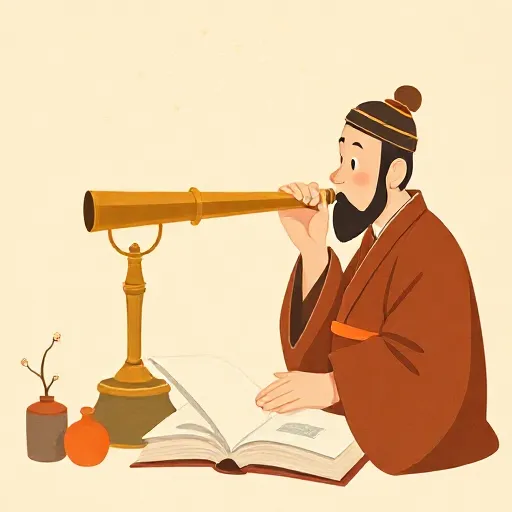
By the late 1700s, Chŏng Yagyong (1762–1836), pen name Tasan, had grown impatient with the whole Principle–Vital Force framework. Reading Catholic ideas brought by Jesuit missionaries, he took a stunning turn. He renamed Heaven as “Lord on High” — a personal, caring God who governs the universe and rewards the good. Principle, he said, is not the basis of morality: an impersonal pattern cannot praise or blame. Only a personal God can.
Tasan also reimagined human nature. He said the heart/mind is not defined by a transcendent Principle, but by an innate inclination — a spontaneous liking for what is good, like a bee’s instinct to protect its queen. But having a natural bent toward goodness doesn’t make a person automatically virtuous. What matters is a new power Tasan named: autonomy, the ability to choose freely between good and evil. Without that freedom, moral responsibility makes no sense. You can be praised or blamed only because your heart/mind holds a genuine balance, a capacity to deliberate and decide.
This was a bold Confucian-Catholic synthesis. Tasan kept the old dream of sagehood, but he grounded it in a free self, standing before a personal God. By then, Korean thought had traveled from the shamanistic spirits of mountains and stars, through the One Mind and the Mu hwadu, to a cosmos where your very freedom is the hinge of meaning.
What’s a Four-Seven Fight Got to Do With You?

You probably don’t spend your days arguing about Principle and Vital Force. But you do know the feeling: a sudden wave of anger toward a sibling, then a quiet voice saying that wasn’t fair. Are those two separate people inside you — one good, one bad — or are they two notes from the same instrument?
Korean philosophers would lean toward “one instrument.” They spent centuries learning to see apparent opposites as intertwined. Your capacity for irritation and your sense of justice are not entirely different species; they are different shades of the same living heart. The task is not to kill one side, but to cultivate — carefully, gradually — the better fruit within the mix.
And if you ever face two friends who give you completely opposite advice, think of Wŏnhyo. Instead of picking a winner, he tried to understand the partial truth each perspective contained. That’s not wishy-washy; it’s a demanding practice of seeing more. Korean philosophy’s gift is this steady habit of harmonizing without erasing. In a world that loves to shout “pick a side,” there’s quiet power in asking, “What if both are partly right?”
Think about it
- If your angry outburst and your sense of fairness are both feelings, can you ever be sure which is which in the moment? How might you tell?
- If two friends give you completely opposite advice about right and wrong, could both be partly correct? How would you decide what to do?
- Do you think you have a “true self” that is always good, or is your character something you have to build day by day?