
Why Is Knowing Better Than a Lucky Guess?
The Road to Larissa: Why Is Knowing Better Than a Lucky Guess?
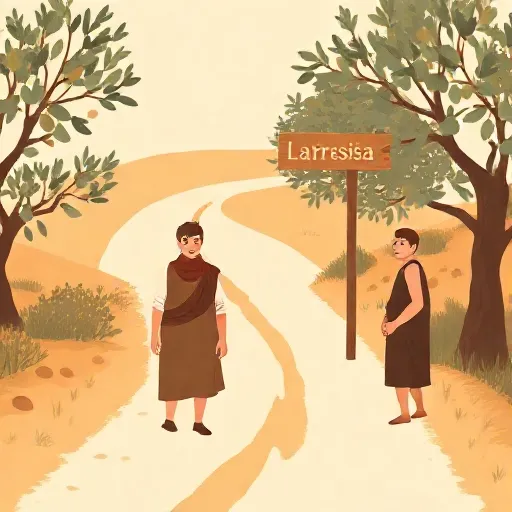
In Plato’s (c. 428–348 BCE) dialogue Meno, Socrates (470–399 BCE) poses a simple puzzle. Imagine you want to reach the city of Larissa. You can ask someone who knows the way, or someone who merely has a true belief about which road to take. Either guide will get you there. So why is knowledge more valuable than just being right by luck? This is the Meno problem, and it has kept philosophers busy for over two thousand years.
Plato’s own answer was that knowledge is “tied down” to the truth, like the mythical statues of Daedalus that would run away if not tethered. A true belief alone might waver — if the road looks wrong at first, you could lose confidence and give up. Knowledge, because it is secured by reasons, stays put and guides action more reliably. That makes it better.
Modern philosophers have sharpened the puzzle into three layers. The primary value problem asks simply: why is knowledge better than mere true belief? The secondary value problem asks why knowledge is better than any state that falls short of it, like a justified true belief that still isn’t knowledge. The tertiary value problem asks why knowledge is qualitatively different — not just a little more of the same good.
The Coffee Machine Test: Does a Reliable Process Make Knowledge More Valuable?
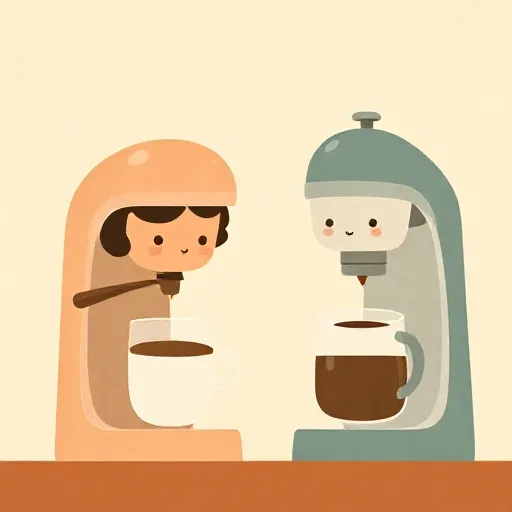
Many contemporary theories define knowledge as reliably formed true belief: a true belief produced by a process that usually gets things right. Linda Zagzebski (b. 1954) challenges this with a now-famous analogy. Imagine two cups of equally good coffee. One came from a reliable coffee machine that regularly brews great coffee; the other came from an unreliable machine that only got it right this once. Is the first cup better because it was produced reliably? Most people think not. The goodness of the coffee itself seems to swamp any extra value from the reliable source.
This is the swamping problem for reliabilism. If true belief is already valuable, the fact that it was formed reliably doesn’t seem to add any extra worth. So reliabilism appears unable to explain why knowledge is more valuable than mere true belief.
But the problem might not be fatal. Some point out that any view treating knowledge’s extra value as purely instrumental — a means to truth — faces a similar challenge. Others argue that reliable true beliefs bring practical benefits beyond the truth itself. Knowing that a map is reliable gives you confidence to plan a journey, even if the map’s accuracy alone hasn’t changed. Some reliabilists, called agent reliabilists, say knowledge requires stable traits of your cognitive character, not just any odd reliable process. Those traits might have value in their own right, which could then transfer to the beliefs they produce.
Zagzebski herself thinks the real issue is the “machine-product model” of belief, where the cause and the effect are separate. She suggests we should see knowledge as a state that includes both the true belief and its reliable source — an intimate connection, like an act that includes its motive. That idea leads us to virtue epistemology.
Is Knowledge a Kind of Achievement?

Virtue epistemology offers a different way to value knowledge. It says knowledge isn’t just reliable true belief — it’s a cognitive achievement: a true belief that you get because of your intellectual abilities, not just along with them. This is often spelled out with three ideas:
- Success: The belief is true.
- Skill: The belief is formed by exercising intellectual virtues, like careful reasoning.
- Success because of skill: The truth is due to those virtues, not to luck.
If knowledge fits this pattern, then it is an achievement. And achievements, the argument goes, are valuable for their own sake — not just as a means to truth. This could solve the secondary and tertiary value problems by making knowledge a qualitatively different good.
But difficulties emerge. Consider the barn façade case. You drive through countryside and see what looks like a barn. Unbeknownst to you, every other object that looks like a barn in this area is a fake façade. You happen to stop at the one real barn. Your belief is true and you used your normal visual abilities — no weird luck intervened between seeing and believing. Many philosophers say you don’t know it’s a barn, because in that environment you could very easily have been wrong. Yet it seems like your success is still due to your ability in some sense; it’s a kind of achievement. Achievements appear compatible with a certain “environmental luck” that knowledge cannot tolerate.
Another challenge comes from testimony. Imagine you ask a stranger for directions in a new city, and she tells you reliably. You form a true belief, and we count it as knowledge. But is your getting the truth because of your cognitive ability? The credit seems to belong mainly to the informant. If knowledge is an achievement, then many everyday cases of knowing would fail to count.
Virtue epistemologists have replies. Some argue that in the barn case, the environment prevents you from truly exercising the right ability, so it’s not an achievement after all. Others note that even in testimony, you use your ability to select good informants, so you deserve partial credit. But these debates show the achievement model is not a settled solution.
Is Understanding More Valuable Than Knowledge?

Jonathan Kvanvig (b. 1961) takes a more radical view. He argues that the secondary value problem cannot be solved. Any extra condition we add to true belief to get knowledge — like ruling out fake barns — seems to add no special value. Knowledge ends up looking like a patched-together concept. Instead, Kvanvig claims, the real intellectual prize is understanding.
Understanding, in his view, comes in two forms: objectual understanding (grasping a whole subject matter) and propositional understanding (understanding that something is the case). Both require seeing how your beliefs hang together coherently. Unlike knowledge, understanding admits of degrees — you can understand physics a little or a lot. And Kvanvig argues that understanding is compatible with some kinds of luck that would prevent knowledge. You might deeply grasp why the dinosaurs went extinct even if there’s a lucky gap that stops you from knowing every precise detail.
If understanding is more valuable, then perhaps epistemology should focus less on knowledge and more on what we genuinely comprehend.
But critics push back. Catherine Elgin (b. 1948) points out that scientific understanding often relies on idealizations — like the ideal gas law — that are strictly false, yet they greatly improve our grasp. That suggests understanding need not even require all true beliefs. Others reply that knowledge of a subject matter (objectual knowledge) also involves coherence, so understanding isn’t uniquely valuable. The debate remains open, but it forces us to ask not just what knowledge is, but what we really care about in our intellectual lives.
So Why Does Knowledge Still Matter to You?

All this might make the value of knowledge seem shaky. Yet in everyday life, we still treat knowledge as special. A key reason comes from practical reasoning: you shouldn’t act on a belief unless you know it. Imagine you hold a lottery ticket and believe, based on the tiny odds, that it’s a loser. That belief is true and highly justified, but you don’t know it’s a loser. Would you throw the ticket away without checking? Most of us wouldn’t. So knowledge seems to have a distinctive role in guiding action, even when your evidence is strong.
The puzzles we’ve explored push you to think about what you really want when you study for a test or learn a new skill. Do you just want the right answer to bubble in? Or do you want to understand the topic so well you could explain it to a friend? Plato thought knowledge is “tied down,” making it durable. Virtue epistemologists think it’s an achievement you can take credit for. Kvanvig thinks understanding is the deeper goal. And when you rely on your phone to remember facts, you might get true beliefs — but are they your knowledge? The value problem touches every time you decide to really learn something, not just look it up. Philosophers don’t agree on a final answer, and that’s exactly why the question is so alive.
Think about it
- Imagine you could instantly download all the facts from a school subject into your brain, but you wouldn’t grasp how they fit together. Would you feel like you truly understood the subject? Why or why not?
- If a friend always guesses correctly on trivia questions without any real knowledge, do you admire their guesses as much as someone who actually knows the answers? What makes the difference?
- When you study for an important test, are you trying to get the right answers or to really own the material? Can you have one without the other?