
Lucky Guesses and Fake Barns: What Does It Really Mean to Know?
The Desert and the Mirage

It’s a scorching day. You’re walking through the desert, throat dry, when in the distance you spot a shimmering patch of blue. Water! You rush toward it, but as you get closer, it vanishes — just a mirage. Disappointed, you slump onto a rock. But then you notice a small pool of actual water hidden right behind that rock. You found water after all. But did you know there was water there before you sat down? Almost everyone says no. You were just lucky.
An Indian philosopher named Dharmottara (c. 770 CE) used a story like this to show that knowledge isn’t just believing something true by accident. More than a thousand years later, philosophers still wrestle with exactly what makes the difference between a lucky guess and genuine knowledge. This is one of philosophy’s biggest puzzles: what does it really take to know something?
The Three Classic Ingredients

For centuries, many thinkers agreed that knowledge has three parts: truth, belief, and justification. This is often called the JTB analysis: knowledge is justified true belief.
First, if you know something, it has to be true. You can’t know that Paris is the capital of Spain, because it isn’t. Even if you’re absolutely convinced, a false belief isn’t knowledge.
Second, you have to believe it outright — not just think it’s sort of likely. If you flip a coin and wonder whether it will land heads, but you don’t fully believe it will, then even if it does land heads, you didn’t know it would. Outright belief means you’re fully committed to the idea, like when you know your own name.
Third, your belief must be justified — you need good reasons or evidence. Suppose you guess that a coin will land tails just because you have a feeling. If it does, your belief is true, but it’s just a lucky guess. That’s not knowledge. Justification is what ties your belief to the world in a proper way, like seeing the coin with your own eyes or hearing from a reliable source.
For a long time, philosophers thought these three ingredients were enough. Then, in 1963, a short paper by an American philosopher named Edmund Gettier (b. 1927) shook everything up.
When Luck Sneaks Back In: The Gettier Problem

Gettier showed that you can have a justified true belief and still not know. He invented cases where someone believes something true for good reasons, but the truth lines up with the belief only by luck. Philosophers now call these Gettier cases.
Here is a famous one. Imagine you’re Henry, driving through Barn County. The whole countryside is dotted with structures that look exactly like barns from the road — but they’re actually just wooden facades, propped up like movie props. You don’t know about the trickery. You glance to your left, see what looks like a barn, and think, “There’s a barn.” And by sheer chance, that one structure happens to be the only real barn in the entire county.
Your belief is true — it is a real barn. It’s justified — you used your normal, reliable eyesight, and it looked exactly like a barn. But would we say you knew it was a barn? Almost everyone feels the answer is no. Your belief was true by a stroke of luck: you could have looked at any of the dozens of fake barns and been wrong. The connection between your good reasons and the truth was just a happy accident.
Gettier’s bombshell meant that justified true belief, by itself, wasn’t enough. Philosophers rushed to find a fourth ingredient that could block this sneaky kind of luck.
Trying to Trap the Luck
One popular idea was to add a sensitivity condition. Robert Nozick (1938–2002) suggested that knowledge requires this: if what you believe were false, you wouldn’t believe it. Think about Henry. If there were no real barn at that exact spot, Henry would still have believed there was a barn — because a fake one would be standing there. So his belief isn’t sensitive. That explains why he doesn’t know.
Sensitivity seems to catch many Gettier cases. But it has a weird side effect. Imagine you know you have hands. If you didn’t have hands — say an evil demon made you a handless brain in a vat, tricking you — you’d still believe you had hands. So according to sensitivity, you cannot know that you’re not a handless brain in a vat. Yet you do know you have hands. So you’d be forced to say, “I know I have hands, but I don’t know I’m not a handless brain.” That combination feels absurd. Most philosophers found it so troubling they abandoned sensitivity.
Another idea is safety. Ernest Sosa (b. 1940) proposed that your belief is safe if, whenever you form it in nearby situations, it isn’t false. On this view, you can know you’re not a handless brain because in all nearby worlds you’re not in a demon vat. But safety faces its own headaches. In Barn County, is Henry’s belief safe? If he’d looked at a fake barn just a few feet over, he would have believed falsely. Whether those nearby worlds “count” depends on hard questions about which possibilities are similar enough. Even safety doesn’t cleanly solve the puzzle.
Knowledge as Skill: The Archer’s Arrow

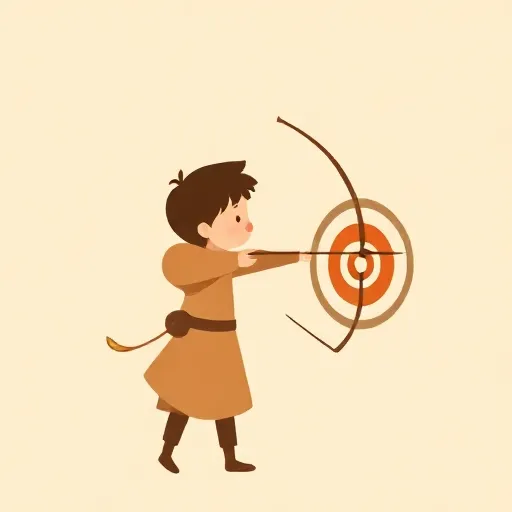
Sosa offered a different way to think about knowledge, using an archer as a model. He suggested evaluating beliefs the way we evaluate an archer’s shot. There are three evaluations: accuracy (did it hit the target?), adroitness (was it shot with skill?), and aptness (did it hit the target because of the archer’s skill?).
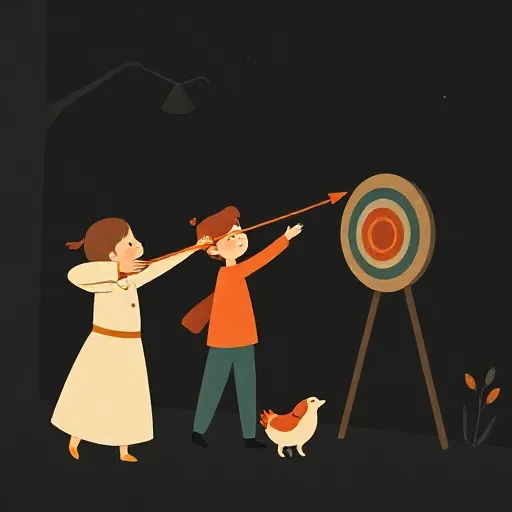
An arrow can hit the target by luck — a gust of wind might blow it off course, then another lucky gust bring it back. Even if it’s accurate and the archer is skilled, the success doesn’t come from the skill. That shot isn’t apt. Sosa says knowledge works the same way: a belief can be true and formed skillfully, but if the truth isn’t because of your skill, it’s not knowledge.
This view, called virtue epistemology, handles many Gettier cases gracefully. Henry’s belief about the barn is accurate (true) and adroit (his vision is reliable). But is it apt? His success isn’t due to his skill in spotting real barns — he just happened to pick the one real barn in a field of fakes. The truth came from luck, so the belief isn’t apt, and he doesn’t know.
But even here there’s debate. Some philosophers think that in Barn County, Henry’s skill does explain his success, because he used a generally reliable method and it worked. They might bite the bullet and say Henry does know, even if it feels unintuitive. The fact that sharp thinkers disagree tells us the question is far from settled.
So What Does It Mean to Know?

After decades of failed attempts to list the exact ingredients of knowledge, some philosophers took a bold step back. Timothy Williamson (b. 1955) argued that the whole project of analyzing knowledge into simpler parts was misguided. In his view, knowledge first means knowledge is a basic mental state — like seeing or remembering — that you cannot break down any further. You can’t define knowledge with a recipe of truth, belief, and something extra, because knowledge is the bedrock.
Not everyone agrees, but the struggle to pin down knowledge tells us something important. The concept we use every day — “I know the bus comes at 3,” “She knows my password” — is far more slippery than it seems. Today, with deepfakes, filtered news, and information bubbles, the question of when we really know something isn’t just a philosopher’s game. The next time you’re certain you know something, consider: could it just be a lucky guess?
Think about it
- Imagine a friend claims to know tomorrow’s lottery numbers because they had a vivid dream. If the numbers happen to be right, did they know? Why or why not?
- If a perfectly realistic virtual reality headset made you see and touch a fake apple exactly like a real one, would you know you’re not holding a real apple? What would it take?
- When you look up a fact online and find the same answer on two different sites, do you know it? What if one site copied the other? What makes a source good enough?