Is Knowing Something More Than Just Being Right?
The Case of the Lucky Guess

Mary walks into the house and glances into the living room. A familiar head of hair peeks over her husband’s favorite chair. She thinks, “My husband is sitting in the living room,” and heads into the den. But Mary made a mistake. The man in the chair is actually her husband’s brother, whom she had no idea was even in the country. However, her husband really was in the living room—dozing in a different chair, just out of sight.
Mary’s belief was true. She also had what seemed like a perfectly good reason to believe it: she saw a person who looked exactly like her husband in his usual spot. Yet most people feel something is missing. Does Mary really know her husband was in the room? Philosophers call this kind of story a Gettier case, after Edmund Gettier, who shook up epistemology in 1963. A Gettier case shows that a person can have a true belief and even a good reason for it, but still not know—because the connection between the reason and the truth is just a lucky accident.
For decades, thinkers struggled to say what knowledge needed beyond true belief and good reasons. Virtue epistemology—a movement started in the 1980s by Ernest Sosa (born 1940) and later expanded by Linda Zagzebski (born 1946) and others—offers a bold answer. To know something, your true belief must come from your intellectual good character. It must be an achievement you can take credit for, like hitting a target through skill rather than a lucky gust of wind.
What Counts as an Intellectual Virtue?
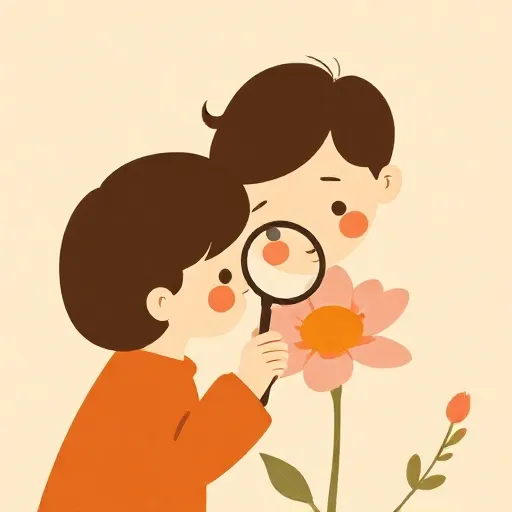
At the heart of this view is the idea of an intellectual virtue—a trait that makes you an excellent thinker. Virtue epistemologists generally fall into two camps about what those virtues are.
One camp, called virtue reliabilism, focuses on built-in mental faculties that reliably produce true beliefs. Ernest Sosa, John Greco (born 1961), and others point to things like sharp eyesight, a good memory, and logical intuition. These are like the hardware your brain comes with or develops naturally. If your eyes work well and you form the belief “there’s a bird on the fence” because you see one clearly, your perceptual virtue is doing its job.
The other camp, virtue responsibilism, insists that real intellectual character goes deeper. Linda Zagzebski, James Montmarquet, and others argue that cultivated traits like open‑mindedness, intellectual courage, and intellectual humility count as genuine intellectual virtues too. These aren’t just inborn faculties; you have to work to develop them, the way you build a habit of double‑checking sources or listening carefully to people who disagree with you.
Many philosophers now think a complete picture of knowledge needs both kinds. Imagine a detective who has 20/20 vision but never reconsiders a hunch—she may get lucky sometimes, but she’ll miss the truth when her first glance is misleading. On the other hand, a detective who is wonderfully open‑minded but can’t see the clues plainly won’t do much better. Good thinking requires both sharp faculties and careful, responsible habits.
The Archer’s Secret: Knowledge as Skillful Performance

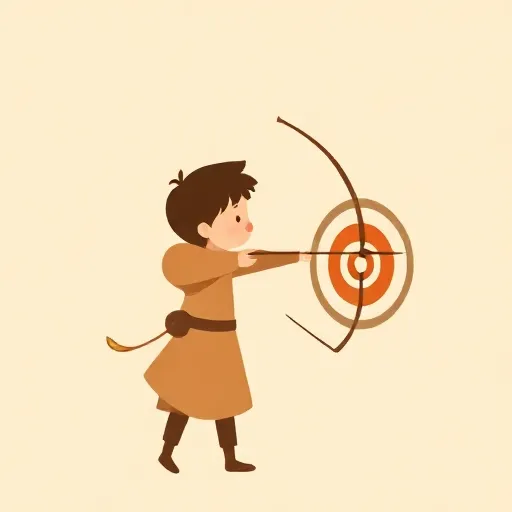
So how exactly does virtue turn true belief into knowledge? Ernest Sosa proposes a model drawn from archery—or any skilled performance. Think about three ways to hit a bullseye:
- Accuracy: The shot hits the target. (Your belief is true.)
- Adroitness: The shot shows skill; the archer shoots well. (Your belief is formed from intellectual competence.)
- Aptness: The shot is accurate because it is adroit. The skill causes the success, not a lucky breeze.
Sosa calls a belief that is accurate because it is adroit an apt belief—and he says that’s what knowledge is. When you know, your true belief results from your intellectual competence, not from an accident.
Now return to Mary’s lucky guess. Her belief was accurate—it turned out to be true. But was it adroit? She used her eyesight and reasonable pattern matching, so her faculties were working. The problem is that her belief wasn’t apt: the truth came from the coincidence that her husband was also in the room, not from her eyesight doing its job reliably in that situation. Because the connection between her competence and the truth was broken by that double dose of luck, her belief wasn’t knowledge. This, Sosa and Zagzebski argue, is why Gettier cases feel like something essential is missing.
Why Knowing Is Better Than Guessing

Imagine someone offers you a million dollars if you correctly guess the outcome of a coin toss. You call heads, the coin lands heads, and you become a millionaire. Did you know it would be heads? No—your success was sheer luck. Now imagine you spend years learning a craft, practice every day, and finally win a major award for your skill. That success feels deeply different. It’s yours in a richer sense.
Philosophers call this the value problem: why is knowledge more valuable than a true belief that fell into your lap? Zagzebski argues that knowledge has extra value because it’s an achievement you deserve credit for. When your true belief flows from your intellectual virtues—your patience, your care, your sharp observation—you have accomplished something, not just lucked into it. The idea that you know only if you deserve credit for reaching the truth is called the credit thesis.
But does that mean you never know anything you learn from other people? Jennifer Lackey (a contemporary philosopher) raises a challenge. Suppose you ask a stranger for directions, and she gives you perfect instructions. You form a true belief, but did you deserve the credit? The stranger did most of the work. Lackey argues that you still know the way, even though you didn’t personally earn it. Virtue epistemologists respond in several ways. Sosa says you still deserve partial credit, just like a quarterback who throws a touchdown pass deserves credit even though the whole team made it possible. Greco goes further, suggesting that when you learn from someone trustworthy, the knowledge is a joint achievement—you and the speaker cooperate, like players on a team. Knowledge, then, isn’t always a solo sport.
Are You Smarter Than a Cookie?
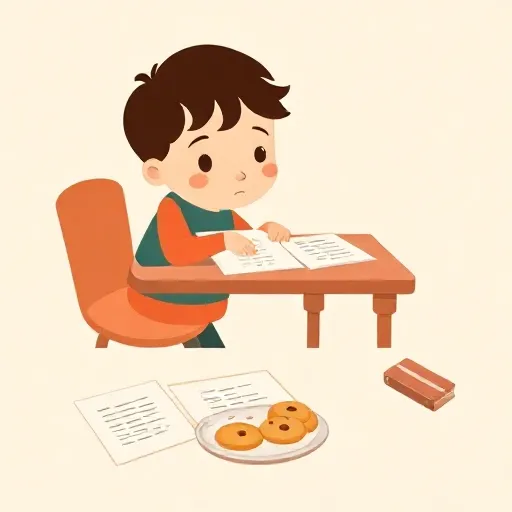
If intellectual virtues are real, you might assume you use them steadily, no matter what. But psychological research suggests a humbling truth: tiny, irrelevant things can sway your judgment. People are more generous with praise when they’ve just found a coin in a phone booth. A sunny day makes you more optimistic about everything. Even the smell of fresh cookies can change how you evaluate an argument.
This raises a problem called epistemic situationism. If our thinking is so easily nudged by mood and surroundings, can we really have stable intellectual virtues? Mark Alfano has argued that if our cognitive dispositions aren’t reliable across situations, then most people don’t have genuine virtues—and virtue epistemology might have to say that most of our true beliefs aren’t knowledge at all.
Defenders of virtue epistemology don’t give up, though. Some point out that we can learn to recognize when we’re in a biased frame of mind and correct for it. Others argue that instead of trying to become perfectly wise in isolation, we should build better environments. A well‑designed classroom, a habit of fact‑checking, or a friend who will call out your sloppy thinking can act as external scaffolding for your intellectual character. This idea—that your virtues can be partly shaped by your community and your surroundings—ties back to the teamwork metaphor. Knowledge and good thinking often live in groups, not just inside a single head.
What This Means for Your Brain
Virtue epistemology isn’t just a puzzle for academics. It has a lot to say about the life of your own mind. Every day you have to decide what to believe—a claim on social media, a rumor at school, a surprising fact in a video. The virtue approach reminds you that knowledge isn’t simply about having facts; it’s about how you come to have them. Are you being careful? Are you open to being wrong? Are you listening to the right people and questioning the loudest ones?
That’s also why traits like intellectual humility matter. Recognizing that you have blind spots—and that some of your opinions might be based on mood or luck instead of real insight—is itself a virtue. And because a lot of what you know comes from others, being a good knower means treating your community as a thinking team. Miranda Fricker (born 1966) has described the harm of epistemic injustice, where someone’s words are unfairly dismissed because of who they are. Attending to such injustices is one way to strengthen your intellectual character as a member of a group.
Mary’s lucky guess about her husband wouldn’t fool you if you trained yourself to look twice, to check the evidence, and to ask whether you really have reason to be sure. That’s the practical side of virtue epistemology. It doesn’t hand you a list of facts to memorize. It asks you to become a certain kind of person: a curious, careful, fair‑minded knower who can tell the difference between a bullseye and a lucky gust of wind.
Think about it
- If someone tells you a fact and you believe them without ever checking, do you really know it? What would the “virtue” view ask you to consider?
- Can you train yourself to be more open‑minded, or is that just a fixed part of your personality? How might a community help?
- If a computer always gives correct answers but never feels curious, does it “know” anything? What might be missing from its picture of knowledge?