Can You Really Know Anything? The Brain-in-a-Vat Thought Trap
Your Friend Says “I Know It’ll Rain.” Does She?

Your friend glances at her phone, sees a storm cloud icon, and announces, “I know it’s going to rain this afternoon.” But the sky stays bright blue all day. Something went wrong, but what? She believed it would rain. She had a reason — the weather app is usually right. And yet she didn’t know. For centuries, philosophers have tried to figure out what turns a lucky guess or a confident belief into real knowledge.
Plato (c. 428–348 BCE) suggested a recipe that stayed popular for over two thousand years: knowledge is justified true belief. You need three ingredients:
- Belief: You have to think something is true. If you don’t even believe it will rain, you can’t know it.
- Truth: The thing you believe must actually be true. You can’t know something false.
- Justification: You need good reasons — like a reliable forecast — not just a wild hunch.
This three-part recipe is called JTB (Justified True Belief). But a famous example shows it’s not enough. Imagine Hal, a hypochondriac who is convinced he has a fatal illness, even though his doctor says he’s fine. He has no evidence except a nagging feeling. Then, by sheer chance, he really does have that illness. Hal’s belief is true and he feels justified, but he doesn’t know — it’s just terrible luck. So JTB has a hole: even justified true beliefs can be accidents.
The Gettier Problem: Barn Facades and Lucky Guesses
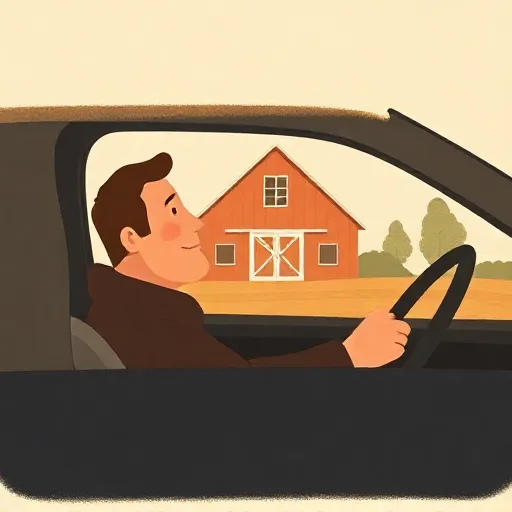
In 1963, the philosopher Edmund Gettier (1927–2021) showed that the luck problem isn’t just about unusual people like Hal. It can happen to anyone, even when your senses and reasoning are working perfectly. Imagine Henry, who is driving through the countryside. He looks out his window, sees what appears to be a barn, and believes, “There’s a barn over there.” His vision is normal, the light is good, and that shape really does look like every barn he’s ever seen.
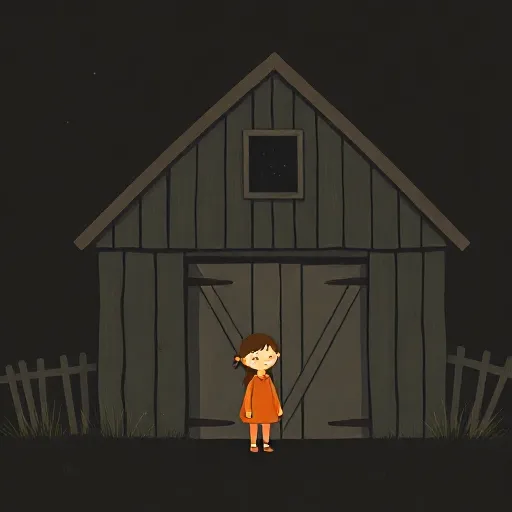
Now for the twist: the whole area is covered with fake barn facades — wooden fronts that look exactly like real barns from the road. Henry happens to be staring at the one and only real barn in the whole landscape. His belief is true, and he has excellent justification (his visual experience). But is it knowledge? Most philosophers say no. If Henry had glanced even a little to the left, he would have seen a fake barn and formed a false belief. His truth was a matter of luck.
A Gettier case is exactly this: a situation where you satisfy the JTB recipe but still don’t know. The problem becomes: what’s missing? Some philosophers say knowledge needs a fourth condition — for example, that your belief isn’t based on any false assumptions (Henry didn’t assume anything false, though). Others think knowledge requires that your belief is formed by a reliable process that would rarely steer you wrong, like properly functioning eyesight in a normal barn-filled world. Still others, like Timothy Williamson (b. 1955), argue that knowledge is a basic thing — it can’t be broken into smaller pieces at all. There’s no agreement, and the Gettier problem remains one of the liveliest puzzles in epistemology, the branch of philosophy that studies knowledge.
Could You Be a Brain in a Vat?
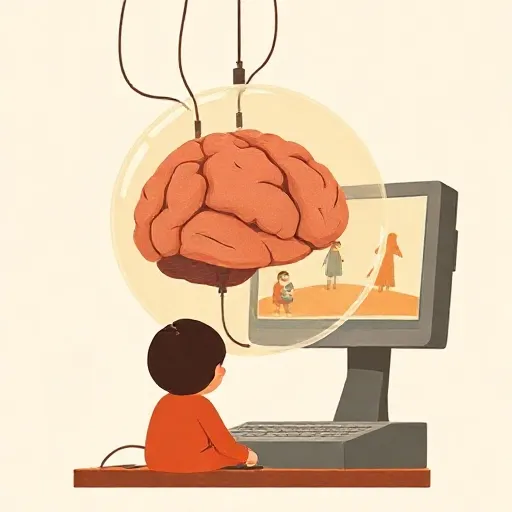
The Gettier problem makes us doubt whether we know even simple things we see right in front of us. But there’s an even deeper challenge, called skepticism, that asks whether we can know anything at all about the world outside our own minds. A favorite skeptical idea is the brain‑in‑a‑vat (BIV) hypothesis. What if you aren’t a person with a body, walking around, reading this screen? What if you are just a brain kept alive in a vat of nutrients, while a supercomputer feeds you the exact same electrical signals you’re experiencing now? Everything — the feel of the chair, the sight of the words, the sound of your own breathing — would feel exactly the same. You’d have no way to tell the difference “from the inside.”
Here’s how a skeptic builds an argument from this. If you can’t know that you are not a brain in a vat, then you can’t know that you have hands — because having hands means you aren’t a BIV. And if you can’t know you have hands, you can’t know any ordinary fact about the physical world. The argument has two simple‑looking premises:
- I don’t know that I’m not a brain in a vat.
- If I don’t know I’m not a BIV, then I don’t know I have hands.
The conclusion (“I don’t know I have hands”) seems absurd. But the premises are hard to shake. The first premise says you can’t rule out the BIV scenario; the second says that knowing a fact forces you to know the other facts it depends on. If the premises are true, we might have to accept that we know far less than we thought.
Moore’s Hands and the Magic of Context
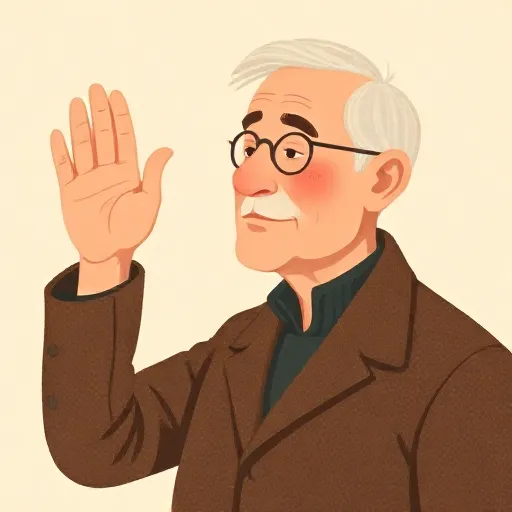
One bold reply comes from the British philosopher G. E. Moore (1873–1958). He held up his hand, then the other, and said that here is one hand and here is another, so external objects exist. Moore didn’t try to prove he wasn’t a BIV. He just insisted that he knew he had hands more firmly than he knew any tricky philosophical premises. To him, the skeptical argument was backwards: our everyday knowledge is solid, so the skeptical hypothesis must be wrong somewhere.
Critics say Moore is just assuming what he needs to prove — that he isn’t a BIV. But there’s another strategy that many philosophers find more satisfying: contextualism. According to contextualists, the word “know” works like the word “tall.” Whether someone counts as tall depends on the comparison class — a tall jockey is short among basketball players. Similarly, what it takes to “know” something changes with the context of the conversation. In everyday life, with no brain‑vat hypotheses in sight, you have more than enough evidence to know you have hands. But if a skeptical philosopher raises the BIV possibility, the standards shoot up so high that you no longer meet them. So both the skeptic and the ordinary person can be right: in different contexts, you both know and don’t know you have hands. This view lets us keep our common‑sense knowledge without ignoring the skeptical challenge entirely.
Why This Puzzle Still Matters
You might wonder: isn’t this all just head‑spinning games? Not at all. Every day, you rely on hundreds of things you claim to know — that your breakfast wasn’t poisoned, that your memory of yesterday is accurate, that the medicine the doctor prescribes will help. The BIV scenario and Gettier cases remind us that our grip on truth isn’t absolute; it can be undermined by luck, hidden fakes, or mass deception. That doesn’t mean we should give up and believe nothing. It means we need to think carefully about what makes our beliefs trustworthy.
When you scroll past a sensational headline, or when someone insists they “know” something on flimsy evidence, the tools of epistemology help you ask: What are their reasons? Are they ignoring alternative explanations? Could they be right just by luck? The goal isn’t to become a grumpy skeptic who denies everything. It’s to become a smarter believer — someone who understands what real knowledge costs and why it’s so valuable.
Think about it
- If a scientist told you right now that your brain was in a vat, what would you do differently, if anything? Would it change how you treat other people?
- Is it ever better to believe something without perfect proof, if doing so makes you happier or helps you get through a hard day?
- How would you explain to a friend why you “know” your best friend isn’t a robot, even if the friend acts exactly like a person?