Are You Really Living, or Just Watching from the Balcony?
The Man Who Talked to Everyone
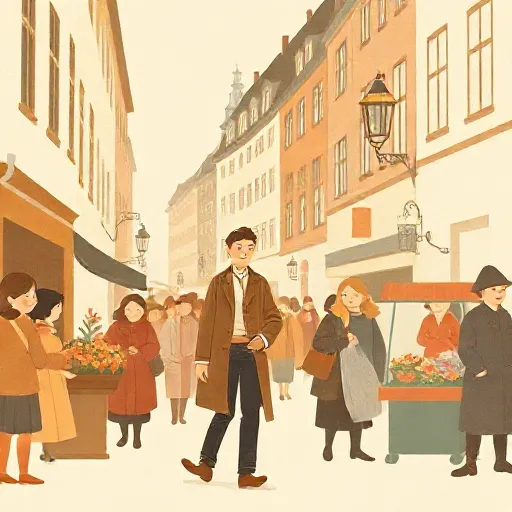
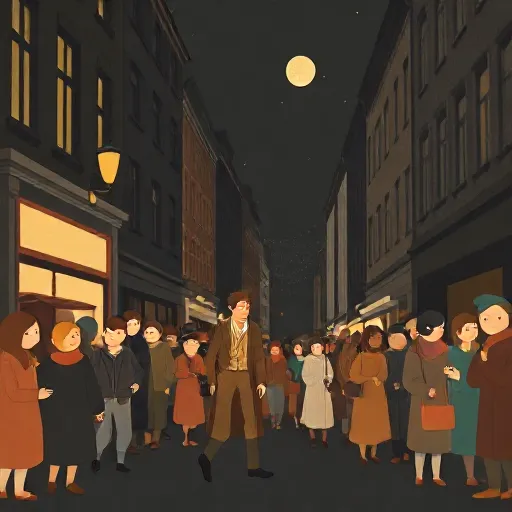
Every day, a slim, sharp-eyed man roamed the streets of Copenhagen. He stopped shopkeepers, students, and strangers, chatting about everything from the weather to the meaning of life. He called these walks his “people baths,” and it seemed he could not get enough of them. That man was Søren Kierkegaard (1813–1855), and for years the city was his living room.
Then, in 1846, everything changed. A satirical magazine called The Corsair began printing cruel cartoons of him. People who once greeted him now jeered. The man who loved the crowd suddenly could not bear it. He became a recluse, pouring his furious energy into books — often writing under fake names, as if the streets themselves had moved onto the page.
Kierkegaard’s shock at the crowd’s meanness made him think hard about what a crowd really is. He came to believe that when we dissolve into “the public,” we lose our own voice. And losing your voice, he thought, is the greatest danger a human being faces. That tiny, personal voice — the one that must decide what kind of life is truly worth living — became the center of his philosophy.
The Balcony and the Stage
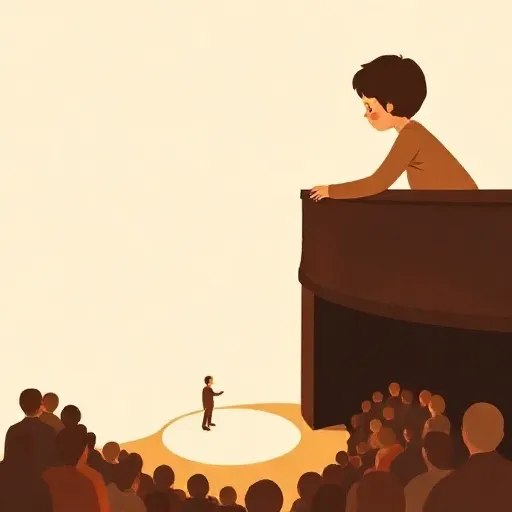
Imagine you spend your whole life seated in a theater balcony, watching a play but never stepping onto the stage. You can study the actors, critique the plot, and feel clever — but you never risk anything. Kierkegaard believed most people live exactly this way: as spectators of their own existence rather than players in it.
He did not mean this as an insult. He thought the habit of stepping back and thinking about life is a real trap. You can keep reflecting forever — should I do this, or that, or maybe the other? — and never actually choose. This endless hovering was what Kierkegaard called a kind of despair. For him, despair was not just feeling sad; it was the sickness of a self that has not yet become a real self.
To understand this, he pictured the self as a tall house. Many people live only in the basement, chasing immediate pleasures — food, comfort, applause. The upper floors — where spirit and deep commitments live — stay empty. Yet the self is not a finished object you just have; it is something you must actively shape. You are a mix of finitude (your body, your limits, your birth) and infinitude (your imagination, your possibilities). If you ignore one side, you suffocate. The person who only dreams but never acts lives in a fog of fantasy; the person who sees no possibilities at all is a prisoner of bare facts. Both are forms of despair, because neither has become a balanced, whole self.
The only way out, Kierkegaard argued, is a leap — a decision that comes not from more thinking but from inwardness, the passionate, personal core that says: “This life, and not some other, is the one I will stake myself on.”
Three Recipes for a Life
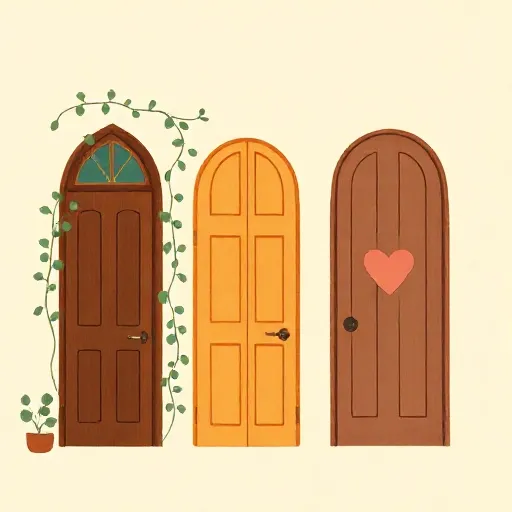
Kierkegaard thought there were three fundamental ways to shape a human life, and he showed them by creating different characters, each with their own viewpoint — almost like a novel published in pieces. He called these the aesthetic, the ethical, and the religious spheres.
The aesthetic person chases interesting experiences the way a channel-surfer flicks through shows without ever committing to one. In Kierkegaard’s book Either/Or, a nameless young man called simply “A” treats boredom as the only enemy. He flits from romance to music to witty conversation, but everything eventually tastes flat. Even the cleverest seducer in the book, a man who crafts a long, manipulative plot to win a woman’s love, finds that success brings only emptiness. The aesthetic life wants intensity without commitment — and that, Kierkegaard shows, is like trying to breathe pure oxygen. It cannot sustain you.
The ethical life says: choose something — and let that choice define who you are. A character called Judge William writes long letters urging “A” to marry, not because marriage is sweet, but because promising your life to another person makes your love historical. A shared past and a shared future give your self a shape that lasts. The Judge argues that real freedom is not having a million open options; it is freely choosing limits that matter to you. When you say “I will be a teacher” or “I will be a friend to this person,” you are not losing yourself — you are finding yourself. This is what he means by “choosing choice itself”: taking responsibility for the person you are becoming.
Yet Kierkegaard did not stop there. Even the ethical life runs into a wall. No matter how good you try to be, guilt and suffering creep in. The ethical person still measures worth by human standards — social roles, customs, approval. The religious life breaks through that ceiling. It is not about being a nicer citizen. It is about standing alone before something infinite, without any crowd to prop you up.
The Knight Who Leaped into the Dark
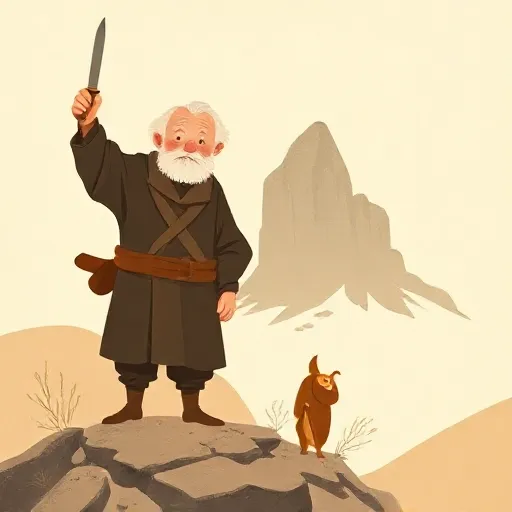
To show what he meant by the religious life, Kierkegaard (writing under the name Johannes de silentio) turned to an ancient story. In the book of Genesis, God commands an old man named Abraham to sacrifice his only son, Isaac, on a mountain. Abraham packs, travels for three days, binds Isaac to an altar, and raises the knife. At the last instant, an angel stops his hand, and Abraham sacrifices a ram instead.
For Kierkegaard, this story is not about blind obedience. It is about a knight of faith — someone who trusts God’s promise so utterly that he believes he will get Isaac back in this life, even as he lifts the blade. This is what Kierkegaard calls the absurd: not a logical mistake, but a hope that shatters all ordinary human calculation.
He contrasts Abraham with a knight of infinite resignation, someone who can give up everything for a higher cause and find peace in renunciation — like a tragic hero who sacrifices his child for the state. That figure can explain himself to others. Abraham cannot. If you had stood next to Abraham on that mountain, his actions would have seemed monstrous. He could not say, “I am doing this because of duty X or principle Y.” His only ground was a direct, personal relation to God — a kind of truth that cannot be pasted onto a public billboard.
That is why Kierkegaard insists that faith is a purely personal virtue. The “single individual” stands higher than any universal rule, but only because the individual is anchored in something beyond the human. The knight of faith walks back down the mountain, and to outsiders he looks like any ordinary person — a shopkeeper whistling on the way home. Yet inside, he carries a secret joy, because he has received back what he was willing to lose, and he knows that his life is held by something that will not betray him.
Why the Crowd Can’t Save You
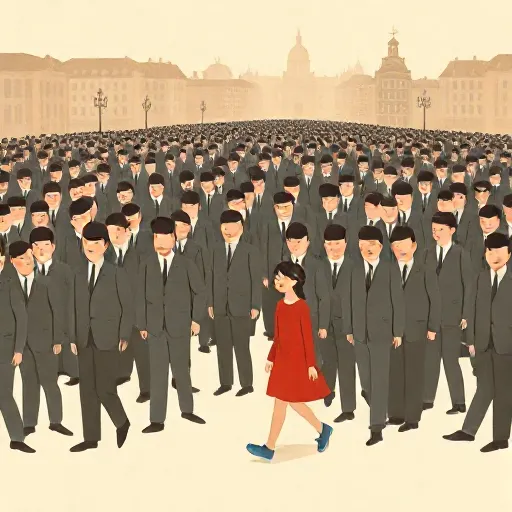
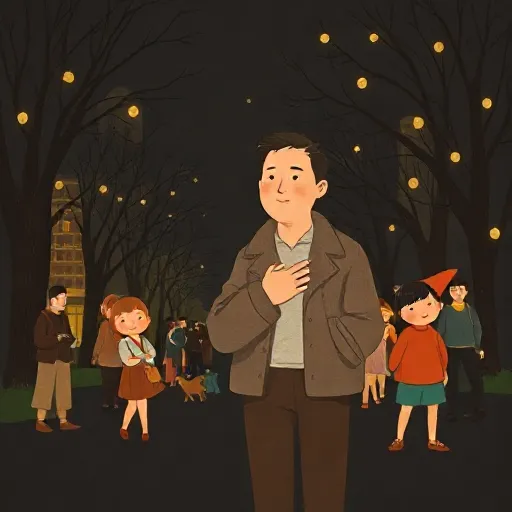
Kierkegaard’s fight with The Corsair was not just a personal wound. It crystallized a danger he saw everywhere in modern life: the rise of “the public,” a faceless, opinionated mass that nobody can answer to. It whispers that you should fit in, that standing out is embarrassing, and that the safest way to live is to think and feel whatever the crowd does. He called this leveling — the process of flattening every distinctive soul into a smooth, anonymous surface.
He wrote of “the present age” as sleepy, envious, and addicted to reflection without action. Sound familiar? Think of an algorithm that feeds you what everyone else already likes, or a feed where performing for the crowd replaces genuine conversation. Kierkegaard would recognize the phantom. The crowd gives you comfort, but never a self.
That is why his challenge still bites. You are surrounded by pressure to drift, to keep your options open, to watch life through a screen rather than climb onto the stage. Kierkegaard does not promise that choosing is easy. It requires anxiety, because every real choice closes some doors. It requires courage, because the crowd may sneer. But he also insists that only by making that leap — by committing to something beyond your own comfort — can you stop being a shadow and start being a person.
Think about it
- Kierkegaard thought you cannot just think your way to a good life; you have to act. Is it possible to figure out the right choice purely by thinking, or do you sometimes need to try something first to really understand it?
- If everyone around you believes something strongly, how can you tell whether you truly agree, or are just following the crowd?
- Would you rather live a comfortable life without huge risks, or one of intense passion that might bring great joy but also great pain? What makes that choice hard?