

Is Your Mind Building the World You See?
The Squirrel Outside Your Window

Maya, 12, stares out the window. A squirrel scrambles up the oak tree. Almost without thinking, a thought forms in her mind: That squirrel is climbing the oak. She’s made a judgment — an everyday act. But what just happened inside her head? That question fascinated the philosopher Immanuel Kant (1724–1804). He spent years pulling apart the hidden machinery of judgment. What he found was startling: the mind doesn’t just record the world. Every time you judge something to be true, you’re actively building the reality you experience.
Before Kant, many thinkers treated a judgment like a simple link between two ideas. You have the idea “squirrel” and the idea “climbing,” and you connect them. But Kant noticed a problem. A list of ideas isn’t a judgment. There’s a special kind of unity when you say “the squirrel is climbing.” That little word “is” — the copula — doesn’t just glue words together. It claims something about the actual world. It brings together a direct sensory awareness of that specific squirrel (what Kant called an intuition) with a general idea of what squirrels and climbing are (a concept). The result is a complete thought that can be true or false — a proposition. For Kant, a judgment is a higher‑order mental act that produces a propositional content. That content isn’t private and muddled; it’s something you could share with anyone. So when Maya judges, she’s not just juggling ideas in her skull. She’s putting a claim out into the world.
The Mind’s Departments: Seeing, Thinking, and Judging

Kant saw the human mind not as one big lump, but as a company with different departments. Two departments are the stars: sensibility, which delivers raw intuitions — the direct, sensory grip on individual things, like the look of this squirrel — and the understanding, which supplies concepts — the general rules that let you recognize something as a squirrel or as climbing. There’s also a kind of middle manager, the imagination, that helps turn raw sense data into images and schemas. But the real chief executive is the power of judgment. Its job is to bring everything together under a single higher‑order unity. Kant called that unity apperception, or rational self‑consciousness. It’s the “I think” that can accompany all your thoughts. When Maya judges, she isn’t just letting sensations and concepts float around. She’s tying them into one coherent claim that belongs to her. That’s why judgment is the central act of a rational mind. Every perception, every memory, every bit of reasoning — all of them can feed into a judgment, but only judgment pulls the whole crew into a single, shareable proposition.
This picture flips an older idea on its head. Many earlier thinkers said that concepts or sensations are the basic building blocks of the mind, and judgments are just combinations of them. Kant insisted on the opposite: the propositional content of a judgment — the complete “that‑squirrel‑is‑climbing” — is more fundamental than the pieces that go into it. You start with the whole claim, and only then can you meaningfully talk about parts like the intuition of a squirrel or the concept of climbing.
How Judgment Builds Your World

Here’s where Kant’s thinking gets wonderfully odd. He argued that the world we can ever experience — the world of squirrels, trees, and windows — must fit the structure of our own minds. This is the core of his transcendental idealism. Space and time aren’t features of things in themselves; they’re the forms our sensibility imposes on every intuition. Concepts like “cause,” “substance,” and “unity” aren’t things we discover out there; they’re hard‑wired categories of the understanding. When you judge “the squirrel climbed the tree,” you’re not just describing a ready‑made fact. You’re actively shaping your experience using your built‑in mental template. Your judgment applies the category of causality (the squirrel moved itself up), the form of time (it happened now), and the unity of a single object (that one squirrel). The result feels like a discovery, but on Kant’s account it’s a construction — a collaboration between your mind and whatever raw data the world sends in.
This doesn’t mean truth is whatever you feel like. Kant was no relativist. He held onto a firm idea of empirical truth: a judgment is true when it correctly hooks up with an actual object of experience according to the rules our mind necessarily follows. He called that “agreement” with an object. But since objects of experience are, in a deep sense, appearances structured by our minds, truth also becomes a kind of harmony between our cognitive machinery and the patterns it generates. Certain truths, like “every event has a cause,” aren’t just true by definition (that would be analytic). They’re synthetic a priori — they genuinely add to our knowledge, yet they are necessary for any experience at all. Kant’s bold claim was that such judgments are the hidden scaffolding of science and everyday life. Your belief that a loud thud must have a cause isn’t a guess; it’s a requirement of having a coherent world at all.
Cracks in the Blueprint
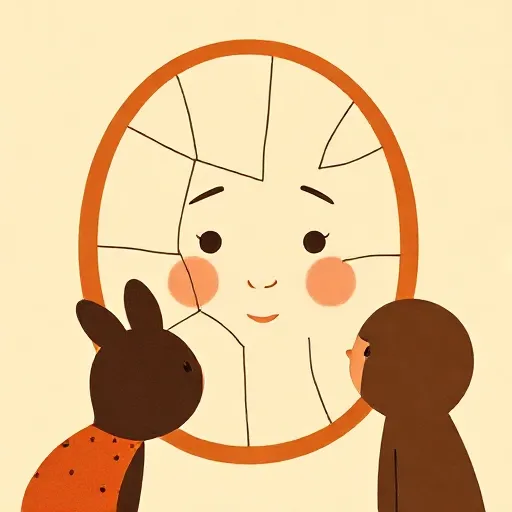
Compelling as Kant’s theory is, it runs into trouble when you try to make it absolutely airtight. The problems, in simple terms, come in three flavors.
First, the rogue‑object headache. If we can have intuitions without any concepts — a direct awareness of something without labeling it — then what’s to stop some “rogue” object from slipping through the net? Such an object might appear in consciousness but never fall under the categories. It would be an experience that doesn’t obey the rules, and Kant’s system can’t guarantee this never happens.
Second, the puzzle of nature’s order. Even if every singular object fits the categories, can we be sure all of nature forms a tidy, law‑governed system? Kant at one point suggested that the “affinity” among appearances — the way they hang together — automatically followed from the categories. Later he backed off and admitted that a chaotic heap of data is still logically possible. We might hope nature is thoroughly lawful, but our minds don’t force it to be.
Third, the dream‑skepticism trap. Suppose your experiences are perfectly ordered and obey all the causal laws. Couldn’t the whole show just be a very coherent dream inside your own inner sense? Kant knew this was a real worry. He argued that inner experience requires outer experience in general, but he openly conceded that any single judgment of experience might still be a hallucination. The boat you see gliding downstream could be a dream‑boat. So his theory can’t give you total certainty that you’re in touch with a mind‑independent outside world right now.
Your Inner World-Builder

Why should any of this matter to you, centuries later? Because every time you decide something is true, you’re stepping into the role Kant described. You’re not a passive camera. Your judgment “that’s unfair” or “she’s angry” isn’t a photograph of an independent fact — it’s an act that pulls your concepts, your memories, and your sensory clues into one unified claim. The world you live in is shot through with such acts.
Kant’s ideas ripple through modern debates about how language, thought, and reality connect. Cognitive scientists explore how the brain builds stable perceptions out of chaotic signals, echoing Kant’s insight that the mind must supply structure. And on a personal level, noticing your own power of judgment can make you a wiser thinker. Your friend sees the same event and makes a wildly different judgment. Perhaps neither of you is simply “wrong” in a simplistic sense — each of you is working with the same raw data but different conceptual lenses. Recognizing that might make you curious instead of defensive.
Kant’s exact system has cracks, and philosophers still argue about them. But the core idea — that judging is a creative, world‑shaping act — remains one of the most electrifying thoughts in the history of philosophy. Next time you look out a window and think “the squirrel is climbing,” remember you’re not just staring at a scene. You’re building it.
Think about it
- If your mind helps create the world you experience, how could you ever tell whether you’re seeing things as they really are or just as your mind constructs them?
- Imagine you and a friend witness the same argument in the lunchroom but come away with completely different judgments about who started it. How might Kant’s idea explain your disagreement without either of you being a liar?
- Can you think of a rule or pattern in nature that must be true for you to have any experience at all? What makes that rule feel different from a fact you can simply check with your senses?