What If Everything Is Just Force? Kant’s Cosmic Idea
A Walk Under the Stars

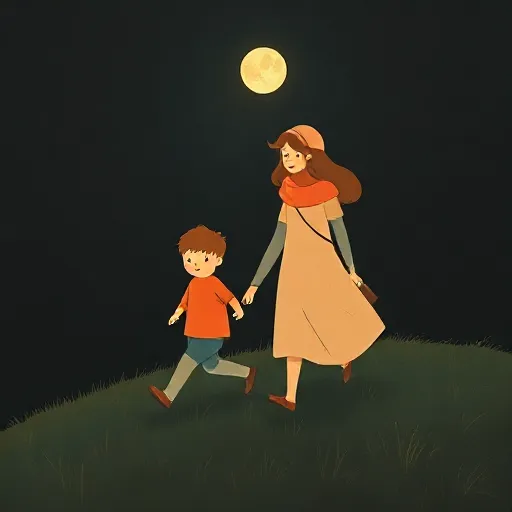
Immanuel Kant was born in 1724 in the Prussian city of Königsberg. His father made harnesses for horses. His mother, Anna, was a gentle and educated woman. When little Immanuel could walk, she took him out into the meadows. She taught him the names of plants and animals and encouraged him to ask about the changing seasons. He never forgot those walks.
Years later, a famous sentence was carved on his tombstone: “Two things fill the mind with ever new and increasing admiration and awe: the starry heavens above me and the moral law within me.” The starry sky had planted its first seed in that curious boy. He would grow up to ask a question so huge it still echoes through science: what holds the universe together?
The Great Force Debate: Pushes, Pulls, and Living Energy
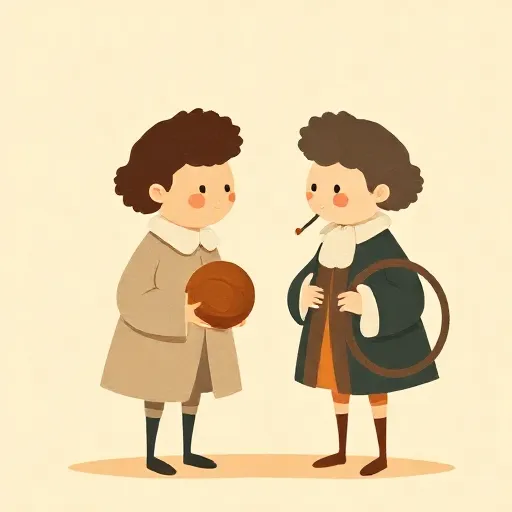
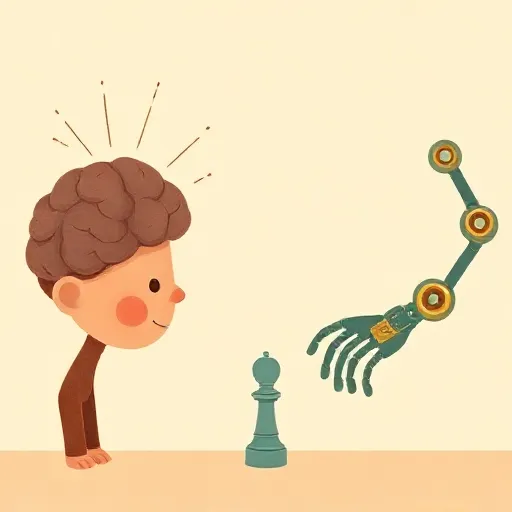
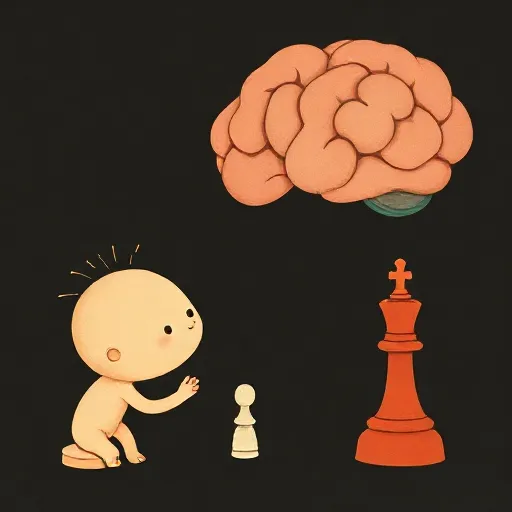
In Kant’s day, physicists were stuck on a puzzle. René Descartes (1596–1650) said force is just how much motion a body has. He measured it as mass times speed, a number we now call momentum. But Gottfried Leibniz (1646–1716) disagreed. Watching objects fall, Leibniz saw a different quantity—mass times speed squared—which he called living force (today we call it kinetic energy). Two camps fought for decades: momentum or energy?
Kant, still a university student, stepped in with a wild idea. Force is not just a number you measure, he argued. Force is a radiating pulse that spreads out like ripples on a pond. Imagine throwing two pebbles into water—each ripple expands, and when they meet they push and change each other. That’s how force works: a source sends out its action, and where fields collide, the interacting forces weave the fabric of space itself. In one stroke, Kant united momentum and energy as two sides of the same coin. He even discovered the rule that any free radiation (light, gravity, sound) weakens in inverse proportion to the square of the distance it travels—a law that later helped scientists discover the Big Bang.
Force, for Kant, was the fundamental stuff of the universe. Not tiny hard bits of matter, but active, dynamic connections.
A Universe That Builds Itself (No Builder Needed)

Kant’s next leap was even bolder. How did the sun, planets, and stars form? The great Isaac Newton (1643–1727) thought God’s hand had arranged the orbits and kept the cosmic machine from running down. Kant, however, believed the universe was a self-organizing process. You only need matter and two forces—attraction and repulsion—and the cosmos will design itself.
Picture a huge, random cloud of particles. Gravity pulls them inward. But as particles fall together, they crash and spin, creating a repulsive centrifugal force that flings them sideways. Over time, the spinning cloud flattens into a disk, its center ignites into a star, and leftover clumps sweep their orbits clean to become planets. Kant figured this out in 1755, without telescopes or computers. His “nebular hypothesis” is basically how astronomers today explain the birth of solar systems.
He went further. Even life and mind are products of this cosmic unfolding. Nature has a built-in goal—an urge to become more complex, to grow order from chaos. He called it an “out-wrapping” of nature, like a blooming flower that eventually wilts, only to seed new beginnings. No divine mechanic was needed to keep the engine running.
Everything is Connected: The Cosmic Web
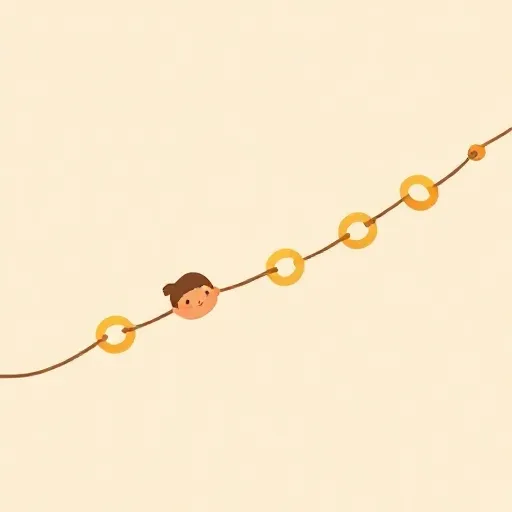
For Kant, nothing exists in isolation. All things interact. He argued that a force-point is nothing without other force-points to engage with—they define each other through their relations. The universe is a vast network of mutual influence.
You are not a spectator of nature; you are a feather on the cosmic phoenix. Your mind and body are both bundles of forces, shaped by your place in the great chain of being. Kant even speculated that how smart you can be depends on the density of the matter that makes up your brain—so beings on a lighter, outer planet might be vastly more intelligent than us. Whether true or not, the point was clear: you’re woven into the fabric of the cosmos, not standing outside it.
The Doubt That Changed Everything

After years of building his grand dynamic system, Kant hit a wall. He had argued that the universe is a coherent whole, that force unites mind and matter, that even God is just the necessary ground of all interaction. But then he read a mystic who claimed to see angels—and he recognized a distorted mirror of his own ideas. Was he, too, just making up stories about invisible forces?
He grew deeply uncertain. Could human reason really figure out the ultimate structure of reality? Kant’s crisis led him to a ten-year rebuild, which produced his most famous work, the Critique of Pure Reason. He now insisted that we must first understand the limits of our own minds before we claim to know what lies beyond our senses. Yet he never abandoned his early fascination with the dynamic cosmos; even in his late work, force-fields and universal interaction kept reappearing as the hidden engine of any possible experience.
Why This Matters to You

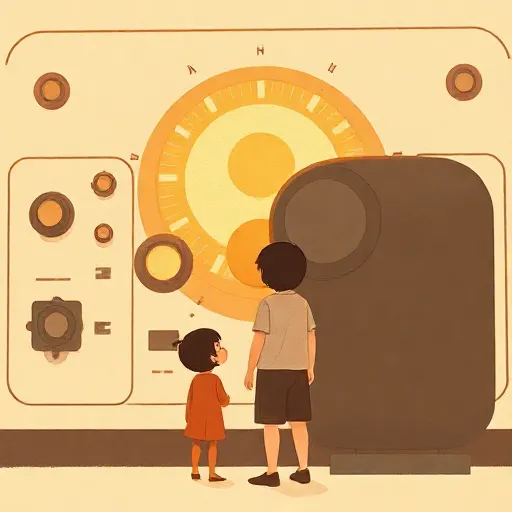
Right now, physicists are hunting for a “theory of everything”—a set of rules that would unite all the forces of nature: gravity, electromagnetism, and the nuclear forces. That quest began with thinkers like Kant, who dared to ask what the universe is fundamentally made of.
You are made of the same forces that spin galaxies. The energy pulses in your brain are distant echoes of the Big Bang. And the question Kant asked on his childhood walks—why the sky looks the way it does—is still wide open. You don’t need a lab coat to be a philosopher of nature; you just need curiosity and the courage to look up.
Think about it
- If everything is made of forces pushing and pulling, can you still be truly free to make your own choices?
- If the universe can build itself, does that rule out a creator, or just change what a creator must be like?
- When you look at the stars, do you feel more like a tiny speck or like a part of something enormous? Why does your answer matter?