If Every Event Has a Cause, Are You Ever Really Free?
The World That Runs Like Clockwork
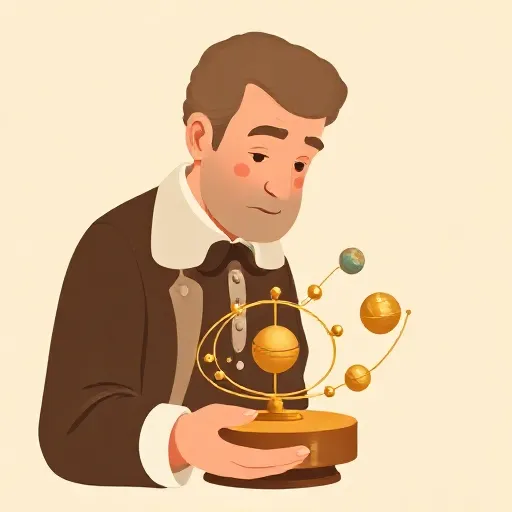
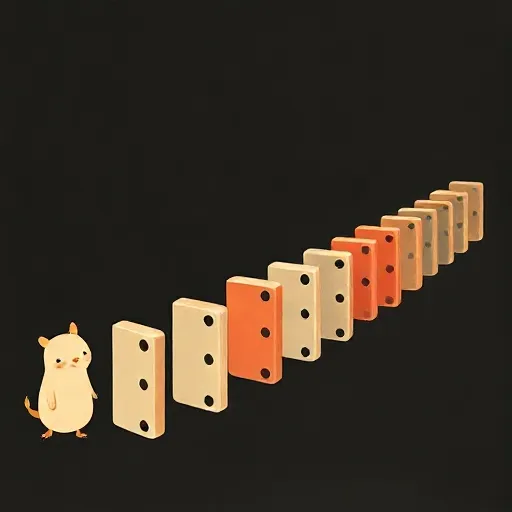
Imagine a scientist in the 1700s who can calculate exactly where every planet will be a century from now. Isaac Newton (1642–1727) had shown that the universe runs like a giant clockwork mechanism. Every event — a leaf falling, a ball rolling — happens because something pushed it. That idea is called determinism: everything that occurs is caused by earlier events, going back in an unbroken chain.
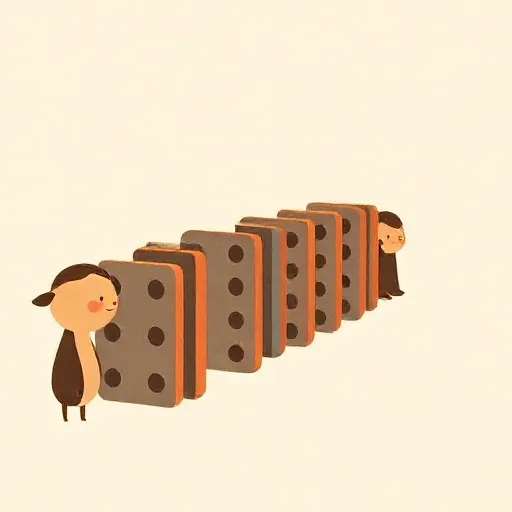
That’s great for astronomy. But it creates a terrifying problem for you and me. If every event has a prior cause, then your thoughts and choices are just events in your brain. Your decision to read this article was caused by brain activity that was caused by earlier brain activity, stretching back before you were born. Where is the room for freedom? If you couldn’t have done otherwise, can anyone really be praised for a good deed or blamed for a bad one?
The 18th-century philosopher Immanuel Kant (1724–1804) looked at this clash — between what science tells us and what morality demands — and refused to give up either one. He believed we can know nature is deterministic and that we are genuinely free. His solution starts with a mind-bending question: what if we don’t just discover the world — we build it?
How Your Mind Shapes Reality

Kant’s big move was to flip an old assumption. Since ancient times, philosophers had assumed that our knowledge must conform to objects — that our minds simply reflect the world as it really is. But if that’s true, how can we know anything about the world before we experience it? We can’t step outside our own heads to compare our ideas with some mind-independent reality.
Kant proposed something shocking: objects must conform to our way of knowing. We never experience things as they are in themselves (the real, mind-independent world). We only experience appearances — a world shaped by the structure of our own minds.
Think of it like this: you’re wearing tinted glasses you can never remove. Everything you see looks blue‑tinted, but that doesn’t mean the world is blue. Space and time, Kant argued, are like those glasses — they’re not features of things in themselves; they’re the forms your mind uses to organize sensory input. This view is called transcendental idealism.
Because space, time, and basic laws like “every event has a cause” come from us, we can know them a priori — before experience — and be certain they’ll hold for every object we ever encounter. But this certainty comes at a cost: we can never peek behind the glasses. Things in themselves remain completely unknowable. That gap, Kant believed, is exactly where freedom can live.
Why Your Mind Insists on Causes

But why must our mind impose cause and effect on appearances? Kant’s answer — the argument he called the transcendental deduction — is one of the hardest but most important parts of his philosophy.
Start with a simple fact: you are self‑conscious. You can think “I” and know that the same “I” has all of your experiences. For that to be possible, your experiences can’t just be a jumble of disconnected sensations. You must be able to combine them into objects that exist even when you aren’t looking.
Kant used the example of a house. Walk around it and you see different sides at different times. Yet you don’t think you’re seeing many different things — you judge that all those views belong to one house. That act of judging connects representations in a necessary way, and it requires a rule: the parts of the house exist together in space, related by cause and effect (your movement causes the angle to change, and the house remains solid). Without such rules, there’s no object, and no unified “I” to experience it.
So the very structure of your mind — the categories or pure concepts like substance and cause — builds a lawful, predictable world of appearances. In that world, every event really does have a cause. But notice: cause and effect are something you bring to the table. If they’re not features of things in themselves, then the deterministic chain need not trap your deepest self.
The Thief Who Couldn’t Help It
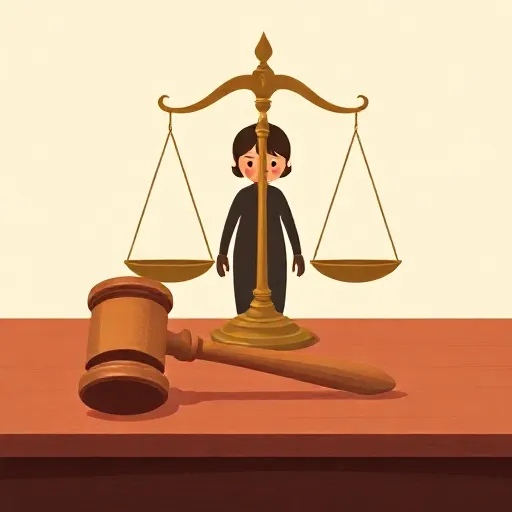
Now comes the practical problem — morality. Kant asks you to imagine a man who steals. If his choice was just another event in the clockwork of nature, then it was caused by earlier events, and those by earlier events, all the way back to before he was born. Could he have done otherwise? Kant says no — if his act was in time, it was determined, and he could never have controlled what happened in the distant past. So no one could ever be held responsible for anything.
But everyone — including you — feels the weight of moral obligation. You know you ought not to lie, even when it would be easier. You feel that if you ought to do something, you can do it. Kant called this the fact of reason: an undeniable awareness of a moral law that commands you unconditionally. He expressed that law as the categorical imperative: before you act, ask whether the rule you’re following could become a universal law that everyone could follow. For the thief, the rule “take whatever isn’t guarded” would destroy the whole idea of ownership if everyone lived by it — so it’s wrong. And you can’t blame your desires or your past; you’re the one who chooses your maxim, the principle behind your action.
This is where transcendental idealism pays off. Your moral “ought” tells you that you are free — not in the world of appearances where everything is determined, but as a thing in itself, outside of time. Your noumenal self (the “you” beyond the senses) can start a new chain of events, undetermined by the past. Kant admits you can’t prove this scientifically; that would be trying to peek behind the glasses. But you are justified in believing it for practical purposes — because without freedom, morality would be an illusion.
A World Split in Two (and Why It Still Matters)

Kant left us with a picture that’s both satisfying and unsettling. Science and its deterministic laws reign in the realm of appearances. Morality and freedom belong to the unknowable realm of things in themselves. You live in both worlds: your body obeys cause and effect, but your will can obey a law you give yourself. That’s what he meant by autonomy — being governed by your own reason rather than by external pushes and pulls.
Of course, huge puzzles remain. How can an “outside‑time” choice show up in your time‑bound actions? When you decide to help a friend, that decision feels like it happens now. Kant’s system doesn’t fully explain how the two sides interact — and philosophers still argue about whether his solution works or whether it just hides the problem.
Yet the basic tension he tackled is yours, too. Neuroscience shows that brain activity can predict a simple choice seconds before you’re consciously aware of deciding. Does that mean your feeling of freedom is an illusion? If so, are praise, blame, and punishment still fair? Next time you feel completely free — picking a movie, sticking up for someone — ask yourself: would it change how you treat people if you believed all their actions were just links in an unbreakable chain? Kant didn’t settle the question, but he gave you the tools to live with it: a split world where you can be both a scientist and a moral being at the same time.
Think about it
- If an advanced machine could predict every choice you’ll ever make before you make it, would it still be fair to punish people for bad choices?
- Think of a time you felt totally free — maybe choosing between two desserts. Was that feeling proof that you really were free, or could your brain have already decided without “you” noticing?
- Imagine you’re the judge at a trial for a theft. If you learned that the thief’s brain activity was completely determined by genetics and upbringing, would your verdict change — and why?