Who Should Fix the Planet? And Who Should Pay?
A Broken Window and a Warming Planet
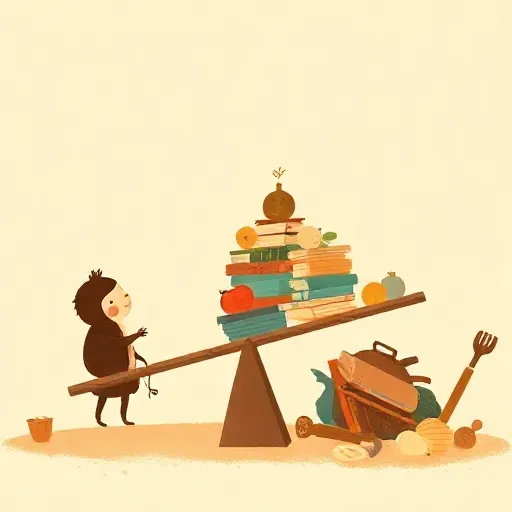
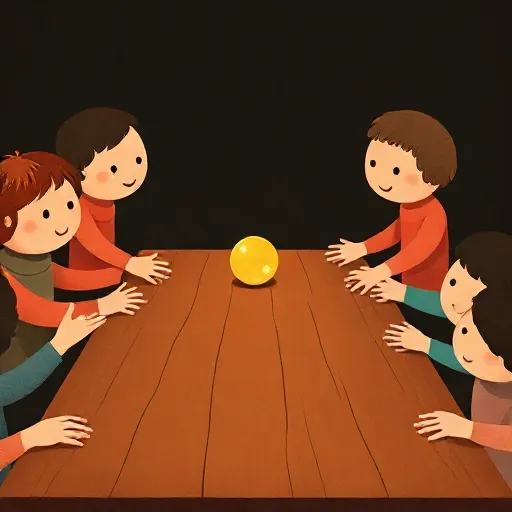
Maya and Leo are kicking a soccer ball. CRASH — the neighbor’s window shatters. “You broke it!” says Maya. “But you kicked it last!” argues Leo. Their friend Amira arrives. “I’ll help fix it,” she says, “because I have the most pocket money right now.”
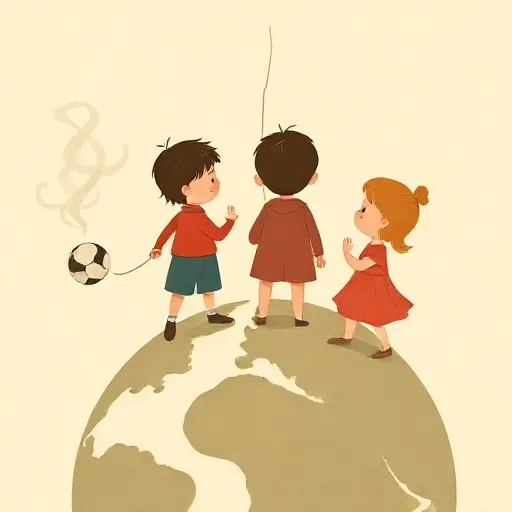
Three different ways to decide who cleans up. Climate change is like that window, but the whole Earth is the house. Every year, heatwaves, floods and storms cause massive damage. Philosophers ask: Who should do the work of cutting pollution and preparing for disasters? And who should pay for it? These are questions of distributive justice — how to share burdens and benefits fairly.
Some philosophers take an Isolationist approach. They think we should treat climate change as its own problem, separate from poverty, trade, or other issues. They argue this keeps things simple and makes it easier for countries to agree on a deal (Blomfield 2019; Gosseries 2005). Others adopt an Integrationist view. They say you cannot pull climate apart from the rest of justice. Burning coal warms the planet, but it also powers hospitals, schools, and factories. Deciding how to share the costs of clean energy forces you to think about what people really need to live decent lives. The integrationist warns: if you only look at the broken window, you might demand payment from someone who has no money and no food — and that would be unjust (Caney 2005).
These two approaches shape everything that follows.
Three Ideas About Who Should Pay

When philosophers ask “who should bear the costs of fighting climate change?”, three principles tend to emerge. Each mirrors one of the voices at the broken window.
The Polluter Pays Principle says that whoever caused the mess should clean it up. The more greenhouse gas you emitted, the more you should pay (Shue 2014). It sounds straightforward, but tricky questions pop up. What if people in the past didn’t know that burning coal would heat the planet? Can they be blamed for being excusably ignorant? Many reply that for decades now the science has been clear — so ignorance hasn’t been an excuse since at least the late 20th century (Singer 2002). Another puzzle: many of the biggest historical polluters are dead; why should their grandchildren foot the bill? Some answer that the grandchildren still benefit from the wealth those polluting factories built, and that benefit can justify asking them to pay (Neumayer 2000; Shue 2014). A third problem is the world’s poorest people. If charging them for their emissions would push them below a decent standard of living, many philosophers say they should be exempt. After all, justice isn’t just about pollution — it’s also about meeting basic needs.
The Beneficiary Pays Principle takes a different angle. Even if you didn’t cause the damage, if you gained from the activities that did, you should help cover the costs (Page 2012). This can address cases where the original polluters are gone. But here too, caution is needed: what if someone benefited a little but is still desperately poor? The same concern about basic living standards applies.
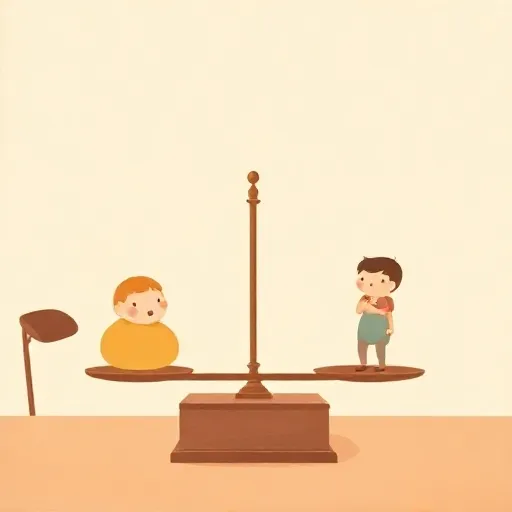
The Ability to Pay Principle shifts the focus entirely away from who caused the problem. It says burdens should be distributed according to how much someone can afford — the richer you are, the more you pay (Shue 2014; Moellendorf 2014). Critics object that this ignores responsibility altogether. Defenders reply that a just world already requires the wealthy to help those in need, so linking climate costs to ability makes sense.
Notice how the Integrationist view keeps creeping back. If you think no one should be pushed below a decent living standard, you are already pulling in a bigger idea of fairness — not just slicing up emissions permits as if they were the only thing that mattered. That is why many philosophers argue that just looking at carbon is like fighting over pieces of a cake when what really counts is whether everyone gets enough to eat.
What Do We Owe People Not Yet Born?
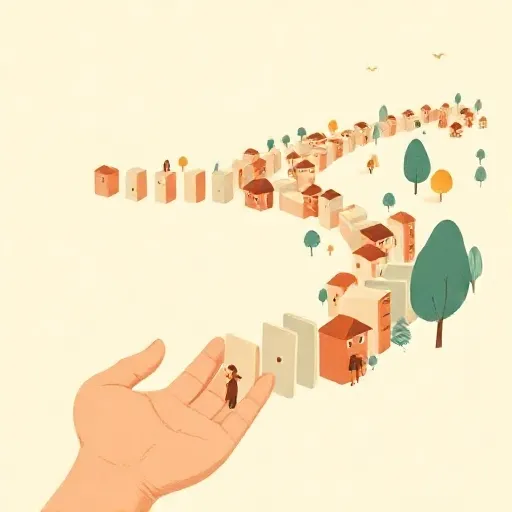
Carbon dioxide lingers for hundreds of thousands of years. The heat-trapping blanket we weave today will wrap around the shoulders of generations we will never meet. So questions of Intergenerational Justice become unavoidable. What does one generation owe the next?
One modest answer is enough: sufficientarianism says we must leave future people above a certain threshold of well-being — no one should fall below a decent level (Meyer & Roser 2009; Page 2006). Some say that is not demanding enough. Suppose we could make future generations much better off at almost no cost to ourselves; sticking to the bare minimum seems stingy. Humberto Llavador, John Roemer and Joaquim Silvestre (2015) defend “growth sustainability”: each generation should ensure that the next is, say, 25 percent better off than they were.
Philosophers also debate how to weigh future interests against present ones. A Social Discount Rate is how economists express this. One part is Time Discounting: giving less moral weight to a person simply because they live later. Most philosophers, following Derek Parfit (1942–2017), think that is wrong — being born later is as morally irrelevant as having a birthday in June. Another part is Growth Discounting: if future people are richer, should their extra money count less? That depends on whether you care about equality. An egalitarian might say yes, but only if the extra wealth really makes their lives better in ways that matter.
Then comes a startling challenge: the Non‑Identity Problem. Parfit showed that the decisions we make now — which energy sources we build, what treaties we sign — will change who is born in the future. If we take the “dirty” path, different people will exist than if we take the “clean” path. So can we really say we have harmed those future people? They wouldn’t have been born at all if we had chosen differently (Parfit 1984). Many philosophers reply that justice does not need to single out a particular person and make them worse off. A sufficientarian, for example, claims we have a duty to make sure whoever lives enjoys at least a decent life, no matter their identity. So the Non-Identity Problem may puzzle us, but it doesn’t let us off the hook.
How Careful Should We Be?
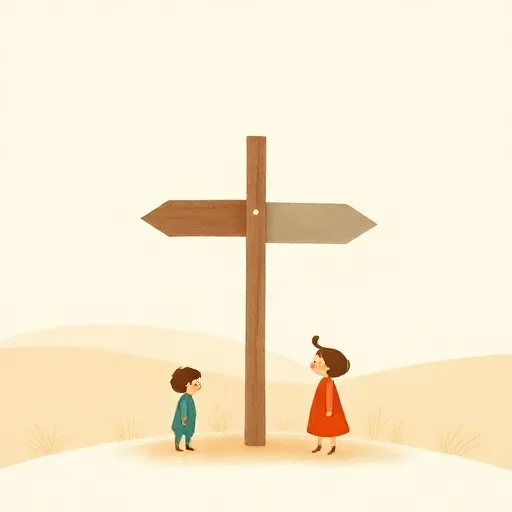
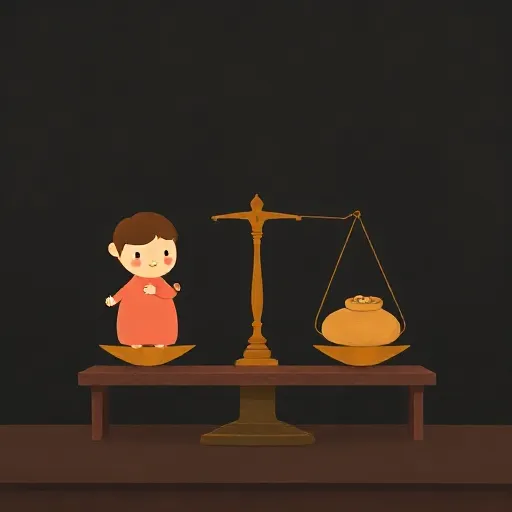
Even if we agree future people matter, a hard practical question remains: how safe must we play it? Scientists cannot give a single, certain answer about how much the planet will warm. The same report that says we might keep warming below 1.5°C with a 66% chance leaves a carbon budget of about 420 billion tonnes of CO₂; if we accept only a 33% chance, the budget doubles (IPCC 2019). That difference is huge. So how risk‑averse should we be?
One common tool is expected‑value calculation: multiply each possible outcome’s harm by its probability and pick the policy with the best average. Critics say the probabilities are too shaky to rely on this way (Gardiner 2011). An alternative is the Precautionary Principle. The contemporary philosopher Henry Shue (born 1940) offers a clear version with three conditions. When these three things are all true, we should act urgently to make the worst outcome less likely — even if we cannot nail down precise odds (Shue 2014):
- Massive loss — the possible harm is enormous (think of flooded coastal cities and collapsed food systems).
- Threshold likelihood — the mechanism is well understood, and the conditions that trigger it are building up (greenhouse gases are accumulating).
- Non‑excessive costs — preventing the catastrophe would not ruin us (switching to clean energy is expensive, but not nearly as costly as a shattered planet).
Under this principle, the sheer scale of the danger, combined with a clear causal story and affordable remedies, demands that we treat the risk as serious even if we cannot compute exact percentages. In practice, both the precautionary and the expected‑value approaches often point in the same direction: cut emissions hard and fast. But they disagree about why — and that matters for how we think about other risks.
Why This Matters to You
Climate change is not a distant story about diplomats and ice sheets. The fairness questions it raises appear right now in your own life. When your family decides who pays for a broken window, or your class splits the cost of a group gift, you are already doing distributive justice. The same knotty ideas — polluter pays, beneficiary pays, ability to pay — show up in friendships, playground disputes, even allowance negotiations.
And the future is yours. The carbon budgets being debated this year will shape the world you inherit. Philosophers who study nonideal theory ask what to do when some people refuse to do their fair share. Some say those who can contribute more should step forward, even if it’s not ideally just (Caney 2016). Others argue that ordinary citizens have a responsibility to push for better laws — not just recycle, but demand change. These arguments are live, and they involve you.
Justice is not a set of finished rules. It is a way of paying attention. The next time you see a mess and wonder whose job it is, you are doing philosophy.
Think about it
- If your great‑grandparents owned a factory that made your family wealthy but also polluted a river, do you owe anything to the people who have to clean it up today? Why or why not?
- Suppose scientists disagree about whether a heatwave will be merely awful or truly catastrophic. Should we prepare as if the worst will happen, or wait until we are more certain?
- If you buy a cheap t‑shirt made in a factory that pollutes, and you didn’t know about the pollution, are you still partly responsible for fixing the harm? What if you find out later but keep wearing the shirt?