
Are Your Thoughts Really God’s? John Norris Said Yes
The Perfect Circle You’ll Never Draw

Try to draw a perfect circle. No compass, just freehand. Your circle will always be a little lumpy. Now look at that wobbly shape — you still know what a perfect circle is. You can picture it in your mind. But where did that idea come from? No real circle is ever flawless.
Philosophers have puzzled over this for centuries. In the 1690s, an English thinker named John Norris (1657–1711) offered a bold answer: all ideas of perfection, and every other truth, are actually inside God’s mind. You don’t invent the idea of a perfect circle; you glimpse it in the divine understanding. Norris was a clergyman and follower of the French philosopher Nicolas Malebranche, who said that we see all things in God. Norris spent his life trying to make that idea even clearer and defend it from critics like John Locke.
God’s Mind: The Ultimate Book of Ideas

Norris called this realm of ideas the intelligible world — the collection of perfect patterns in God’s mind that everything in the physical world copies. He believed God didn’t just make things randomly. Before creating, God thought about the essences (the “what-it-is”) of everything. Those divine thoughts are the divine ideas. If you want to know why a human being is a certain kind of thing, you look to the divine idea of a human.
This raised a big question: how can God contain the idea of a body, like a triangle, without being physical and extended himself? Critics said that if God has the idea of extension, God must be extended — which would make God material, a disaster for traditional theology. Norris used a clever distinction. He said you can contain something in two ways: formally, like a matchbox containing matches, or eminently, like an architect’s mind containing the design for a building. The building doesn’t exist physically in the architect’s head, but the plan is there in a higher, non-physical way. God contains all ideas eminently, without being made of those things.
Norris offered several arguments that this intelligible world must exist. One came from the existence of perfect shapes. When you think of a perfect sphere, you have an idea that is more perfect than any ball you’ve ever seen. Since a cause must have at least as much perfection as its effect, the idea of a perfect sphere must come from something that actually is perfect — an ideal sphere in God’s mind. Another powerful argument came from the nature of truth itself. If a skeptic says “There is no truth,” they are making a truth claim. They assume that at least that statement is true. This means some truths are necessary and eternal, like “2+2=4.” For Norris, these eternal truths are relations among divine ideas. They always exist because God’s mind exists.
Locke’s Challenge: Where Do Ideas Really Come From?
While Norris was writing, another philosopher, John Locke (1632–1704), had just published his Essay Concerning Human Understanding. Locke argued that all our ideas come from sensation (seeing, hearing, touching) and reflection (thinking about our own mental operations). There were no built-in divine ideas. For Locke, your idea of a circle is a mental picture built from experience of round things.
Norris reviewed Locke’s book and punched back with a sharp question: What kind of thing is an idea? If ideas are merely mental content caused by the senses, are they substances or modifications of the mind? Neither answer seemed satisfying. More importantly, Locke couldn’t explain how we achieve certainty about necessary truths. Our senses can only show us how things happen to be, not how they must be. When you know that a triangle must have three sides, that’s not just from looking at triangles — you can’t imagine a triangle without three sides. Norris said we know necessary truths because our minds are directly linked to the divine ideas; we are, in his phrase, seeing “the very same divine nature itself” in a limited way.
This is where the big split between rationalism and empiricism comes in. Rationalists like Norris believed that reason, not the senses, gives us the deepest knowledge. Empiricists like Locke thought the senses are the only source of ideas. Norris insisted that clear and distinct thoughts — like “mind is not body” — aren’t just private mental events; they reflect real relationships among God’s eternal ideas. For Locke, a clear thought was just a strong feeling of conviction, not a guarantee of truth. The two men never reconciled.
The Soul vs. the Thinking Body
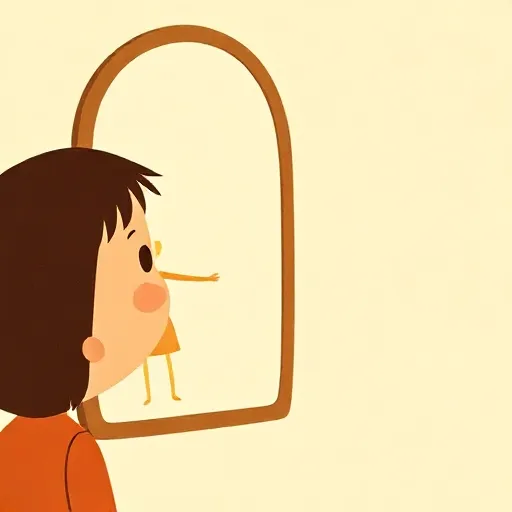
The disagreement over ideas spilled into a bigger fight: what are you? Are you just a body that thinks, or a union of an immaterial soul and a material body? René Descartes (1596–1650) had earlier argued for a real distinction — mind and body are two completely different substances. You can clearly imagine yourself thinking without a body, so they must be separate. Locke suggested a more modest view: maybe God simply added the power of thought to certain material systems. This is the “thinking matter” hypothesis.
Norris defended Descartes with a fresh twist. He introduced the notion of modal abstraction. When you think about a thing and its properties, like a ball and its roundness, you can mentally separate the shape from the ball — consider roundness without thinking about the ball at all. But that’s only a modal abstraction: roundness isn’t a separate thing; it’s a mode (a way of being) of the ball. By contrast, when you think about your mind, you can conceive it existing without any body at all, and you can conceive a body without a mind. That’s not just a trick of thought; it reveals two really distinct substances. If mind was merely a mode of matter, you couldn’t think of mind without matter — just like you can’t think of roundness without something being round.
Norris also attacked the thinking matter idea with an argument from God’s creative plan. God creates each kind of thing according to its ideal essence. Bodies have the idea of extension, minds have the idea of thought. If God could just toss thought onto matter, it would mean that what it is to be a body isn’t fixed by its divine idea. That would make it impossible to know what anything really is. So, Norris concluded, you are a substantial union of an immortal soul and a mortal body.
He even extended compassion to animals. Like Descartes, he thought animals were likely machines without souls, but he warned against cruelty — “’tis easy to err in the Dark.” We should treat animals gently, as if they could feel, just in case.
Why It Still Matters: Truth and You
Norris was a deeply religious thinker. For him, philosophy wasn’t just a game; it was about knowing God and living a good life. He believed that by contemplating the divine ideas, you align your own mental life with eternal truth, and that makes you wiser and better. His fight with Locke raised a question that hasn’t gone away: do our thoughts reflect an independent reality, or are they just constructions from experience?
Today, we talk about “brain-generated” thoughts and worry about whether our perceptions match the world. When you’re absolutely certain that something is true — like that every event has a cause — where does that unshakeable conviction come from? Norris would say you’re touching something in the divine mind. Others say it’s just a habit of your brain. This still shapes debates in philosophy of mind and the search for objective knowledge.
Even the animal question lingers: if you aren’t sure whether animals feel pain, should you treat them as if they do? Norris’s answer was yes. That cautious kindness is a tough and important lesson for any thinker.
Think about it
- If your idea of a perfect triangle comes from glimpsing God’s mind, how could you ever check if that’s true?
- Suppose a scientist could prove that all thoughts are just brain patterns. Would that mean we can never know anything for certain?
- If you’re not sure whether animals feel pain, is it better to act as if they do or as if they don’t? Why?