Is It Dangerous to Think Too Hard? The Trial of John Italos
The Day He Stood Before the Judges
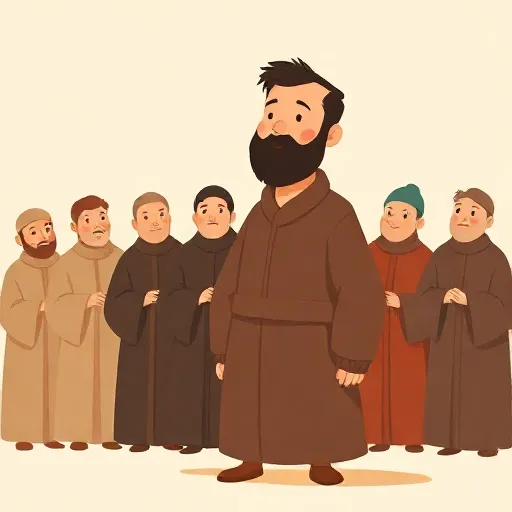
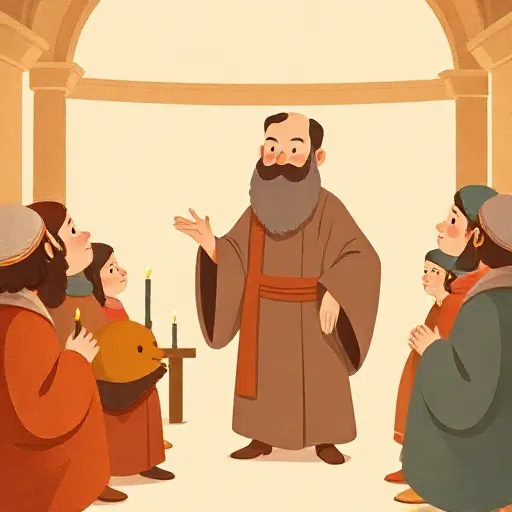
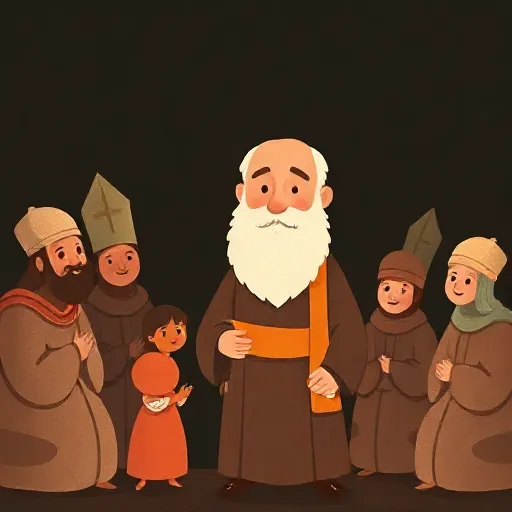
Constantinople, March 1082. In a hall lit by flickering lamps, a man named John Italos (c. 1030–after 1082) faced a panel of bishops. They called him a heretic — someone who teaches beliefs that go against the church. His real crime? Using logic so sharp that it made religious authorities uncomfortable. The trial would end his career and change the way philosophy was done in the Byzantine Empire.
Italos had not always been an outsider. Born in southern Italy when the region was still part of the Byzantine world, he grew up following his soldier father. As a young man, around 1050, he made his way to Constantinople, the glittering capital. There he joined the circle of Michael Psellos (1018–c. 1078), a famous teacher who admired Italos’s powerful arguing skills even while complaining about his rough, unpolished style. Italos climbed quickly. By 1076, he had become the Consul of the Philosophers — the head of the imperial school of philosophy. Students flocked to him, drawn by his intense, no-nonsense way of teaching. But that same sharpness would soon get him into trouble.
A Mind Sharpened by Logic

Italos’s favorite tool was dialectics — a method of reasoning by putting arguments and counterarguments against each other to test what holds. He wrote clear, brief treatises on syllogisms, the kind of logical chains where two true statements force a third to be true. For Italos, logic was not just a classroom game. It was the best way to explore every question, even questions about God.
One of his favorite topics was universals. Think about the word “horse.” Does “horseness” exist somewhere, or is it just a name we give to many similar animals? Italos followed the Alexandrian tradition, which said universals exist in three ways. First, they are in the mind of God as perfect blueprints — ante res, “before the things.” Second, they are in each individual horse — in rebus, “in the things.” Third, they exist in our human minds as abstract concepts we build after seeing many horses — post res, “after the things.” This careful three-part answer let him be a moderate realist: he believed universals are real but not floating in some separate world. The topic mattered because it touched on how we know anything and whether our words connect to a real order in the universe. His students worked through these puzzles again and again.
Did the World Have a Beginning?

Among the hottest debates in Italos’s time was whether the universe is eternal or whether it was created at a specific moment. Ancient Greek philosophers like Aristotle and Proclus had argued for an everlasting world. But Christian teaching said God created the world from nothing. Italos jumped into the fight with a treatise dedicated to an emperor. Drawing on the earlier Christian thinker John Philoponus (c. 490–c. 570), he argued that an eternal world is logically impossible.
One of his key moves was about matter. If the world were eternal, there would be a special kind of unchangeable matter — called aether, or quintessence — in the heavens, different from the corruptible matter down here. But matter has no form of its own, Italos pointed out. To have two distinct kinds of matter, you would need a formal difference, and formless matter cannot carry that difference. Therefore, the idea collapses. The cosmos must have had a beginning by God’s free choice, not by necessity. For Italos, believing in a created world was not just a religious duty; reason itself demanded it.
What the Soul Can and Cannot Do

If logic could defend the beginning of the world, it could also raise uncomfortable questions about the soul. Italos, as a Christian, believed in life after death. But as a philosopher, he could not ignore what reasoning told him. He studied Plato’s arguments that the soul is immortal because it moves itself and gives life. He found them weak. The soul, he concluded, depends so tightly on the body that only one part of it — the intellect — is truly independent and immortal. The lower parts, tied to passions and desires, die with the body.
This landed him in hot water. His opponents nicknamed his followers “deadsoulers” because he seemed to say much of the soul perishes. He also taught that after death, souls become inactive; they cannot progress or become better on their own. Even deceased saints, he suggested, cannot perform miracles unless God’s grace overcomes their stillness. For a church that celebrated saints as active wonder-workers, this was scandalous. When he considered the resurrection, Italos insisted that our identity is held not by our physical atoms (which change constantly anyway) but by our form — the organizing principle of who we are. At the end of time, that form would be clothed in a new, spiritual body. This elegant solution still sounded too close to pagan Platonism for some ears.
Why They Burned His Ideas

When Emperor Alexios I took the throne in 1081, Italos lost his powerful protectors. He was put on trial a second time and, in spring 1082, officially anathematized — condemned in a formal church document. The Synodikon of Orthodoxy, a liturgical text still used in Eastern churches, added eleven articles against him. He was accused of teaching that the world is eternal, that Platonic ideas are eternal, that souls transmigrate from body to body, and that icons should be worshipped in a way that bypasses the physical image. Some of these accusations were exaggerations; others may have come from twisting his students’ lecture notes.
Many historians today think the trial was mostly about politics, not pure theology. Italos had been the favorite of the previous dynasty. The new emperor wanted to show his religious devotion and silence a potential troublemaker. But something deeper was also at work. Italos’s method — applying dialectics to every question, even the most sacred — frightened the authorities. The official verdict did not just ban specific teachings; it condemned the habit of using pagan philosophical logic on Christian mysteries. After the trial, Italos vanished from public life. His most important book, the Questions and Answers (Quaestiones quodlibetales), survived only in fragments, some copied by his students, some mixed with later notes. The church’s message was clear: some doors of the mind should stay shut.
Why Italos Still Matters

You may never face a panel of bishops, but you have probably felt the tension between asking hard questions and fitting in with the people around you. Italos’s story is not just about dusty medieval theology. It is about what happens when a brilliant thinker refuses to stop reasoning, even when the powerful tell him he has gone too far. Was he a dangerous heretic or a Socratic free-thinker who used logic to purify his faith? Scholars still disagree. Some argue his condemnation shut down scientific and philosophical inquiry in Byzantium for centuries. Others say his influence, through students who continued to write in secret, trickled into the wider world.
His life leaves us with a living puzzle. When you ask a big question — about the world, about the mind, about God — you are doing what Italos did. You are using the tools of reason to see further. Sometimes that will make people nervous. Deciding when to push on and when to stop is, itself, a philosophical problem that no logic textbook can solve.
Think about it
- If a teacher told you not to ask certain questions, would you still want to ask them? Why or why not?
- Can a belief be dangerous even if it is true? How should we decide?
- John Italos used logic to explore religious ideas. Do you think reason and faith can ever fully agree? Give an example from your own experience.