Beyond Genes: The Hidden Ways You Inherit Traits
The Snip That Changed Everything
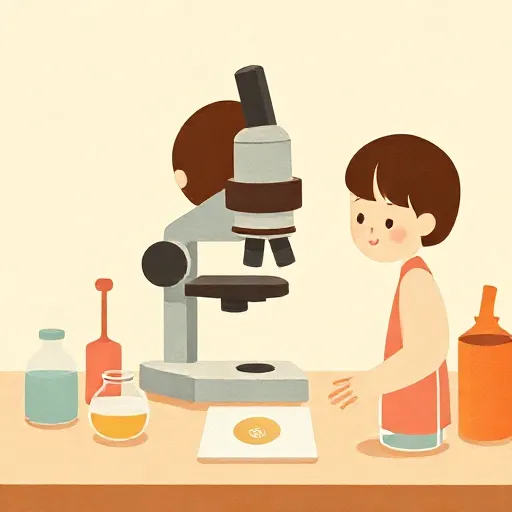
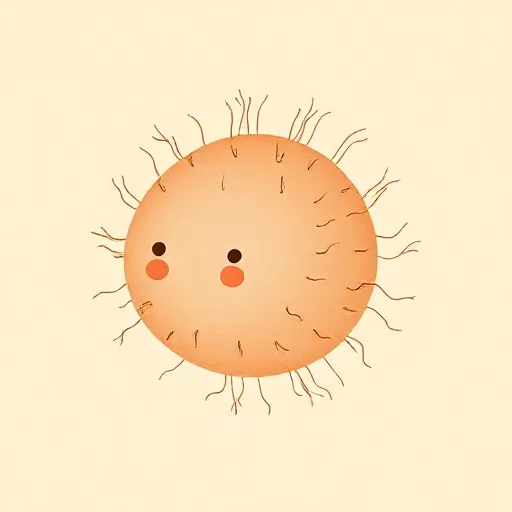
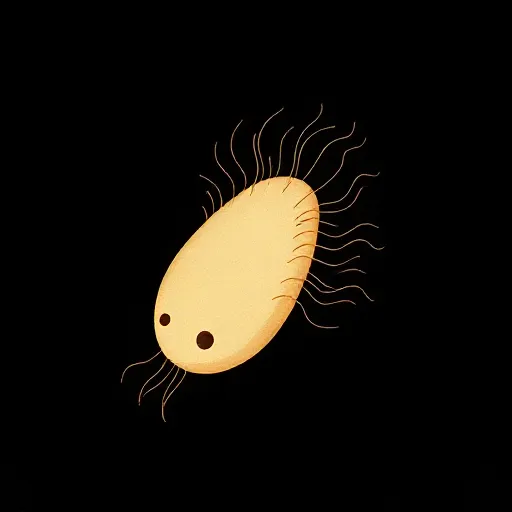
In a lab around 1950, a biologist named Tracy Sonneborn peered through a microscope at a Paramecium. This single-celled pond creature swims with rows of waving hairs, or cilia. Sonneborn carefully snipped a small strip of those hairs and then watched. He expected the cell’s offspring to repair the damage. They did not. The daughter cells kept the snipped arrangement, generation after generation. No change in their DNA had happened. Yet the altered shape was faithfully passed down.
That experiment shook a core idea. Since the discovery of DNA’s structure in 1953, most scientists had come to see genetic inheritance as the only way traits travel from parents to offspring. If you inherit your mother’s eyes or your father’s height, it’s because of the genes you received. Sonneborn’s Paramecium showed that heredity — reliable resemblance between generations — could happen without changing genes. Something else was being inherited.
Biologists use the word inheritance for the actual processes that produce heredity. Genetic inheritance uses DNA replication and cell division. But Sonneborn’s result, and later work on cellular “memory,” hinted at extra-genetic inheritance systems. When a cell’s machinery gets locked into a pattern, that pattern might survive through cell division, even without DNA changes. Researchers called this epigenetic inheritance — hereditary variation that does not involve changes to the DNA sequence. Over the following decades, more and more examples piled up, from chemical marks on chromosomes to traditions that animals pass along by imitation. The idea that inheritance is just genes began to crack.
Chemical Tags That Stick Around
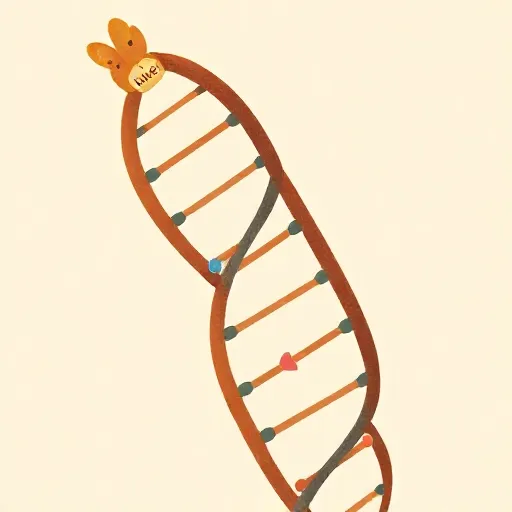
Think of DNA as a long instruction book. Every cell in your body holds an identical copy. Yet a skin cell looks and acts nothing like a nerve cell. Why? Because cells “read” different chapters. The parts they leave unread are marked with molecular sticky notes — tiny chemical tags that attach to the DNA or to the proteins (called histones) the DNA wraps around. These marks can lock a gene shut or open it for reading.
What Sonneborn saw in Paramecium was a version of cellular epigenetic inheritance. When a cell divides, it does not just copy the DNA sequence. It must also re-create the pattern of chemical tags so that the daughter cells know which genes to use. Some of these tags are kept going by self-sustaining loops — chemicals that maintain their own levels. Others are copied by dedicated enzymes. DNA methylation, for instance, adds a methyl group to DNA, and this mark can be duplicated when the cell splits.
Importantly, a few epigenetic marks can even jump from parent to offspring, a phenomenon called transgenerational epigenetic inheritance. In lab mice, a mother’s diet can change the coat color of her pups by altering methylation patterns. Those pups can then pass the new coat color to their own young — no mutations needed. It is not just a lab quirk. Plants regularly carry epigenetic changes across many generations. For evolution, this means that a sudden environmental shift, like a drought, might trigger a stress-tolerant pattern that gets inherited, giving the species a head start without waiting for a lucky gene mutation.
Still, epigenetic inheritance is often limited. Most marks are erased in the early embryo, resetting the cell’s programming. And while some inherited epigenetic markers are known in humans, the overall picture is still debated. Yet the very existence of these systems challenges the simple story where genes are the sole carriers of hereditary information.
Learning Without Lessons: Behavioral Inheritance
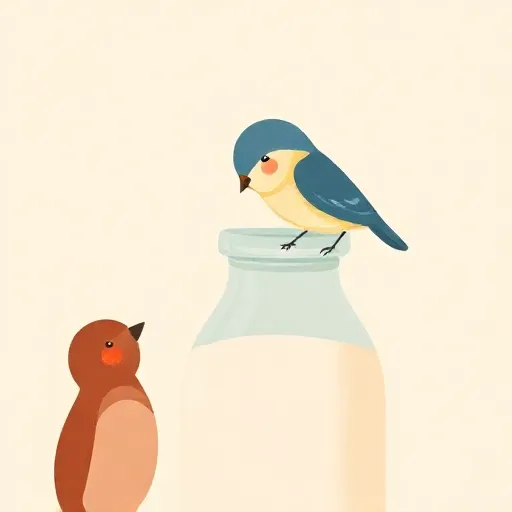
A bird does not pass down a milk-opening trick in its genes. Yet in the 1920s, blue tits and great tits across the UK suddenly started pecking open the foil caps of milk bottles left on doorsteps. The behavior spread not through DNA but through social learning. Young birds saw others doing it and learned the trick, even though they did not imitate every movement exactly. This pattern — where behavior is transmitted from parent to offspring or between neighbors — is called behavioral inheritance.
Behavioral inheritance takes several forms. Sometimes a mother passes a preference directly through her body. The food she eats during pregnancy sends chemical signals to her developing baby’s brain, shaping its tastes later. Other times, animals learn by being in the same environment as an experienced adult. They figure out the behavior on their own because the older animal has changed the setting, like digging a burrow the young can later use. The most powerful form is imitation, where an animal copies a specific action it sees. Imitation allows a precise pattern to spread horizontally — not just from parent to offspring (vertical transmission) but to brothers, cousins, and unrelated neighbors (horizontal transmission).
An important twist: behaviors are always expressed. You cannot carry a hidden, latent behavior the way a gene can hide a recessive trait. Also, an animal often modifies a learned trick, improving or adapting it. That means behavioral inheritance is not a blind copying system. It is full of filtering and meaning-making.
For biologists, this matters because behavior can alter the environment an animal lives in and therefore change the pressures of natural selection. A troop of monkeys that learns to wash sweet potatoes in the sea starts living differently, exposing themselves to new food sources and predators. Over time, these new habits may even favor certain genetic mutations. That creates a feedback loop that blurs the line between “nature” and “nurture.”
The Language Code: Humans’ Special Inheritance
Humans take behavioral inheritance to an entirely new level. We alone have symbolic inheritance, which means we transmit information through words, writing, and other symbols. Language is not just a collection of sounds. It is a code with nearly unlimited power. You can describe things you have never seen, talk about the past, plan the future, and even pass along knowledge about how to pass along knowledge. Two contemporary biologists, Eva Jablonka and Marion Lamb, call this the symbolic inheritance system (SIS). They are the main architects of the view that multiple inheritance systems shape evolution.
The SIS shares some features with the genetic system. Both use encoded information. Genes use nucleotide triplets to specify amino acids. Language uses words and grammar to specify meanings. Both are modular — you can change one part (a word, a sentence) without rewriting the entire message. And both can store and transmit latent, unexpressed information. An unread book or an unused saying can lie dormant for generations. Yet the symbolic system is utterly different in one crucial way: when you learn a story, you reconstruct it in your mind, filtering it through your own background, not just copying it. Cultural change is not a competition of blind memes. It is a story re-told.
That matters for how we think about human evolution. Some philosophers have proposed that cultural bits, or “memes,” spread like viruses, with faithful copying and differential success. Jablonka and Lamb argue that this picture misses the creative, meaning-driven way people transmit culture. A song survives not because it makes the most copies but because people find it beautiful, alter it, and pass it on in a social context. The symbolic system shapes the niche we live in, and in turn our niche shapes the genes that spread. For example, communities that kept dairy cattle for centuries often carry a genetic mutation that lets adults digest milk — a classic case of gene-culture coevolution.
Evolution in Four Dimensions
Jablonka and Lamb’s big idea is this: biological evolution runs on four inheritance systems — genetic, epigenetic, behavioral, and symbolic. They are not just curious extras. Each can carry hereditary variation. Each can be acted upon by natural selection. And each interacts with the others. Their book, Evolution in Four Dimensions, sums up this vision.
Think about the interaction. Epigenetic marks can reveal or hide stretches of DNA, affecting which genes get exposed to mutation. A new behavior, like using a stick to dig for grubs, can create a new environmental niche and select for stronger hands. Symbolic knowledge — such as a farming technique — can spread horizontally across a whole generation within years, not centuries. And because humans can plan and teach, we deliberately construct environments that protect certain genetic variations, a phenomenon called niche construction. The feedbacks are so tight that some thinkers claim genes are often followers rather than leaders in evolution, locking in changes that development first explored.
Critics argue that many non-genetic forms fizzle out over many generations and cannot support the kind of unlimited, cumulative evolution that genes do. Epigenetic marks, for instance, are often reset early in development. Yet defenders point out that even short-lived inheritance can buy time for genetic mutations to catch up — a process called genetic assimilation. More radically, they suggest that cells and organisms possess tools that respond to stress, producing directed changes that challenge the classic picture of random mutation.
Why does any of this matter for you? Because it reshapes the old story about life as a passive lottery. Your great-grandmother’s diet, the songs you learn, and even the choices you make today might, in tiny ways, echo down your biological lineage. Evolution is more than a ruthless weeding-out of chance mutations. It is a dance between copying and construction, between fixed codes and living meaning. The debate over which inheritance systems count, and how much they matter, is very much alive — and it keeps pushing biology to look beyond the gene.
Think about it
- If a mother’s diet during pregnancy can influence her child’s epigenetic marks, and those marks may affect grandchildren, does that mean we are responsible for the health of generations we will never meet? How far does that responsibility go?
- A bird learns a new song from a neighbor instead of its parents. Could we call that neighbor a “parent” in some evolutionary sense? What would that mean for how we define family?
- Imagine a future where scientists can safely edit epigenetic marks in human embryos. Should they use this power to give children a better chance at a healthy life? What could go wrong?