Your Genes Don’t Tell the Whole Story: The Genotype-Phenotype Puzzle
The Bean Plants That Changed Everything
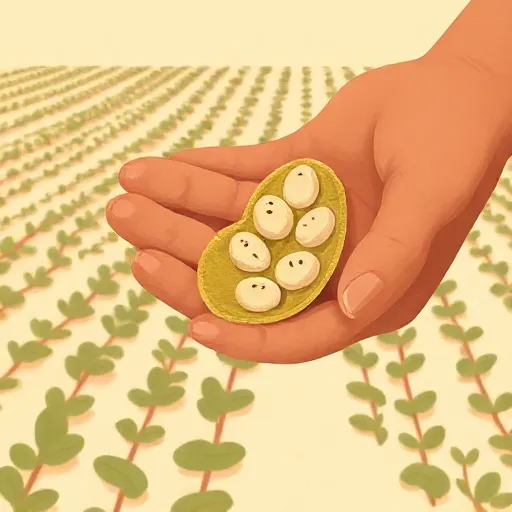
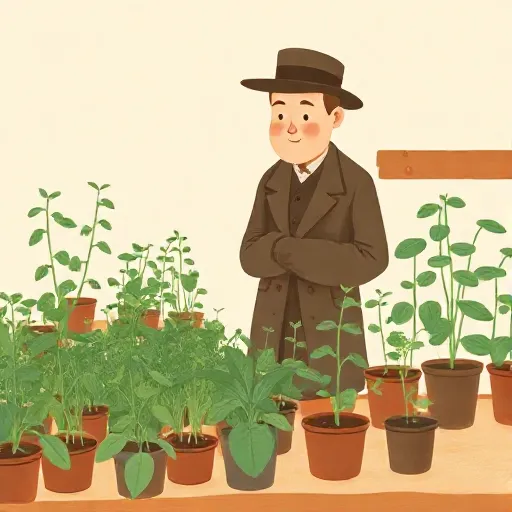
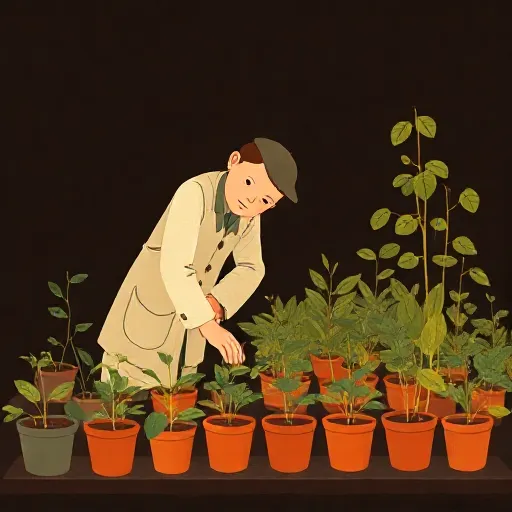
On a bench in a bright greenhouse, hundreds of bean plants sat in neat pots. Some grew tall and sturdy; others stayed short and spindly. The year was around 1911, and a Danish scientist named Wilhelm Johannsen was about to ask a question that still echoes through biology today: How do seeds pass on traits like size and shape, yet still produce so much variety?
Johannsen wanted to turn heredity into an exact science—something you could measure and repeat, not just describe. He started by creating inbred lines of beans. That meant letting plants self-pollinate for many generations until each line was genetically almost identical. Then he planted seeds from the same line and watched. Even within a line, individual plants still varied. Some grew taller, some smaller, depending on tiny differences in soil, water, or light.
But here came the surprise. If he picked the tallest plant in a line and bred from it, its offspring were no taller on average than the rest of the line. The hidden “something” inside the seeds that set the possible range of heights had not changed. Johannsen called that stable hidden part the genotype. The visible trait—the actual height of a plant right in front of you—he called the phenotype. The whole range of phenotypes a genotype could produce under different conditions he named its norm of reaction.
Johannsen’s big idea: selection can sort different genotypes, but it can’t reshape a genotype itself. Heredity wasn’t a blending of parental traits or a transmission of what parents acquired during life. It was about stable factors passed down, shielded from most of the messiness of daily living. The genotype was like a musical score; the phenotype was the performance, which changed with the orchestra and the hall.
Mendel’s Peas and the Rise of the Gene
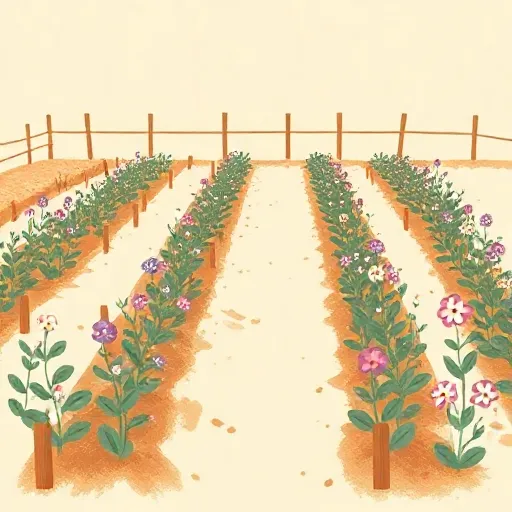
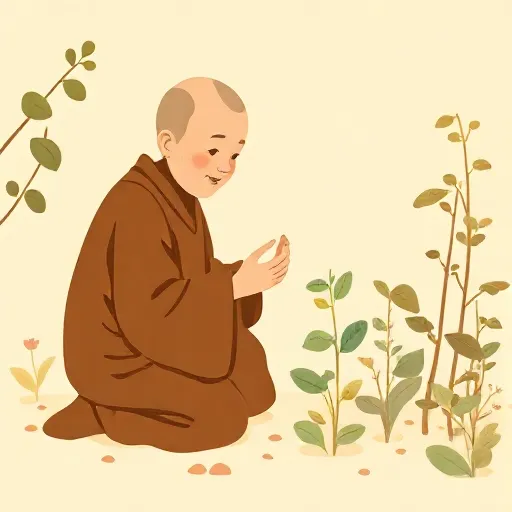
Johannsen wasn’t the first to think about hidden factors. Decades earlier, a monk named Gregor Mendel had crossed pea plants that differed in simple ways—purple flowers versus white, smooth peas versus wrinkly. He kept conditions as uniform as possible and created inbred lines. When he crossed two lines, the first generation all showed one form of the trait. But when those hybrids self-pollinated, the hidden form reappeared in about one quarter of the next generation.
Mendel concluded that each plant carried a pair of “factors” for every trait, one from each parent. The factors separated when making pollen or eggs, and only one of each pair was passed on. Sometimes one factor masked the other, a pattern he called dominance. Johannsen later coined the word gene for these factors. A plant with two identical copies for a trait was a homozygote; one with two different copies was a heterozygote.
This was a powerful tool. By controlling crosses and environment, scientists could use a plant’s phenotype—what it looked like—to infer its hidden genotype. For example, a purple-flowered hybrid looked just like a pure purple-flowered plant, but by breeding it and seeing white offspring, you knew it was a heterozygote. The method made heredity visible, in a way, and promised that every trait could be linked to its own pair of genes. Johannsen’s careful classes had become experimentally useful.
But even then, Johannsen worried. He insisted that no gene acted alone; the whole genotype worked together. He advised that “the talk of ‘genes for any particular character’ ought to be omitted”. Yet the Mendelian program took off, mapping genes along chromosomes as if they were separate beads on a string. The particulate view was just too productive to resist.
When One Gene Doesn’t Equal One Trait
Real life, however, wasn’t as tidy as Mendel’s peas. Soon researchers found complications that made the genotype-phenotype link much messier.
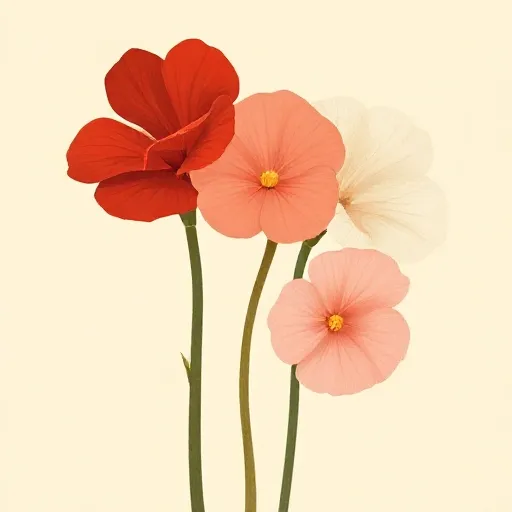
In snapdragons, a gene for white flowers could mask the effects of other genes entirely—a phenomenon called epistasis. A plant that had the white-making genotype would be white no matter what other color genes it carried. The same genotype could also produce a range of shades, a phenomenon called expressivity. And not every individual with a genotype showed the expected trait at all; that was called penetrance. Even dominance could be incomplete: crossing red and white snapdragons gave pink flowers.
Worst of all, many traits—like height, weight, or crop yield—don’t split into neat categories. They vary continuously, and you can’t point to a single gene that makes the difference. Scientists dealt with this by inventing quantitative genetics. They built mathematical models that imagined hundreds of unobserved genes, each with tiny effects, adding up to produce the trait. Those models allowed breeders to predict average changes under selection, but the genes themselves remained theoretical. In this world, “genotype” became a statistical abstraction—not a concrete stretch of DNA. And the heritability number you might hear about doesn’t tell you how genetic a trait is; it just describes how much variation in a particular group, under particular conditions, is associated with relatedness.
The Big Problem: What Did We Leave Out?
Here lies a deep philosophical puzzle. Johannsen’s original distinction—genotype versus phenotype—only worked because he controlled almost everything. He used inbred lines, identical soil, and protected greenhouses. He ignored how organisms develop over time and how they interact with their surroundings. In that controlled bubble, you could draw a clean arrow from hidden factors to visible traits.
But step outside the greenhouse, and the bubble bursts. In nature, organisms aren’t planted in identical pots. They grow in changing environments, build nests, modify their habitats, and even pass non-genetic resources to their young—like reptiles choosing egg-laying spots that keep the temperature right. The genotype is not a blueprint; it’s one player in a whole developmental system. Cells turn genes on and off, chemicals from food or stress can silence genes for a lifetime, and these changes sometimes even last into the next generation. This is the world of epigenetics and niche construction.
So the genotype-phenotype distinction is an abstraction—a useful one, born from careful control. But to understand heredity in the wild, we’d need to “reintegrate” everything that was pushed aside: development, environment, and the living whole. That’s a project science is still wrestling with. The clean experimental distinction doesn’t automatically apply to the messy, natural world.
Why This Matters: The DNA Trap in Everyday Life
Have you ever heard someone say, “It’s in my DNA to be messy,” or “She has a genetic talent for math”? Those phrases lean on a simple picture of genes directly causing traits. But as we’ve seen, the real relationship between genotypes and phenotypes is tangled.
The very word “genetic” shifts meaning depending on who uses it. In one study, “genetic” might refer to statistical patterns of family resemblance—useful for plant breeders, but not about actual DNA. In another, it might mean a particular gene variant that influences a disease. Because these meanings blur together, it’s easy to slip from “this trait runs in families” to “this trait is fixed by your genes.” The nature-nurture debate gets foggy fast.
Johannsen’s greenhouse gave us a powerful tool, but it also taught us that a tool works only within its limits. The clean separation of genotype and phenotype was an achievement of experimental control, not a full description of life. So the next time you hear a claim about your “genetic destiny,” remember those bean plants—each growing a little differently, each shaped by more than its hidden factors. The puzzle of who you are is still wide open.
Think about it
- If a plant breeder can make a line of beans that always grows to the same height under the same conditions, does that prove height is “in the genes”? What if you change the soil?
- Your friend says, “I can’t help being messy—it’s genetic!” Based on what you read, how could you respond without being mean?
- Suppose a future doctor could scan your DNA and predict your future health perfectly. Would you want to know? Why or why not?