When 'Lovely Weather' Really Means a Blizzard Is Raging
What Did Barb Really Mean?

Alan asks his friend Barb, “Are you going to Paul’s party?” Barb answers, “I have to work.” Alan understands right away that Barb is not going. But Barb never actually said that. She said something about work. The sentence “I have to work” doesn’t mean “I’m not going to the party.” Yet in that moment, Alan knows exactly what Barb means.
The philosopher H. P. Grice (1913–1988) was the first to study cases like this systematically. He gave them a name: implicature. When a speaker means something different from what the sentence they used says, they are implicating something. What they mean is the implicature. So Barb implicated that she wasn’t going; the implicature was “I’m not going to Paul’s party.”
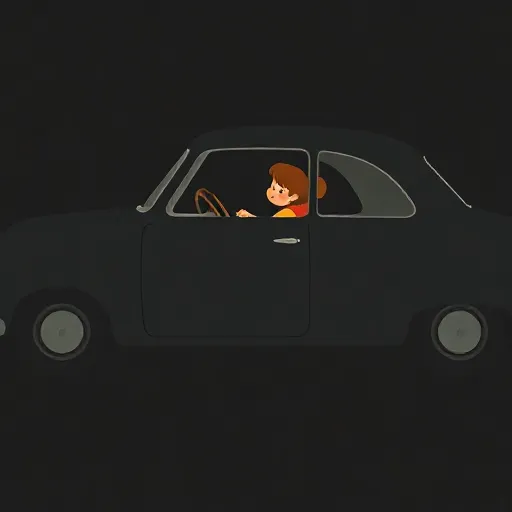
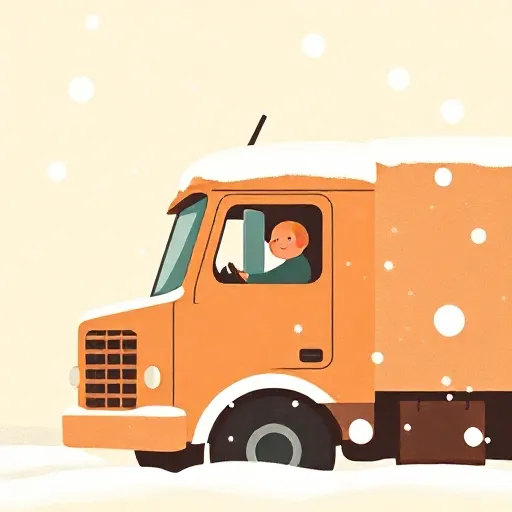
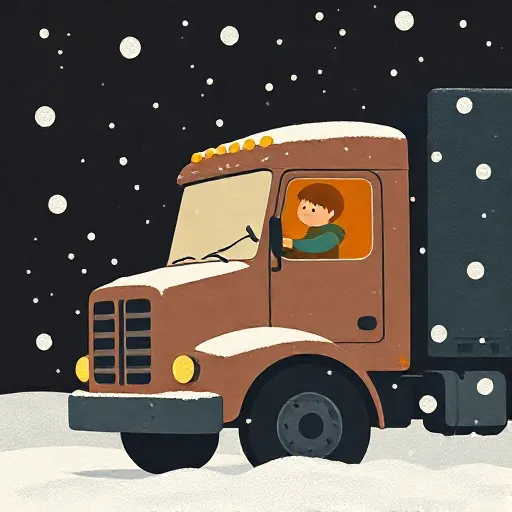
Another example: Don is a truck driver trying to cross a mountain pass during a blizzard. Carla, a dispatcher in sunny Denver, asks over the radio, “How’s the weather?” Don replies, “The weather’s lovely.” Don said the weather is lovely, but he meant exactly the opposite. He implicated that the weather is terrible. This is irony, and it is a kind of implicature.
In both cases, the speaker did something indirect. They said one thing, but they meant something else. Grice called what a speaker says the locutionary act — using words to state something. Barb said she has to work. But what she meant includes the implicature. That difference matters: if Barb knew she didn’t really have to work, she might be telling a lie about that, but if she knew she was going to the party, she might be misleading Alan without actually lying. In law, witnesses can’t avoid perjury by only implicating a falsehood instead of saying it. A jury will still know they meant it.
Two Kinds of Implied Meanings

Grice noticed that not all implicatures work the same way. Barb’s and Don’s implicatures depend on the conversation — what was asked, the situation, the blizzard outside. They are conversational implicatures. But some implicatures are baked into the words themselves. Grice called these conventional implicatures (we’ll call them semantic implicatures to avoid confusion with ordinary customs).
Take the sentence “The queen is English and therefore brave.” By saying that, a speaker implicates that being brave follows from being English. They didn’t say it, but the word “therefore” forces that extra thought. If someone said “The queen is English and brave,” that implicature wouldn’t appear. The meaning of “therefore” itself triggers it. Other words like “but,” “even,” “still,” and “know” also create semantic implicatures. For example, “Jack knows that 51 is prime” implies that 51 is prime (even though it’s false — 51 is 3 × 17). The speaker didn’t assert “51 is prime,” they just implied it.
Conversational implicatures are different. They aren’t tied to special words. They arise because of how we use sentences in a particular conversation. Consider the sentence “Some athletes smoke.” In many situations, a speaker who says this implicates that not all athletes smoke. That’s a conversational implicature — the sentence doesn’t mean that on its own. You could say “Some athletes smoke, in fact all do” without sounding like you’ve contradicted yourself, though it would be a strange thing to do. But if you say “The queen is English and therefore brave, but being brave does not follow from being English,” the sentence sounds broken. The semantic implicature can’t be cancelled without making the utterance weird.
Grice also pointed out that conversational implicatures are calculable: a hearer can figure them out from clues. And they are cancellable: a speaker can take them back. Barb could have added “But I might get off work early,” and the implicature would vanish. Semantic implicatures can’t be undone so easily.
How Do We Figure Out What Someone Really Means?
If implicatures aren’t said aloud, how do we catch them so fast? Grice proposed that we all follow a general Cooperative Principle: when you talk with someone, you try to contribute what is needed for the purpose of the conversation. He broke that down into four maxims (rules of thumb):
- Maxim of Quality: Try to make your contribution true. Don’t say what you believe is false or lack evidence for.
- Maxim of Quantity: Give as much information as is needed, but not more.
- Maxim of Relation: Be relevant.
- Maxim of Manner: Be clear — avoid obscurity, ambiguity. Be brief and orderly.
Grice thought these aren’t arbitrary rules; they’re like rational principles for any cooperative task. If you’re helping someone build a house, you’ll hand them a hammer, not a tennis racket (relation), and straight nails, not bent ones (quality).
Now imagine Alan hears Barb say “I have to work.” Alan assumes Barb is following the Cooperative Principle. Her answer must be relevant to his question. Since work and a party don’t go together, she must mean she can’t go. Alan works this out automatically. Grice called this the working-out schema: from what was said, the context, and the assumption that the speaker is being cooperative, the hearer infers the implicature.
For irony, like Don’s “Lovely weather,” Grice said the speaker so blatantly violates the Maxim of Quality (stating something obviously false) that the hearer has to search for another meaning — the opposite. The maxims thus generate conversational implicatures.
The Trouble with Grice’s Theory
Grice’s idea is elegant, but philosophers and linguists soon found problems. One is overgeneration. The same reasoning that predicts “Some athletes smoke” implicates “Not all smoke” would also seem to predict it implicates “Not several athletes smoke,” or “I don’t know whether all smoke,” or countless other things — but we don’t actually infer those. Why only “not all”? The Gricean method seems to pick out the right implicature only if we already know what it is.
Another problem is determinacy. Grice assumed that a speaker must mean a particular thing to stay cooperative. But often there are many ways to be cooperative. If Don says “Lovely weather,” he could be speaking literally (perhaps he loves blizzards) or using irony, metaphor, or hyperbole. The Cooperative Principle alone doesn’t narrow it down to one. Irony in particular often expresses a mocking attitude, not just the opposite belief, making it even harder to pin down using Grice’s simple maxims.
Real conversations aren’t always fully cooperative, either. We talk to joke, to show politeness, to mislead without lying. Grice’s maxims often clash with each other (being clear vs. being polite) and with other principles like Style (be interesting, not dull) and Politeness (be tactful). So a theory based purely on cooperation struggles with much of everyday speech.
Some later researchers, like cognitive scientists Dan Sperber and Deirdre Wilson, developed Relevance Theory. They replace all the maxims with a single principle: speakers try to be as relevant as possible — meaning their utterance has the best balance of positive effects in the mind and processing effort. But critics argue that “relevance” is too vague to predict specific implicatures, and it faces similar overgeneration problems.
Philosopher Wayne Davis offered a different view: conversational implicatures aren’t generated by the Cooperative Principle; they’re conventions — customs of language use we learn the way we learn grammar. The fact that we use “Some athletes smoke” to mean “not all” is a widespread practice, not a logical deduction from a maxim. Like idioms, these conventions are passed down and can differ across languages.
Why This Matters: Lying, Politeness, and the Law
Understanding implicature isn’t just a philosopher’s hobby. It explains huge parts of your daily life. When your friend says “I have to study” after being invited somewhere, you know they’re declining — and you probably don’t even think about how. Implicatures let us be polite without spelling everything out. “Dinner will be at six” usually means around six, not exactly on the dot. That looseness keeps conversations smooth.
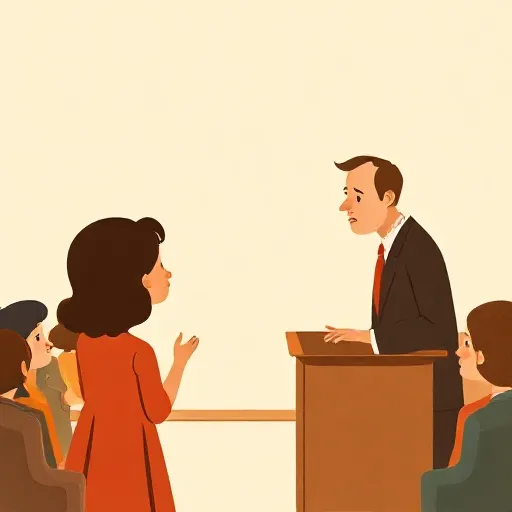
Implicatures also let people mislead without technically lying. If a kid says “I didn’t eat the last cookie” but really means “I didn’t eat the last cookie tonight — I ate it yesterday,” they’re implicating a falsehood. In a courtroom, a witness can’t hide behind such tricks. Judges and juries interpret implicatures as part of testimony. So grasping these hidden messages is essential for fairness.
And once you start noticing implicatures, you see them everywhere: in sarcasm, in understatement (“It’s just a scratch” for a giant dent), in metaphors, and in the little words like “but” and “even.” Grice gave us the toolkit to see language as more than a code — it’s a living, flexible practice where what we mean always goes beyond what we literally say. That’s why a storm can be “lovely” and still make perfect sense.
Think about it
- If a friend always uses irony, could you ever be sure they mean the opposite of what they say? What if they sometimes mean it literally?
- Is it ever wrong to use an implicature instead of saying something directly — for example, to avoid hurting someone’s feelings? When might it be better to be fully honest?
- If you’re texting and can’t use tone of voice, how do you signal an implicature? Can you still be polite, or does more get misunderstood?