

Does Saying "You Ought to Do It" Really Mean "Do It"?
A Moral Decision in the Jungle

It is 1942. Richard Mervyn Hare (1919–2002), a British prisoner of war, is brought before the Japanese commander of a jungle camp. Sick prisoners are being forced to work on the railway. Hare, acting as interpreter, tries to persuade the commander not to send them out. He does not appeal to mysterious moral intuitions. Instead, he tries to get the commander to see the real, concrete suffering that his order will cause—to understand what he is actually choosing. In the end, the choice is the commander’s alone.
This moment captures something that Hare believed for his whole life: moral thinking is not about describing facts hidden somewhere in the world. It is about prescribing—telling ourselves and others what to do. And while we each must choose for ourselves, logic can still guide those choices.
After the war Hare returned to Oxford, studied ancient philosophy, and began building a radical new account of moral language. He had seen how easily people forget what the word “ought” means, and he thought that getting clear about it was the most urgent job in philosophy.
Moral Words Are Commands in Disguise

When you say “You ought to return the library book,” what are you really doing? Are you describing a fact—something true or false about the world? Hare thought that was a mistake. He took sides in an old debate: the is–ought gap. Most philosophers agree you cannot logically jump from a pure “is” (a fact about the world) to an “ought” (a moral conclusion). Hare went further. He said that moral statements do not describe facts at all—or at least their main job is not describing. Their main job is prescribing.
A statement is prescriptive if it entails, together with some factual claims, an imperative—a command. For instance, “You ought to return that book” implies “Return that book!” If you sincerely agree with the “ought” statement but do not intend to return the book, something has gone wrong. Hare called this the prescriptive meaning of moral words.
At the same time, moral words can have descriptive meaning. In a community where everyone agrees that returning what you borrow is honest, “You ought to return it” also carries the information that returning it matches that standard. But for Hare, the command part comes first.
This meant he agreed with the great Scottish philosopher David Hume that you can never derive an “ought” from an “is.” And it led him to a surprising conclusion: reason helps us choose, but in the end every moral agent chooses for themselves.
The Golden Rule: Putting Yourself in Others’ Shoes

If moral language is really about prescribing, can we still argue rationally with someone who disagrees? Hare believed we can. His argument begins with a second key feature of moral words: universalizability. When I say “You ought to repay the money you borrowed,” I am not just prescribing for you, here and now. I am committing myself to a universal rule that anyone in a similar situation ought to do the same.
Hare used this idea to build a Golden Rule argument. Imagine a creditor named B who owes money to A, and who also knows that a debtor C owes him money. B decides to put A in prison to recover his debt. Can B say “I ought to put A in prison”? To say that, B must accept a universal principle like “Anyone who is owed money ought to imprison the debtor.” But then B must also be willing to accept that C should imprison him, B. That frustrates B’s own interests, so B cannot honestly prescribe the universal rule. The logic of universalizability pushes B to consider other people’s preferences as if they were his own.
But what about the fanatic? A fanatic might say, “I believe so strongly that debtors deserve punishment that I’d let myself be imprisoned if I were a debtor.” Hare first admitted the fanatic was possible. Later he tightened the argument. He asked us to consider all preferences—what people actually want and how strongly they want it. The fanatic’s desire to punish would have to be weighed against the suffering of the debtor. And a real fanatic would have to be sure he would honestly accept the same suffering if he were in the other’s shoes. That, Hare argued, is possible but wildly unlikely. Most of us, when we prescribe universally, end up committed to a form of utilitarianism: the right action is the one that most satisfies the preferences of everyone affected, counted equally.
Thinking Like an Archangel, Acting Like a Prole
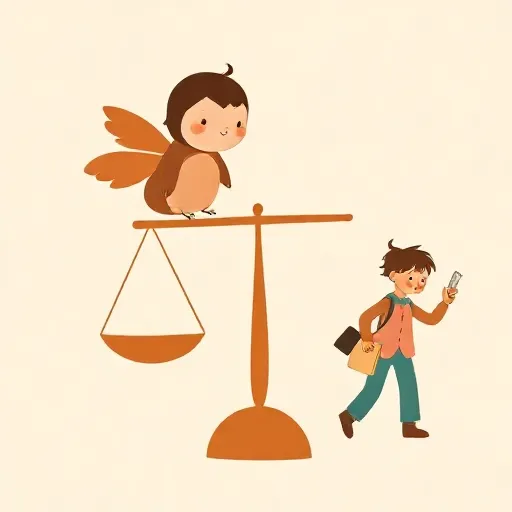
Hare knew that real life is messy. We cannot run a Golden Rule calculation every time we decide whether to share our lunch or tell the truth. So he distinguished two levels of moral thinking.
The first is critical thinking. This is what an ideal thinker—an “archangel” with unlimited time, perfect information, and complete impartiality—would do. The archangel uses Golden Rule arguments to decide which principles actually maximise preference satisfaction overall.
The second level is intuitive thinking. This is how ordinary people—“proles”—actually get through the day. We rely on simple rules learned from family, school, and experience: don’t lie, keep promises, don’t cheat. These rules have what Hare called acceptance utility: having the rule in your head generally leads to better outcomes, even if sometimes breaking it would technically produce more good. For instance, a sheriff might be tempted to execute one innocent person to prevent a riot. But a firm rule against judicial murder has very high acceptance utility, because officials who start making exceptions will often rationalise terrible things. So the archangel would actually recommend that proles hold such a rule strictly.
Crucially, we are not two separate species. Each of us switches between levels. When you have time to reflect, you think critically. When you must act fast, you fall back on sound intuitive principles. Hare thought this explained why good moral thinking often feels torn between strict principles and the pull of particular circumstances.
Why This Matters When You Have to Choose

Hare’s philosophy can sound abstract. But it lands squarely in the middle of your everyday life. Every time you wonder whether to tell a friend a hard truth, whether to own up to a mistake, or what you owe to someone you dislike, you are stepping into the same game of universal prescription. You are asking, “What can I honestly prescribe for everyone?”
Hare never said that moral language gives us a machine that spits out right answers. He insisted that we always choose freely—no fact can force an “ought” on us. But he also believed that the logic of moral words can help us see when we are making an exception for ourselves that we would never grant to someone else. His method pushes you to ask: “If I were in their place, and felt what they feel, would I still endorse this rule?”
Philosophers still argue fiercely about whether Hare’s prescriptive logic really works, whether the fanatic is truly impossible, and whether moral statements might after all describe something real. Many find his account too tidy. Others think it remains the most honest description of what we are doing when we say “ought.” The debate is wide open. Hare’s great gift was to show that moral argument is not just a clash of feelings but a discipline with its own kind of reasoning—and that you can learn to do it better.
Think about it
- If a classmate thinks it is fine to gossip about someone who is absent, how might Hare’s Golden Rule challenge them?
- Can you imagine a situation where the best thing to do would be to break a simple moral rule you were taught—and your own critical thinking would tell you to break it?
- Do you think there really could be a fanatic who honestly prefers their own suffering to giving up an ideal, or does that sound like someone just not thinking straight?