What Do You Really Mean? The Hidden Rules of Conversation
The Question That Wasn’t a Question

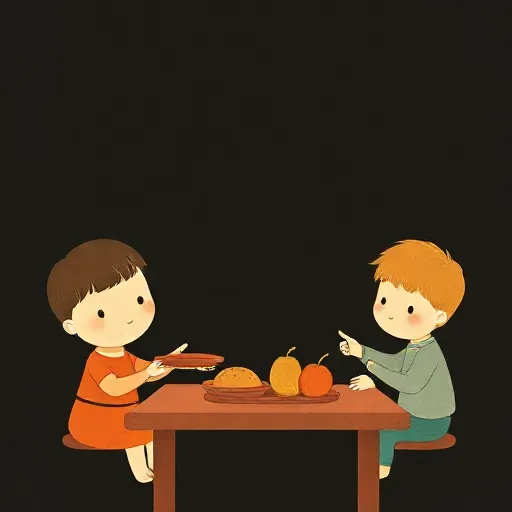
It is a normal afternoon. You ask your friend, “Could you close the door?” Your friend doesn’t just say, “Yes.” Instead, she stands up, walks over, and shuts the door. How did a question turn into an action? And why didn’t your friend simply answer the question?
The philosopher Paul Grice (1913–1988) spent his career figuring out the answer. He noticed that when we talk, we often communicate much more than our words literally say. He called this extra meaning a conversational implicature. An implicature is something a hearer works out from the way something was said, not from the dictionary meaning of the words.
Your friend understood that your question was really a polite request. Saying “Yes” and doing nothing would have been uncooperative. The words themselves did not mean “Please close the door,” but in that situation, your intention was clear. Grice wanted to explain how that works.
The Secret Rulebook of Every Conversation
Grice proposed that all conversations are cooperative. He formulated the Cooperative Principle: Make your conversational contribution such as is required, at the stage at which it occurs, by the accepted purpose of the talk exchange. In simpler terms, when you talk, you assume the other person is trying to help the conversation achieve its goal. If you ask about the door, the goal is to get it closed, not just to check your own hearing.
To see how cooperation works, Grice broke it down into four categories of maxims (guidelines). The maxim of quantity says give as much information as needed, but not more. The maxim of quality says try to be truthful. The maxim of relation says be relevant. And the maxim of manner says be clear and orderly.
These maxims aren’t rules someone taught you in school. They are expectations you carry into every chat. When someone seems to break a maxim, your mind automatically searches for an extra meaning that would make the remark cooperative again. That search is what generates an implicature.
The Gas Station Test: How to Imply Something Without Saying It

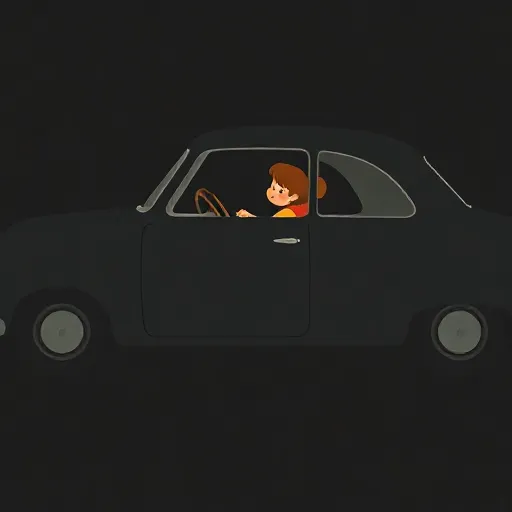
Here is one of Grice’s most famous examples. A driver says she is low on gas. Her passenger replies that there is a station around the corner on Main Street.
Notice that the passenger did not say the station is open. The sentence “There is a station around the corner” does not logically imply that it is open. Yet the driver immediately understands that the passenger meant the station is open and has gas. How?
The driver reasons: the passenger’s remark is supposed to be relevant and helpful (maxim of relation). If the station were closed, pointing it out would be useless. The passenger also seems to be obeying the quality maxim — only saying what she has good evidence for. So the driver concludes that the passenger believes the station is open and wants her to know that. The implicature is born.
Grice pointed out that implicatures can be cancelled. If the passenger adds, “but I don’t know whether it’s open,” the extra meaning disappears. There is no contradiction because the literal words never claimed the station was open. This is different from a logical implication, which cannot be cancelled without making your statement false. Cancellability became a key test for distinguishing what is said from what is merely implied.
What If? The Case of George and the Late Arrival
Philosophers have long puzzled over sentences like this: “If George is driving, he will be late.” According to the simplest logical analysis — the material conditional — the sentence is true whenever George is not driving, or whenever he is late. But many people feel it would be wrong to say “If George is driving, he will be late” when you already know for certain that George is not driving.
Grice offered a clever solution. He said the sentence isn’t literally false when George isn’t driving. It is just conversationally inappropriate to utter it then. Why? Because the maxim of quantity says you should be as informative as possible. If you know George is not driving, the shorter statement “George is not driving” is simpler and more informative. If you know he will be late regardless, just say “He will be late.” So the only time the conditional “If A then B” is appropriate is when you are unsure about A, but have good reason to think B will follow if A happens. The assertibility matches a kind of probability, not strict truth conditions.
This idea showed that many puzzles about language could be solved not by tweaking the meanings of words, but by understanding the unspoken rules of conversation.
When a Flash of Light Means Something

So far we have seen how Grice distinguished what words mean from what speakers imply. But he also wanted to explain what meaning itself is. His answer was radical: meaning comes down to what a speaker intends.
Imagine you are driving at night and another driver flashes her high beams. You think: “Why did she do that? She must intend me to believe my lights are off. If she has that intention, maybe my lights really are off. So I’d better check.” You have just reasoned your way to the speaker’s meaning.
Grice said that a speaker means something by an utterance when they have a special kind of intention, which he called an M-intention. The speaker intends (1) that the audience form a certain belief (or, in some cases, perform an action); (2) that the audience recognize intention (1); and (3) that this recognition be part of the audience’s reason for adopting the belief. In the headlight case, the flashing driver M-intends that you believe your lights are off, and you get there by recognizing her intention.
This pattern extends to everyday language. When someone says, “She brandished her clarinet like a tomahawk,” you understand instantly. But according to Grice, your mind relies on a shared procedure: English speakers have a standard procedure of using that sentence to M-intend that the audience believe the speaker believes she brandished her clarinet that way. You recognize the intention, and you form the belief. All of this happens so fast you do not notice any reasoning — yet Grice argued that this hidden structure is what gives words their meaning.
Why Grice Still Matters: From Chats to Chatbots

Grice’s ideas transformed how linguists, philosophers, and computer scientists think about communication. His distinction between literal meaning (semantics) and speaker meaning (pragmatics) is now a cornerstone of the study of language.
When you talk to a voice assistant — asking “What’s the weather?” or “Could you set a timer?” — the device doesn’t just parse your words. It must figure out your intention. Are you asking a question, making a request, or testing whether the microphone works? Engineers designing these systems draw, sometimes unknowingly, on Grice’s insight that understanding means grasping a speaker’s intentions.
The cooperative principle also helps us navigate everyday life. When a friend says “Nice haircut” in a flat tone, you might detect a sarcastic implicature that means the opposite. Being aware of these hidden rules can make you a better listener — and a more thoughtful speaker.
Grice gave us a picture of humans as rational, cooperative communicators. Even when we break the maxims, we often do so in ways that still count as cooperation: a metaphor flouts the quality maxim (“My lawyer is a shark”) to convey a truth more vividly; a diplomatic pause flouts quantity to avoid hurting feelings. Language, on this view, is not just a code for facts. It is a shared project of making ourselves understood.
Next time you ask someone to close a door and they just do it, you’ll know why. You are not exchanging coded messages — you are cooperating, inferring, and trusting that your partner in conversation wants to be understood. That is the secret logic Grice uncovered.
Think about it
- If a friend says “Nice haircut” in a flat tone, you might think they mean the opposite. Can you ever be completely sure what someone really means, or is interpreting always a bit of guesswork?
- Grice’s quality maxim says “Try to be truthful.” But people often tell small lies to avoid hurting someone’s feelings. Is it ever okay to break the rule of truthfulness to be kind?
- Imagine you are designing a robot that talks to people. What hidden rules would you program into it so conversations feel natural and cooperative?