Are You a Fortress or a City? Your Immune System Decides
The Scratch That Launched a Thousand Questions
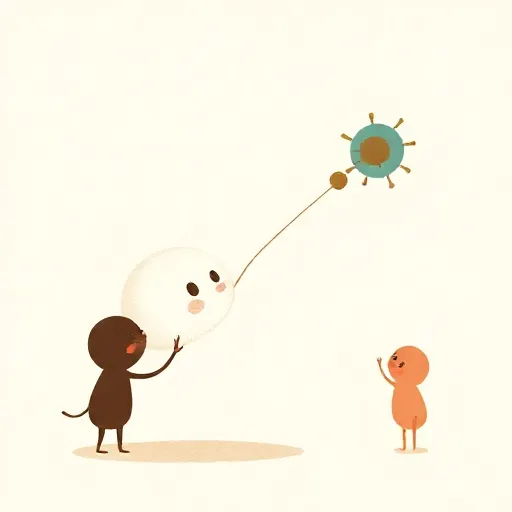
You fall off your bike and skin your knee. Within seconds, your body goes to work. White blood cells race to the scene, gobbling up bacteria and clearing away debris. But something subtler is happening too: your immune cells are not just attacking—they are asking a question. Is this dirt part of me? What about this piece of gravel? This new scab? Your body needs to know what counts as you and what does not, not just to fight germs but to survive.
For a long time, scientists pictured this as a fortress story. The immune system was a wall, and it shot anything that tried to climb over. That wall had a name: the immune self. But over the past few decades, immunologists have realized that your body is not a walled-off castle. It is more like a bustling, noisy city, full of citizens who do not all share your DNA. And the immune system? It is less a soldier and more a mayor, negotiating who gets a visa and who gets citizenship. This shift changes everything—not just how we understand medicine, but how we answer the deepest question: who exactly are you?
The Fortress: Burnet and the Self/Nonself Rule
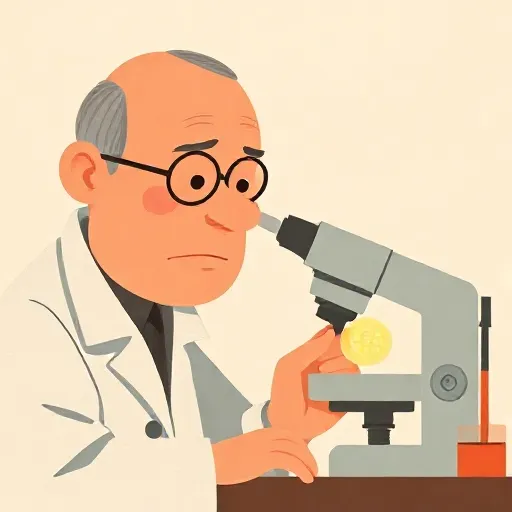
In the middle of the twentieth century, the Australian virologist Macfarlane Burnet (1899–1985) described the immune system with a simple, powerful idea. Every cell and molecule in your body has a chemical “shape.” Early in life, Burnet suggested, your immune system learns to recognize the shapes of your own body and marks them as self. Everything else—bacteria, viruses, splinters, even another person’s blood cells—is nonself. Once something is stamped “nonself,” your immune army destroys it.
This self/nonself model felt right. It explained why you fight off infections without attacking your own lungs or liver. It explained why organ transplants are rejected unless powerful drugs calm the immune response: the new heart or kidney is chemically different, so it is treated as an invader. Burnet compared this lifelong memory of self to a solid, unshakable psychological ego—a fixed you that stays the same from childhood to old age. Under this model, identity was a permanent fingerprint, and immunity was the guard dog that protected it.
The idea was so successful that it became the backbone of immunology for decades. Vaccines, allergy treatments, and autoimmune disease research all leaned on the self/nonself picture. It made the living world feel tidy: organisms were whole, separate, and constantly at war with everything they were not.
The Cracks Appear: Pregnancy, Gut Bugs, and Friendly Foreigners
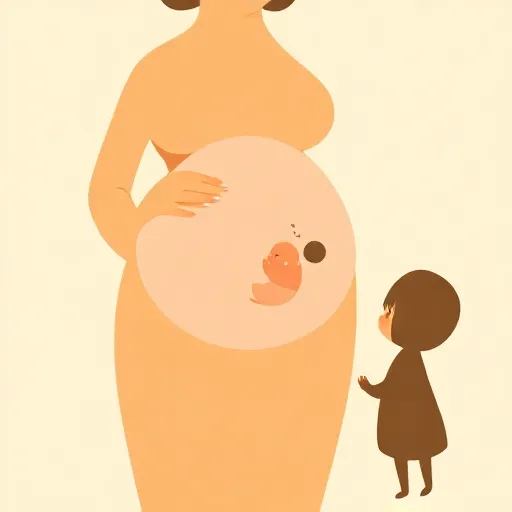
But biology rarely stays tidy. A few observations made the fortress picture wobble badly.
First, pregnancy. A growing baby has half its genes from the father—chemically, it is a foreign body. If the immune system truly attacked all nonself, every pregnancy would end in rejection. Yet the mother’s immune cells do not storm the fetus. Instead, they actively protect it, helping it implant in the womb and grow. Inflammation, ordinarily a weapon, becomes a scaffold for new life. The immune system seems to decide that this “foreigner” belongs.
Second, trillions of bacteria, fungi, and viruses live inside you right now—on your skin, in your gut, between your teeth. You depend on this microbiota to digest food, make vitamins, and even influence your mood. If your immune system truly hated anything that was not “you,” it would wage constant war against these microbial tenants. Instead, your immune cells chat with them, hold them at a comfortable distance, and often welcome them into the body’s economy. This is not passive tolerance; it is active cooperation.
These puzzles revealed that the immune system does not simply scream “foreign” and attack. It runs a much more flexible operation. It can judge whether a change is sudden and alarming, or slow and steady—like the difference between a stranger smashing a window and a new neighbor gradually moving in. That realization pushed scientists toward a new metaphor.
From Fortress to Conversation: The Ecological View
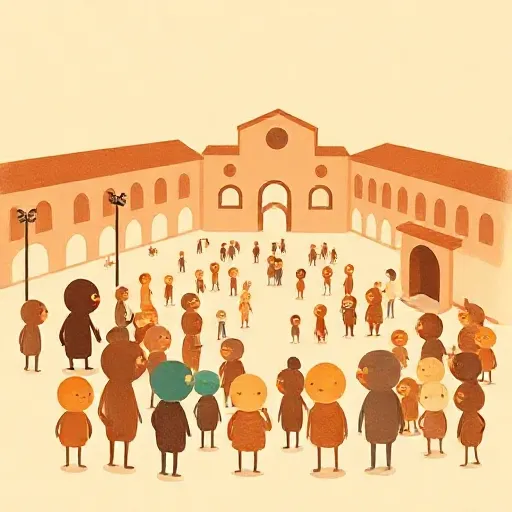
If a fortress was the wrong image, what about an ecosystem? Some immunologists now talk about the body as a holobiont—not one individual, but a coalition of many species living together. Your identity, on this view, is not a hard border. It is a conversation.
The Russian scientist Élie Metchnikoff (1845–1916), one of the founders of immunology, already suspected this a hundred years ago. He noticed that phagocytes—immune cells that eat invaders—also play a role in development and healing. They do not simply destroy; they remodel. A metamorphosing tadpole uses immune cells to absorb its own tail. A growing brain uses immune cells to prune unused connections. Metchnikoff argued that immunity was an agent of transformation, not just defense.
Today, this ecological perspective is gaining ground. Instead of a simple self/nonself toggle switch, your immune system appears to read patterns, speeds, and contexts. It reacts to sudden breaks in continuity: a blast of unfamiliar proteins from an infection, or a rapid increase in damaged cells after a wound. It ignores the low-level, constant hum of friendly microbes and routine housekeeping. Some philosophers of biology, such as Thomas Pradeu (born in the 20th century), describe this as a continuity model—the immune system maintains the stable biochemical flow of your life, and it only raises alarm when that flow is disrupted.
In this light, your biological identity is not a fixed essence. It is an ongoing process, a “coordinated group of changes” rather than a still photograph. A liver transplant, a new strain of gut bacteria, a pregnancy—each rewrites your body’s chemical community, and the immune system manages these rewritings. The boundary between you and not you becomes fluid, depending on time, place, and the needs of the moment.
Why It Matters: You Are Always Becoming
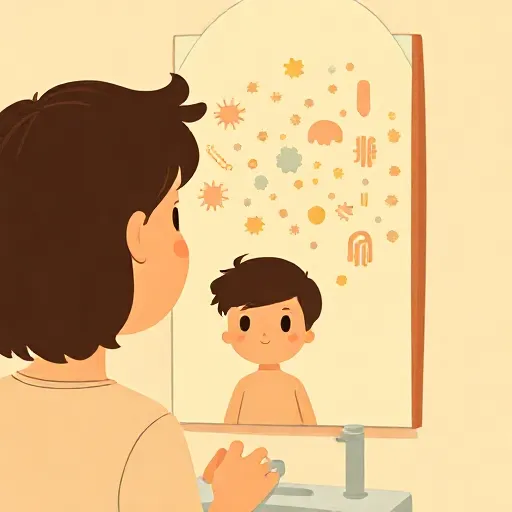
You might think this is just a story for biologists. But it ripples out into your own sense of self. If your body is a shifting coalition, not a locked box, then identity is not something you simply have. It is something your body—and by extension, you—are constantly doing.
Consider what happens after an organ transplant: a person lives with a second heartbeat that is genetically someone else’s. Is that organ part of them? Which answer feels more true, the fortress or the city? Or think about the microbiome. Gut bacteria help shape your emotions, your cravings, even your response to stress. When you eat differently, travel, or take antibiotics, that microbial community shifts—and your mood can shift with it. If bacteria influence who you are, then “you” extends beyond your skin.
The immune self, once imagined as a core identity protected by tiny soldiers, has turned out to be a flexible idiom. It remains a useful metaphor, because it connects our cultural feeling of individuality with the machinery of the body. But it is a metaphor that has changed its meaning. Where it once meant insularity, it now hints at relationship. The immune system is not a wall; it is a gatekeeper deciding who gets inside, and that gate is always open for negotiation.
This matters because it reshapes how we think about health, belonging, and even personal growth. If you can accommodate new microbes, new organs, even a developing baby, then change is not a threat to your identity—it is how your identity is built. Biology, in this sense, is teaching a philosophical lesson: you are not a frozen statue; you are a story with many chapters, and the immune system is one of its most careful authors.
Think about it
- If you receive a heart transplant, the new heart has different DNA. Is it now a part of you, or is it a stranger you carry inside?
- Scientists have swapped gut bacteria between thin and overweight mice, causing them to gain or lose weight. If microbes influence your body and mood that much, how much of what you call “me” is really “we”?
- Imagine your immune system’s memory of “self” slowly changes as you age. If the biological you is never the same from one year to the next, can you ever be exactly the same person you were yesterday?